The boards here include static displays you build once, like a welcome wall or motivational quotes, and interactive ones students use daily, like a classroom jobs chart or a shout-out board with sticky notes.
Your pick depends on what the board needs to do: welcome students in, track birthdays and jobs, display their work, or give them a place to interact.
A board works when you can tell what it does in 3 seconds: a welcome sign says hello, a birthday list names the dates, a kindness tree collects notes.
1. Welcome Bulletin Board
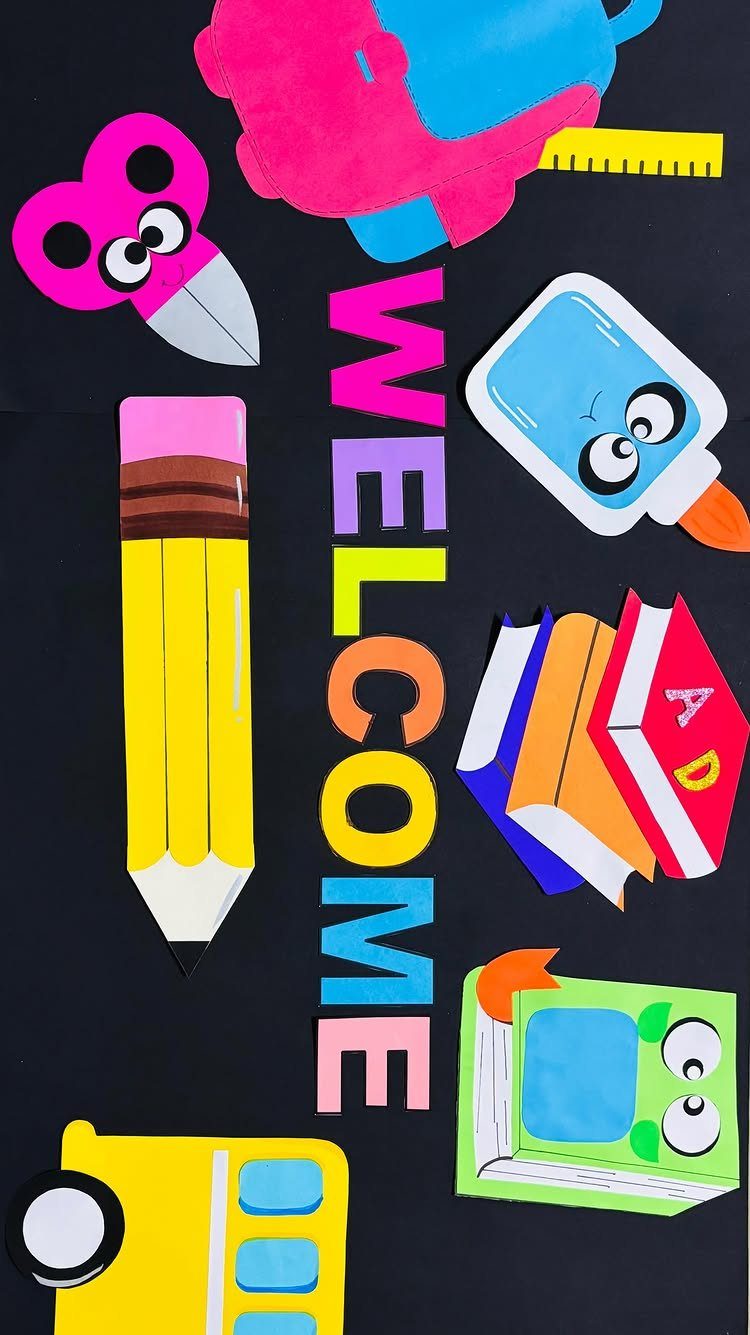
A black background makes bright letters pop from across the hallway, so the choice in this board is smart.
Paper cutouts are cheap and easy to swap out. Build the board before the first day and it greets students the moment they walk in.
2. Birthday Bulletin Board
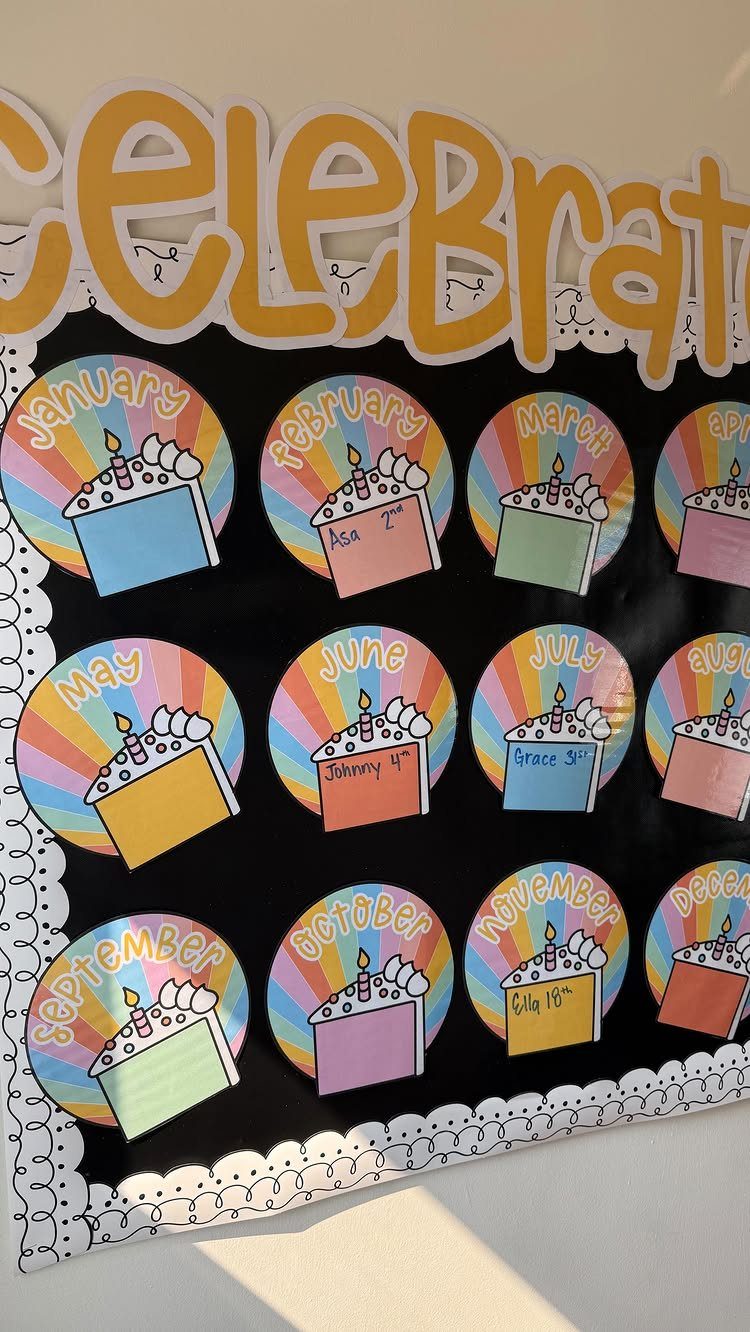
Monthly circles turn a birthday list into something students can find themselves on. Cut each cake in a different color and write a name on its month as new students arrive.
A word like "Celebrate" across the top sets the tone. Black backing keeps the colors loud.
I would write names on paper strips or sticky notes so a mid-year move-in doesn’t mean redoing a circle.
3. Class Calendar Display
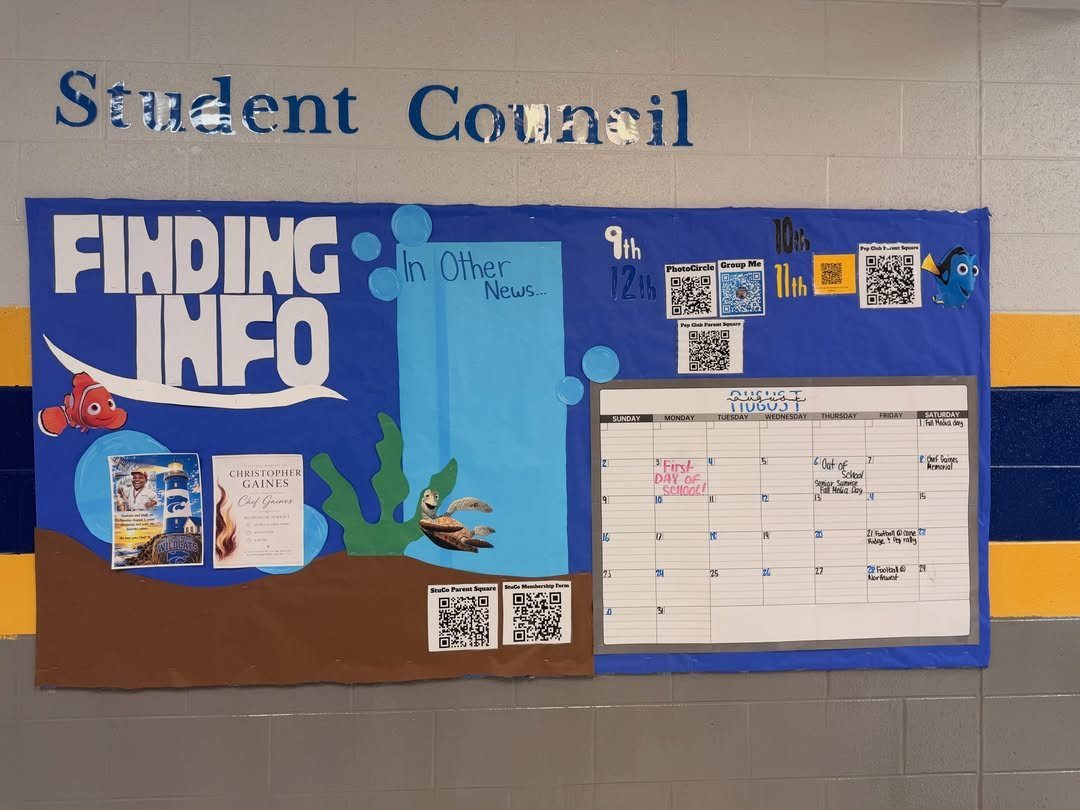
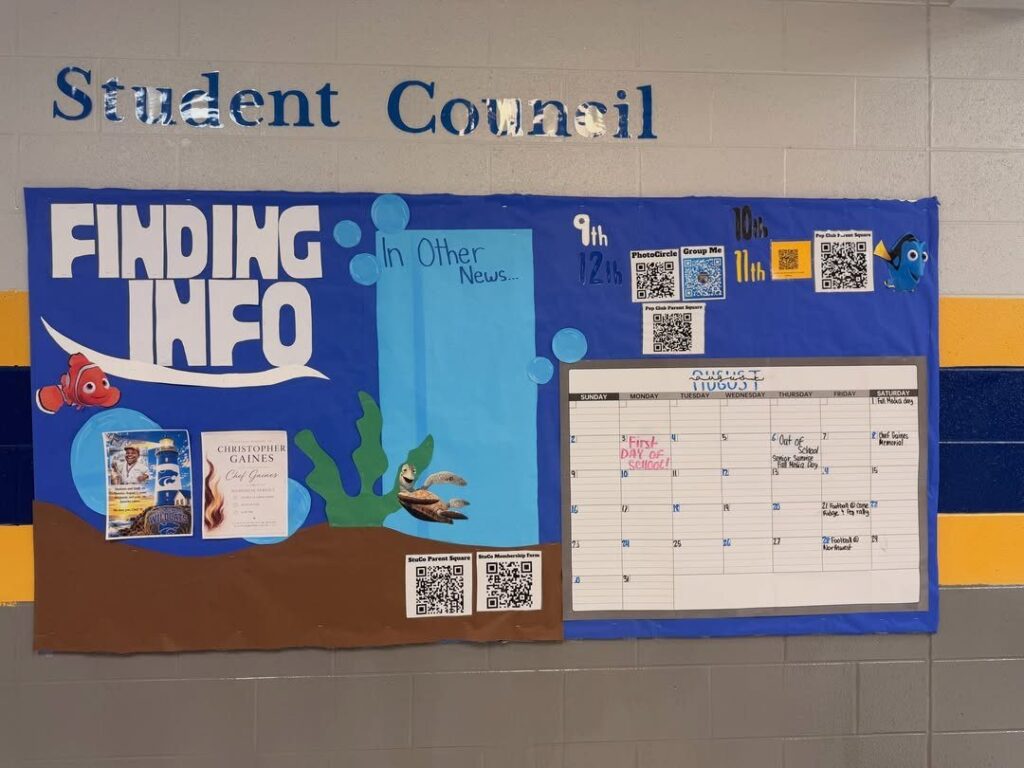
Pick one large monthly calendar and let it take up most of the board; everything else orbits it.
Student council boards like this one add QR codes that link to sign-ups or announcements, which saves paper and keeps the board from filling with flyers.
A short "In Other News…" corner catches the extras. A theme such as an underwater scene makes dates feel less like a chore to read.
4. Classroom Jobs Board
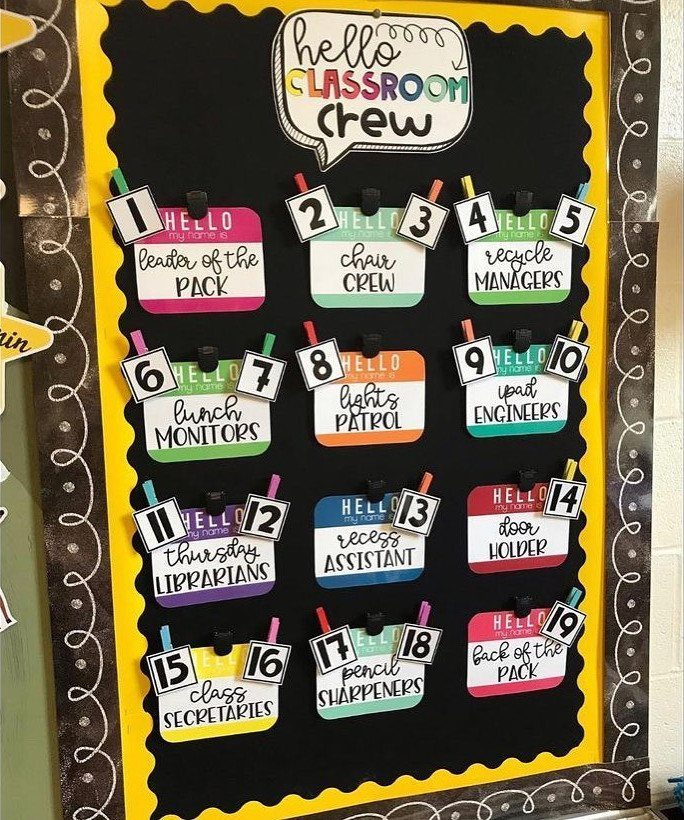
Numbered cards on clothespins make job rotation almost effortless: clip a student’s name or number to a card and move it when the week changes.
Give jobs playful titles, like "Leader of the Pack" or "Recycle Managers," so a chore reads as a role.
A bright border around a dark board keeps the cards easy to spot. Cardstock holds up better than copy paper to repeated handling.
5. Student Work Display
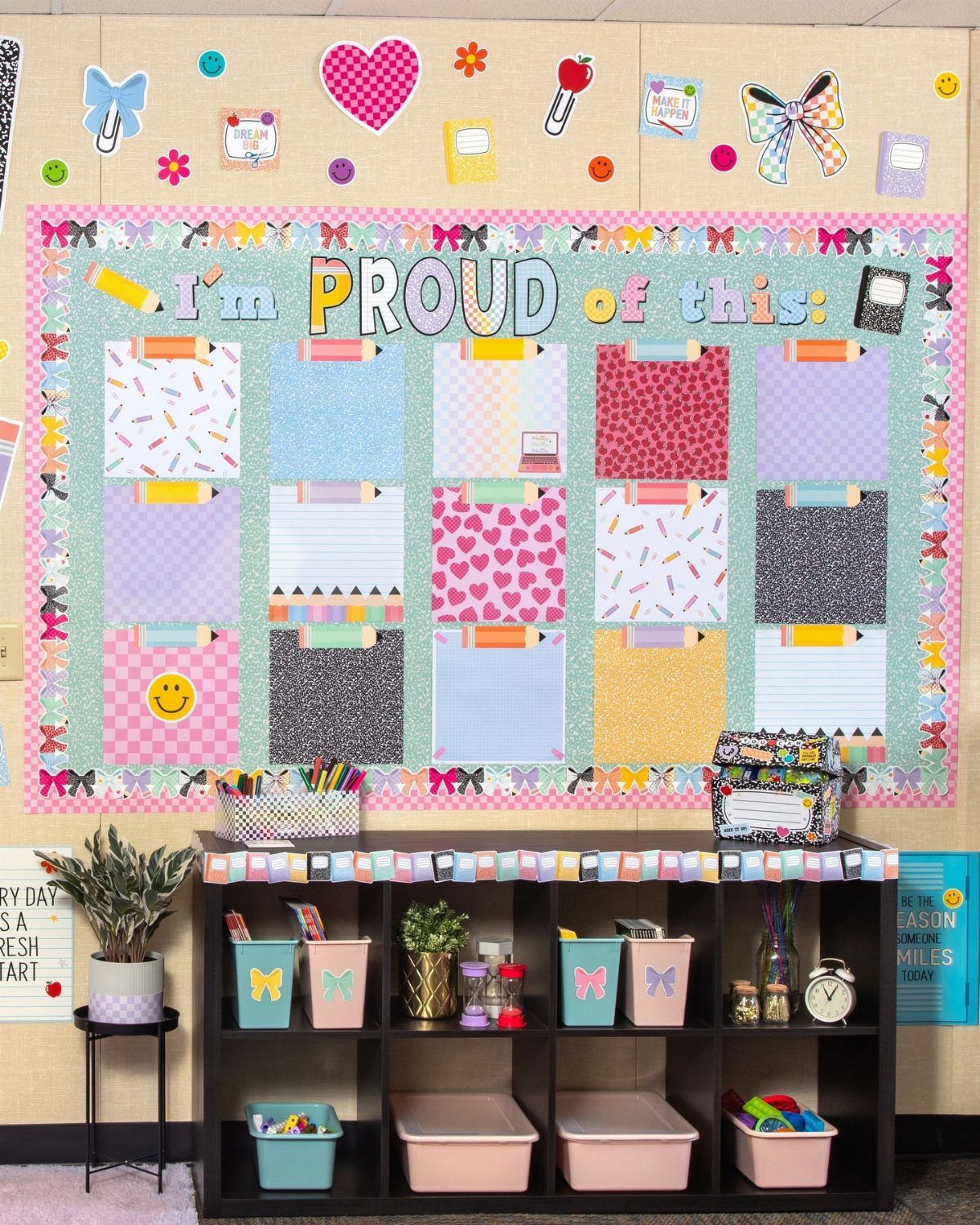
Let students choose what goes up. A title like "I’m PROUD of this:" asks them to pick their own work rather than waiting for a teacher’s selection, and I like that ownership.
Colorful pockets make swapping pieces fast, so the board never goes stale. Mount it low enough for kids to reach.
Placing it above a shelf keeps the whole corner tidy and purposeful.
6. Kindness Tree
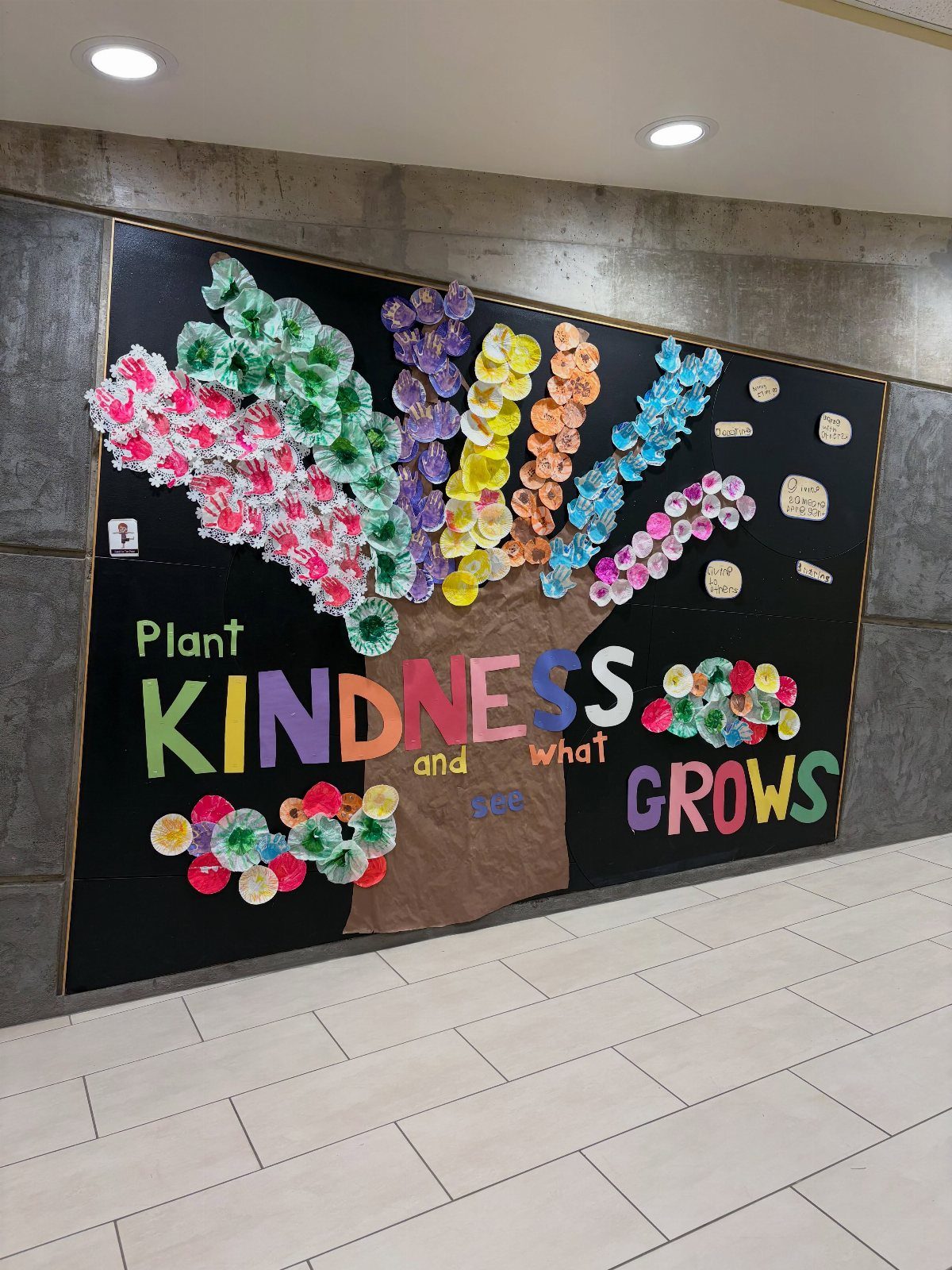
Brown paper makes a trunk in minutes, and cupcake liners make leaves that look layered and cost very little.
Each liner can hold one kind act, written by a student and stapled on, so the tree fills out as the weeks pass.
A line like "Plant KINDNESS and see what GROWS" gives the board its purpose. Hallway placement lets the whole school see it, which I think is the best argument for this one.
7. Giant Bookshelf Bulletin Board
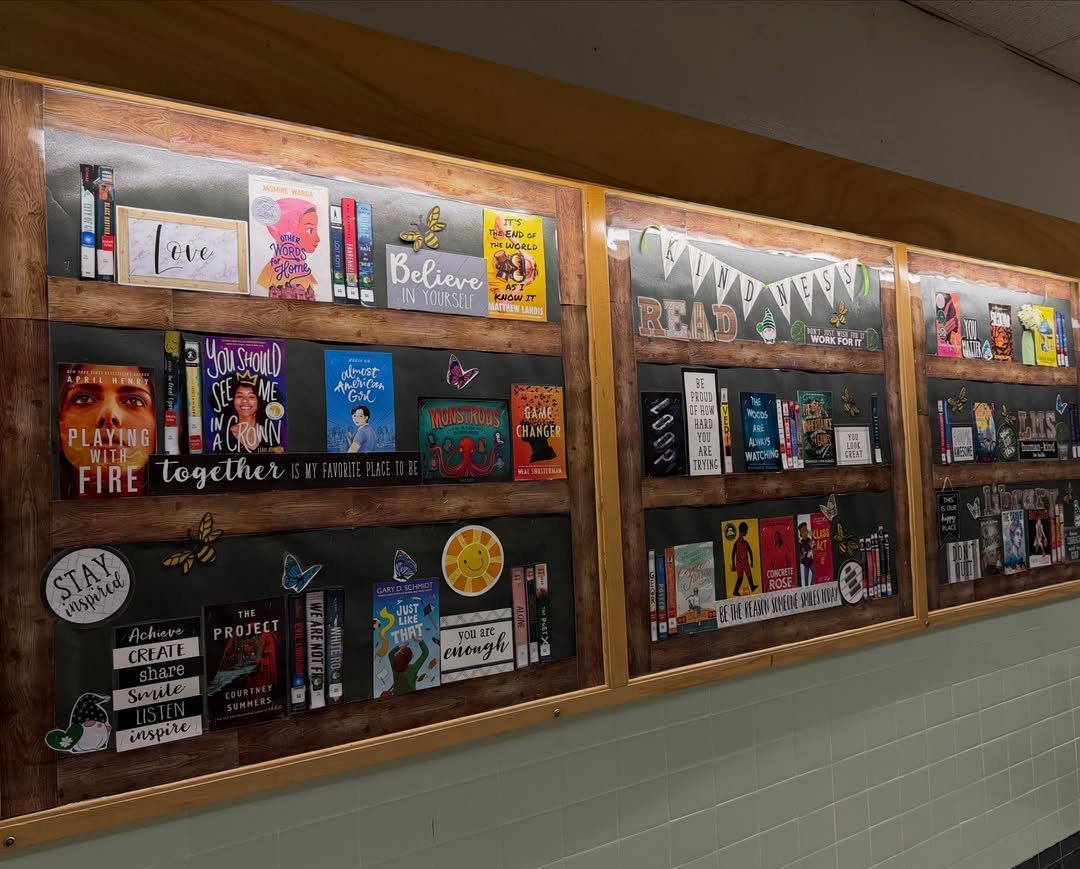
Fake book spines are the whole trick here: cut paper rectangles in assorted heights and colors, then stack them in rows so a flat board reads as a shelf.
Printed covers or quotes like "Believe in yourself" can double as titles.
A "READ" banner across the top says what the board is for. Three boards side by side make a long wall feel like a library, and I would choose that over one big board.
8. Shout-Out Board
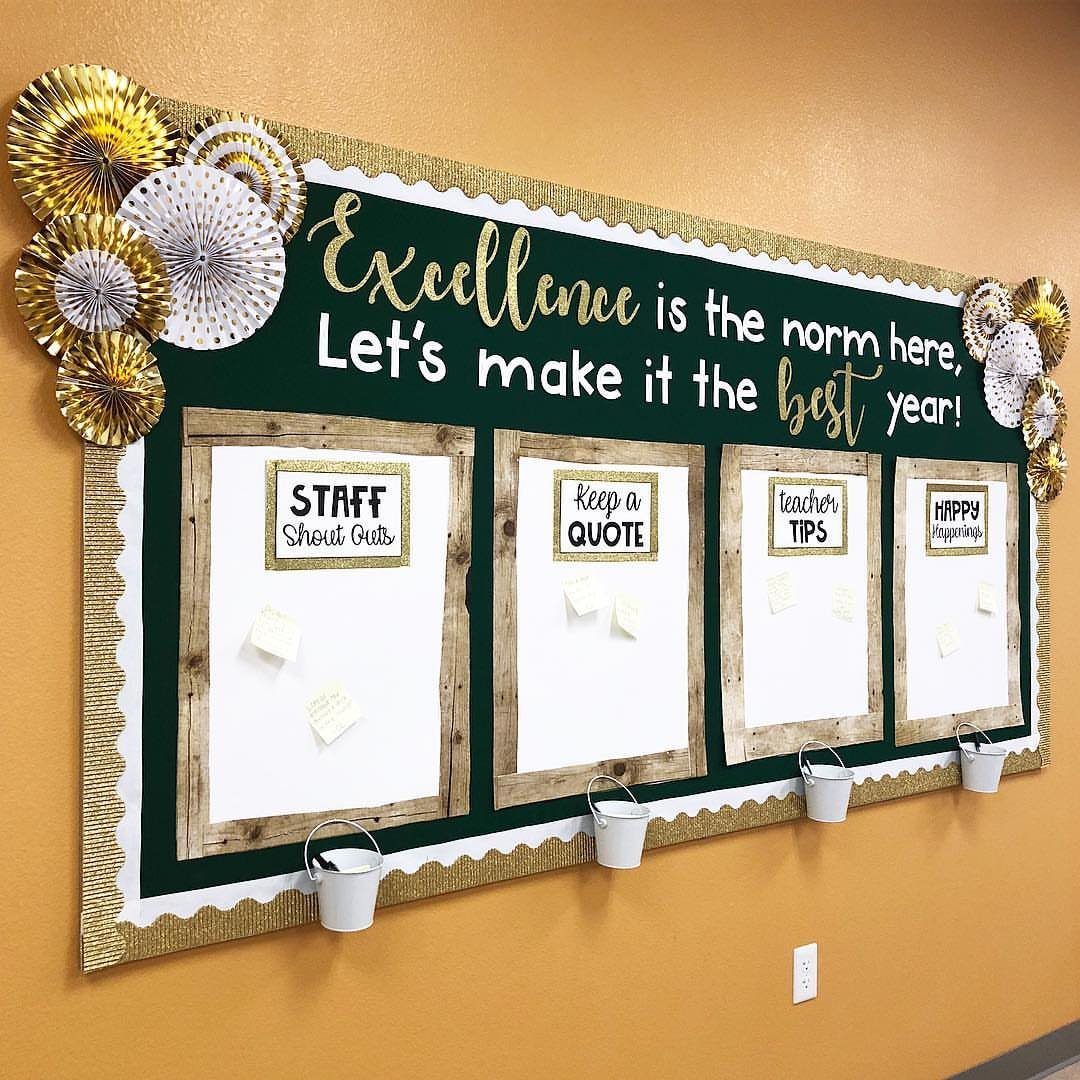
Recognition works best when it has a home, and a dedicated shout-out section gives praise a place to land. Staff and student shout-outs can share one board, each with its own labeled area.
A headline such as "Excellence is the norm here" sets the standard before anyone reads a single note. Green and gold together read as formal without looking cold.
Keep slips and a pen nearby so shout-outs get written the moment someone notices good behavior.
9. Positive Vibes Board
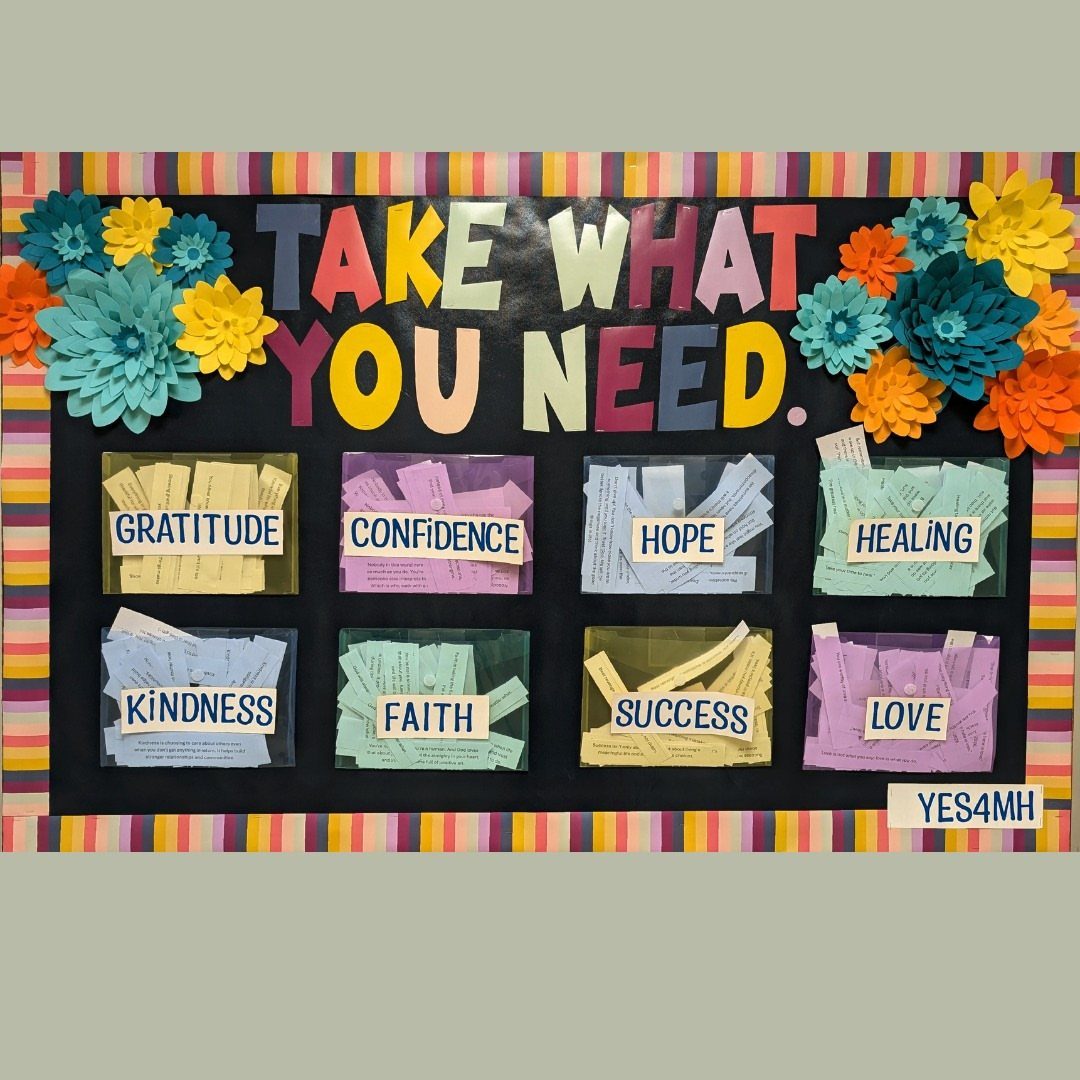
"Take what you need" turns a board into something students can use, not just look at. Sort the affirmations by theme and label each pocket with the category name.
Paper flowers soften the board and cost little. I would write the affirmations on slips and refill the pockets weekly, since the popular ones run out first.
A student who is having a rough morning can grab one without saying a word, and I think that quiet access is the best part.
10. Reading Detective Bulletin Board
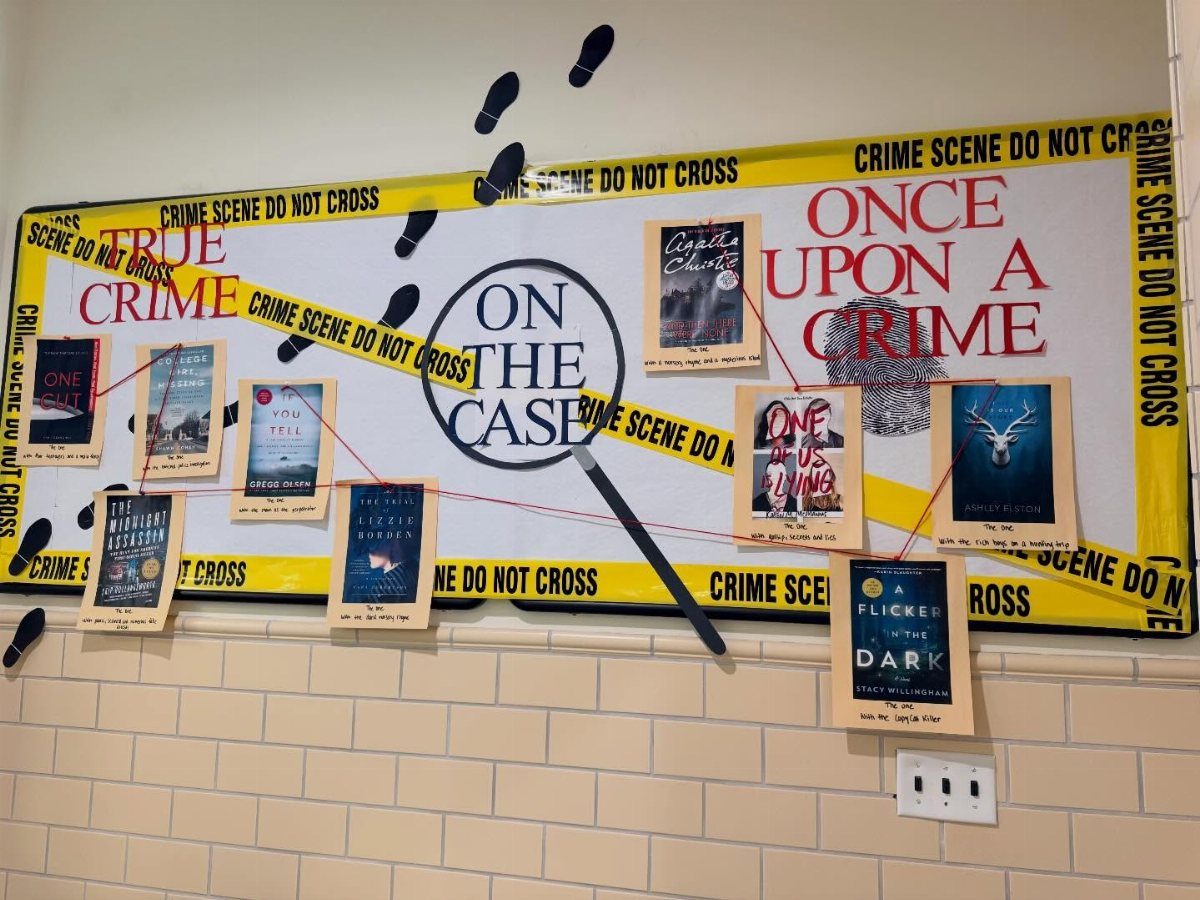
Pin book covers to the wall and link them with red string, so each title becomes a clue.
Puns do the heavy lifting on the titles: "On the Case" or "Once Upon a Crime" costs nothing and gets a grin. Yellow tape stands out sharply against a white wall.
Mystery shelves suit this theme best, though any genre can be "investigated."
11. Celebrating Diversity Board
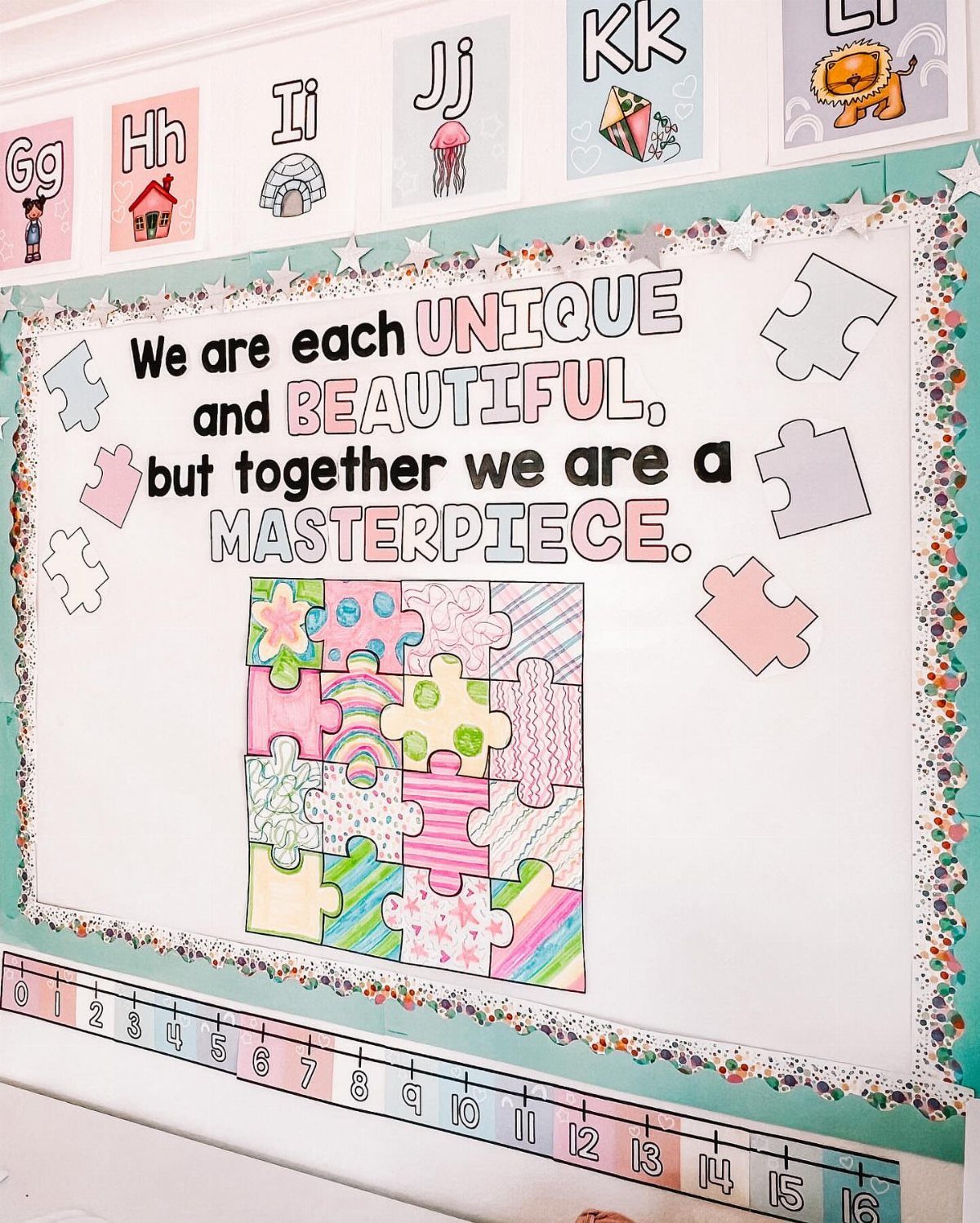
Puzzle pieces say it without a lecture: each student gets one, and the pieces only make a picture when they fit together. Let every child decorate their own piece with colors, patterns or words about who they are.
A line like "We are each UNIQUE and BEAUTIFUL, but together we are a MASTERPIECE" gives the board its message.
Hang the board where the class sees it daily, and add new pieces as students arrive.
12. Friendship Board
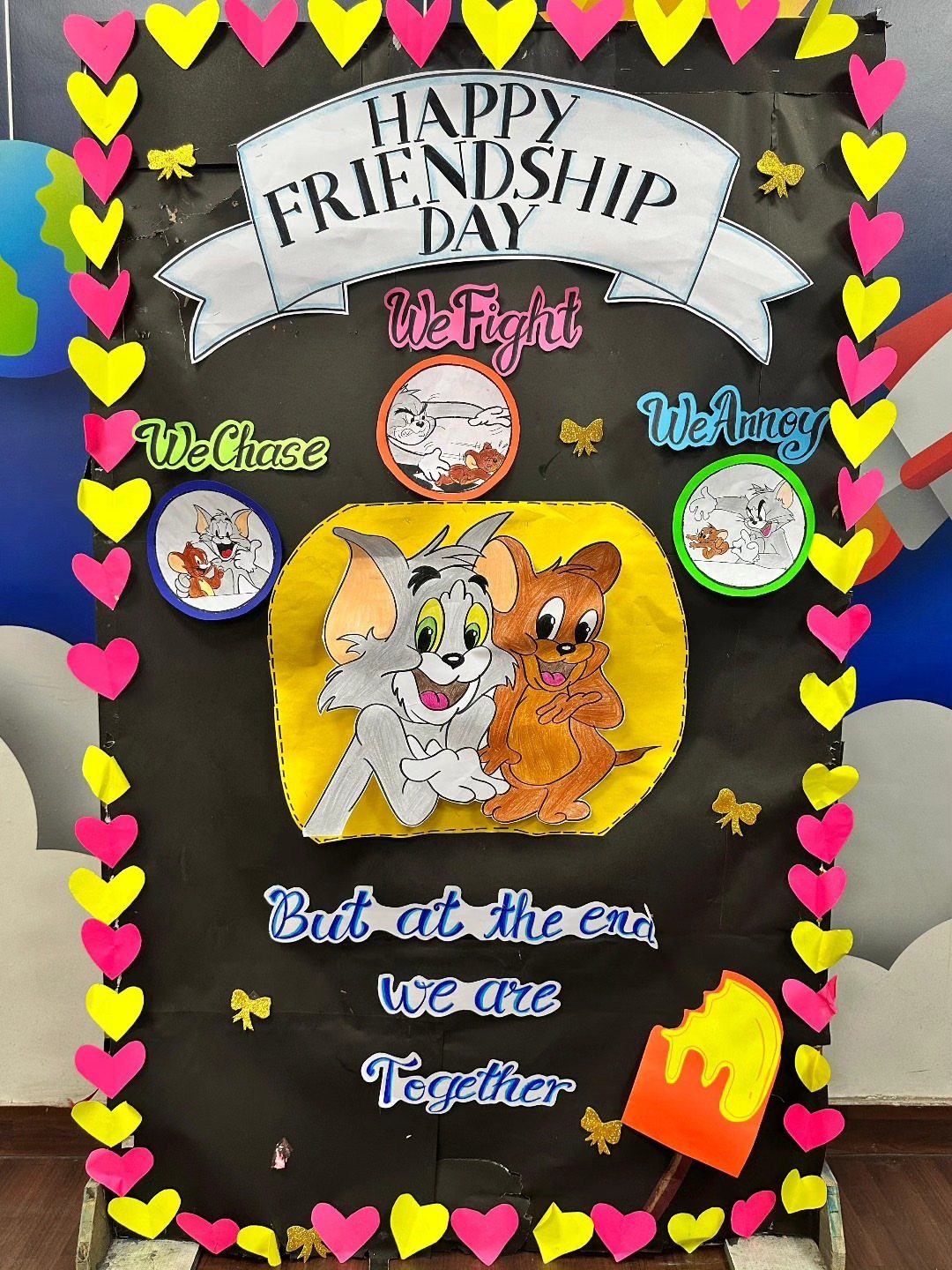
A pop-culture pair can carry a friendship message better than a plain poster. Tom and Jerry’s chasing and annoying, ending in "we are together," is honest about how friends really behave, which I like.
Paper hearts in assorted colors fill the gaps cheaply. Black backing makes them glow.
Choose characters your students already know. Print them large, add a short rhyme or list of what friends do, and the board is done in an afternoon.
13. Popsicle Bulletin Board
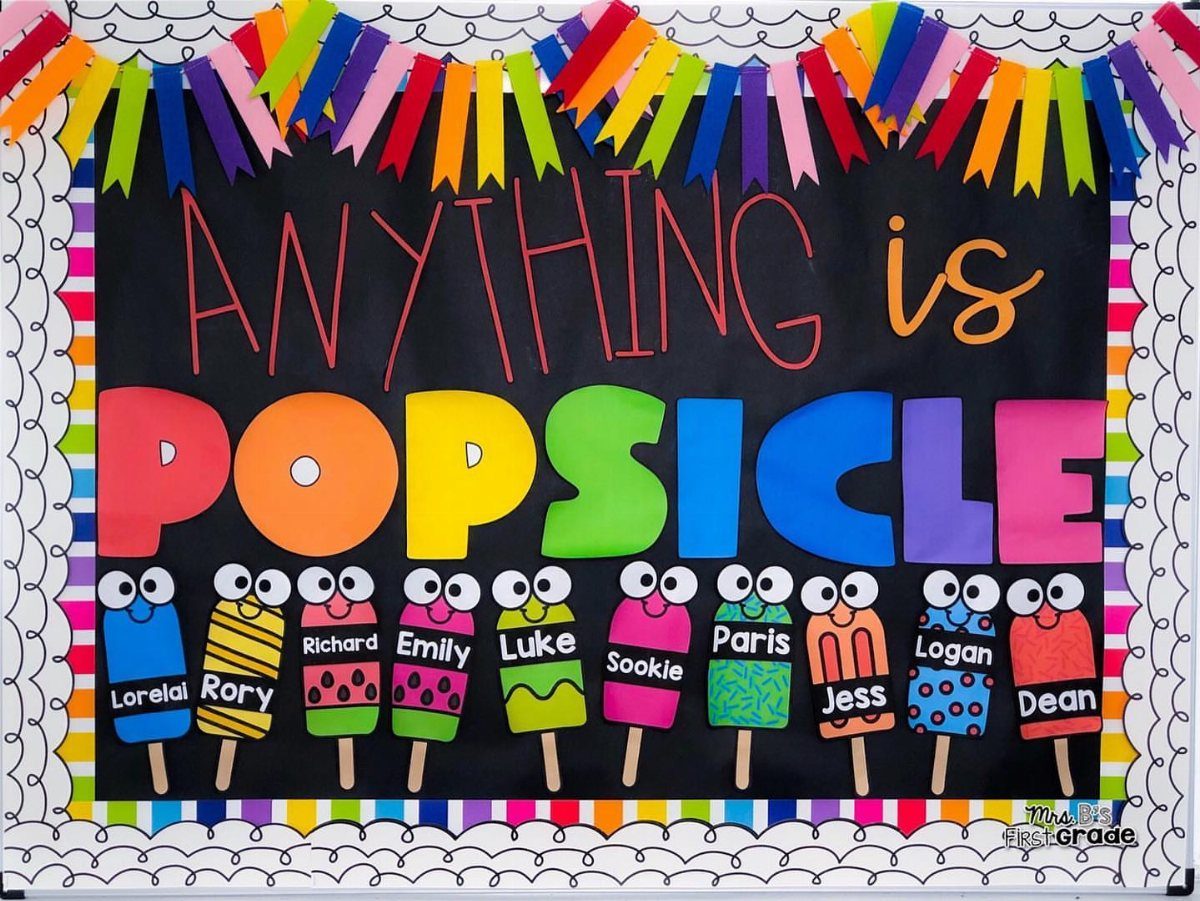
"Anything is Popsicle" is a pun on "anything is possible," and it makes a good first-week message for a board that does a second job.
Each popsicle cutout can carry one student’s name, so the board doubles as a welcome display.
Cut the pops from cardstock in different colors, add a stick to each, and let students decorate their own.
A rainbow banner across the top ties the mismatched colors together. I would pick this over a plain name-tag board, since students recognize their own pop at a glance.
14. Motivational Quotes Board
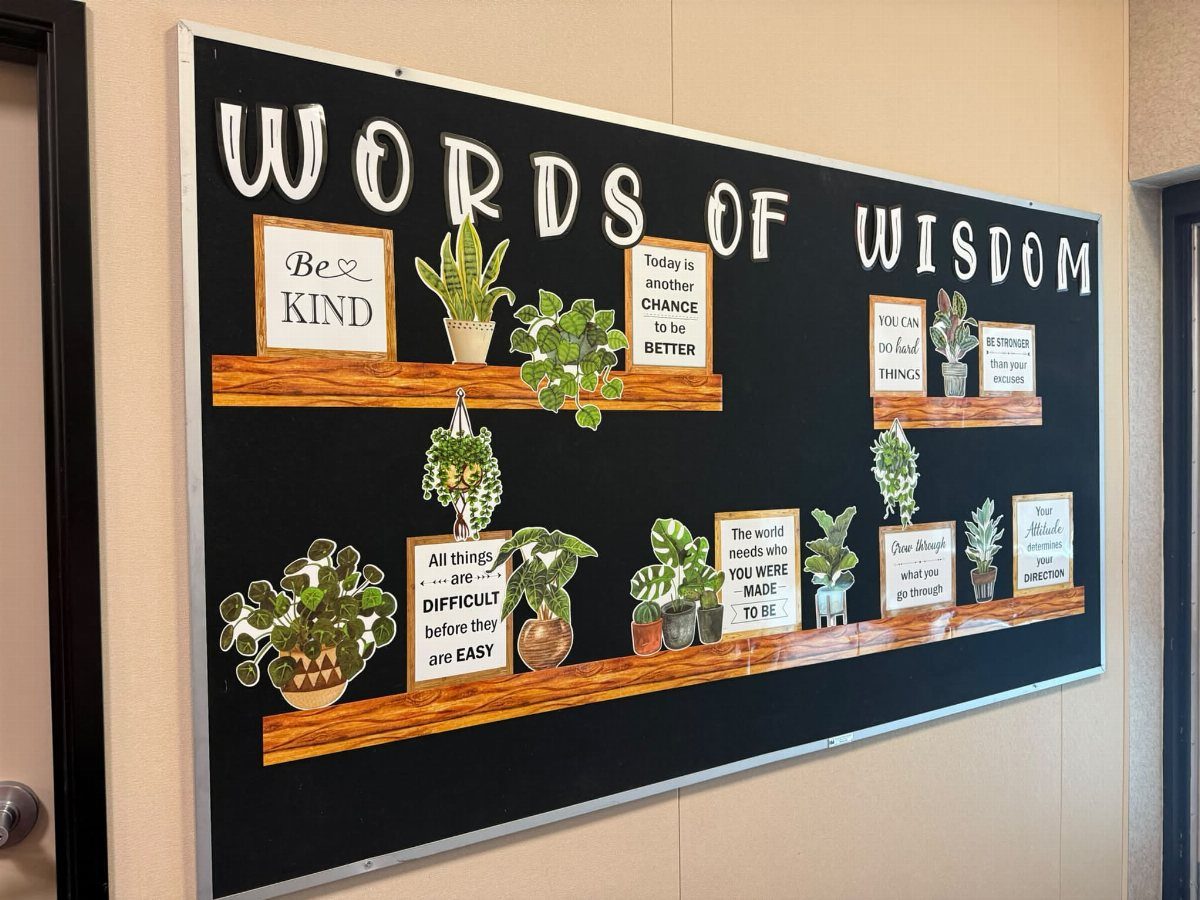
Shelves give a quotes board structure. Paper plants sit on each shelf, and each quote gets its own spot, so the board reads as a display rather than a pile of posters.
A black backing keeps light-colored text easy to read from a few feet away. "WORDS OF WISDOM" works as a title because it tells students what to expect.
Print quotes in large type, about the size of a sentence strip, and rotate a few each month. I would ask students to suggest quotes, which gets them reading the board instead of walking past it.
15. Goal Setting Board
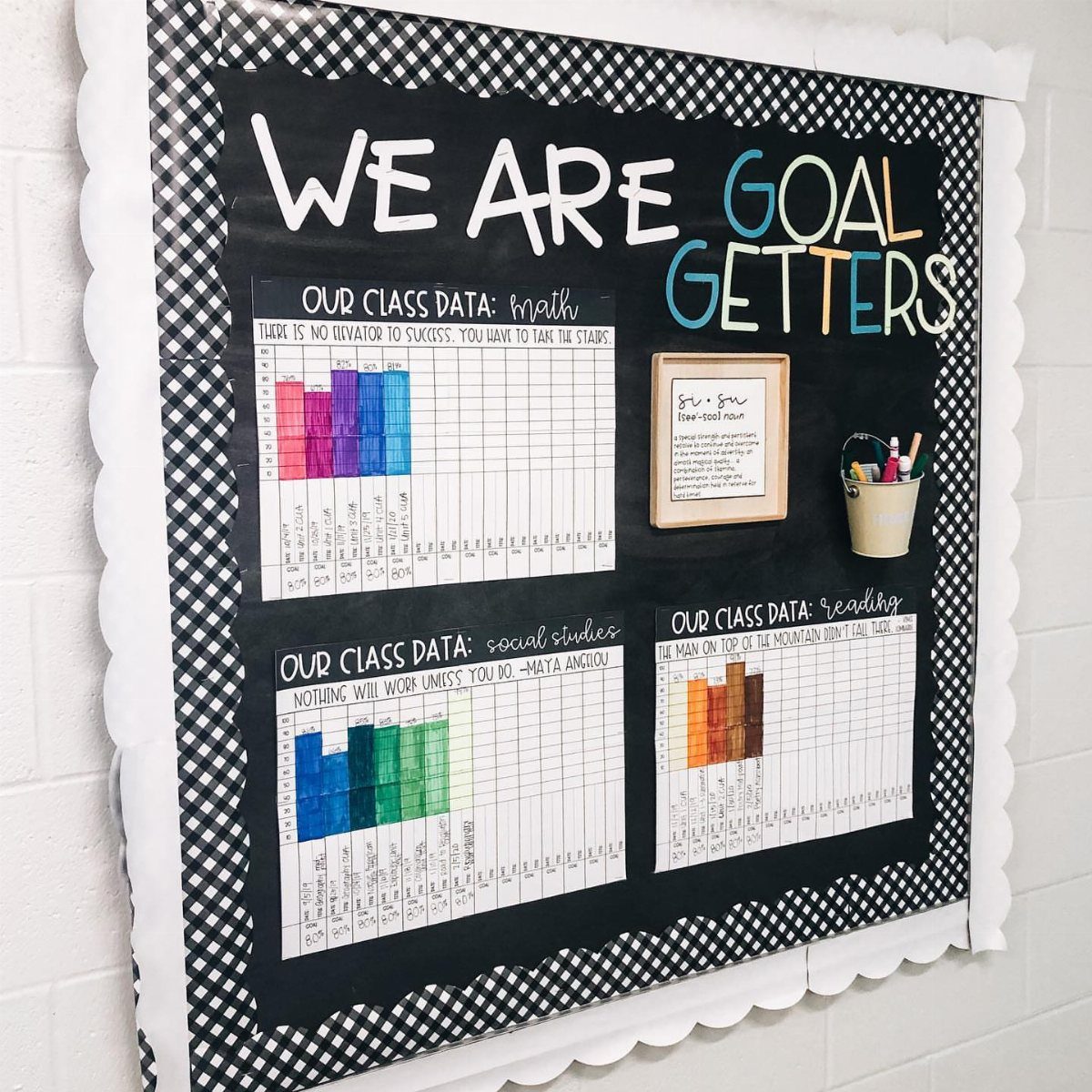
Tracking beats posting: a goals board earns its space when the data changes. Break goals into subjects like math, reading and social studies so each student can track the one they’re working hardest on.
Keep the charts simple enough to update in a minute. Students can color in a bar or move a marker, and I would have them do it themselves rather than collecting it all on your own time.
A checkered border and the title "WE ARE GOAL GETTERS" give the board a team feel. Use class totals rather than individual names if you want to avoid comparisons.
Advice for Creating Bulletin Boards
Fabric beats paper as a board covering, because paper shows every staple hole, glue smear and sun-faded patch. A fabric cover hides those marks, so the board looks fresh for the month without recovering it.
Keep the design plain.
Stick to 2–3 colors, choose a solid background to cut visual noise, and limit how many elements share one board. Plain block letters are easier to read from across the room than script or novelty fonts.
Plain does not mean boring. A clean, calm board is easier for students to process, and it keeps the room from feeling crowded.
Bring students into the building. Cutting, lettering and arranging give them a stake in the board, and it saves you prep time.
Importance of Bulletin Boards
Decide what a board is for before you pick a theme. Display, decoration and information are the 3 common jobs, and some boards add a fourth: interactive use.
Give practical information a fixed spot so students never have to ask where to look. Procedures, bell schedules, homework assignments and menus all fit there.
For student work, set aside a space that is clearly about their efforts. The board’s purpose should be clear in 3 seconds, with nothing extra competing for attention.
Short on space?
Use open wall as extra board. A large board can also be split into halves or quarters with borders, and each area should carry a label so students find things quickly.
Bulletin boards are the unsung heroes of the classroom. They can help set a theme for the year, engage students, relay important information, and display student work.
Engaging Students
Make the board something students handle. Interactive boards give tactile learners a way to review that feels less like studying and more like playing.
A vocabulary match-up works well with Velcro tabs or yarn connecting words to definitions.
For math, try number puzzles or "problem-solving pockets" where students share strategies. In a science unit, put up a blank water cycle or plant diagram and give students detachable labels to place themselves.
I would keep one concept per board. Label every interactive piece clearly, and resist cramming in extra topics, since a crowded board makes the activity harder to use.
Frequently Asked Questions
What to put on a teacher bulletin board?
Match the board to one job: student work, a motivational quote display, a seasonal theme, or something interactive like a vocabulary match-up with Velcro tabs.
Pick the purpose before the theme, since a board should be clear in about 3 seconds. A student work board with colorful pockets is easy to refresh, and students get more out of it when they choose the pieces themselves.
What are some creative ideas for photo boards?
Build the board around one theme, such as a birthday display with a circle for each month, or a class memory wall. Cutouts in different colors on a black backing keep a birthday board loud and easy to read.
What can I use instead of bulletin board paper?
Fabric is the best swap.
Fabric forgives the damage paper advertises: pull a staple and the hole disappears instead of announcing itself from across the room. Wrapping paper or recycled materials can work for a one-off look, but they wear like paper does.
What are good classroom themes?
Kindness, reading and diversity are strong choices because each gives students something to add to.
A kindness tree has cupcake-liner leaves that each hold one kind act, and a puzzle board gives every student a piece to decorate, which only makes a picture when the pieces fit together.
A reading detective board, with book covers linked by red string, suits mystery shelves best. Seasonal themes also work if you keep the design plain, at 2–3 colors.