Your room decides which of these ideas you pick: a classroom with a sink can handle the green soapy water of the Halloween Sensory Bin, while one without should stick to dry options like Halloween Bingo, the Witch Hat Ring Toss or Halloween Crafts.
The list runs from 5-minute setups, like a parade that needs only a route and a little music, to projects you prep the night before, such as graham cracker haunted houses with icing pre-squeezed into small bags.
Check the school’s snack rules before settling on the Spooky Snack Mix or the Halloween Snack Platter, since many schools require prepackaged, allergy-friendly food.
1. Spooky Snack Mix
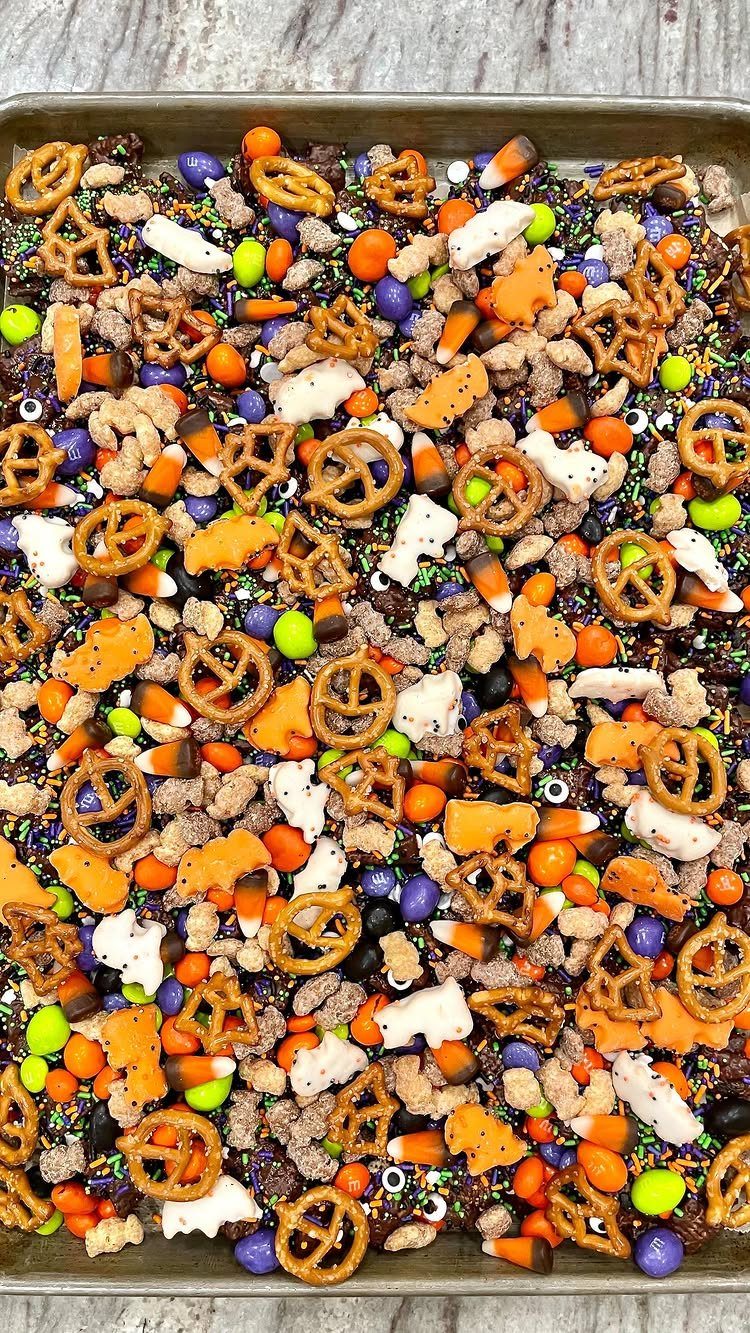
Pretzels hold up better than anything else in a mix like this. Their salt cuts the sweetness of candy corn and M&Ms, and their sturdy shape keeps the pile from turning to mush.
Spread everything on a baking sheet and let kids scoop their own into cups.
Add chocolate-covered pieces with sprinkles for extra color. Keep the ratio close to half pretzels, so no one ends up with a handful of pure sugar.
Kids can scoop their own into cups from a baking sheet, so I would set out the cups empty and let them fill them.
2. Halloween Bingo
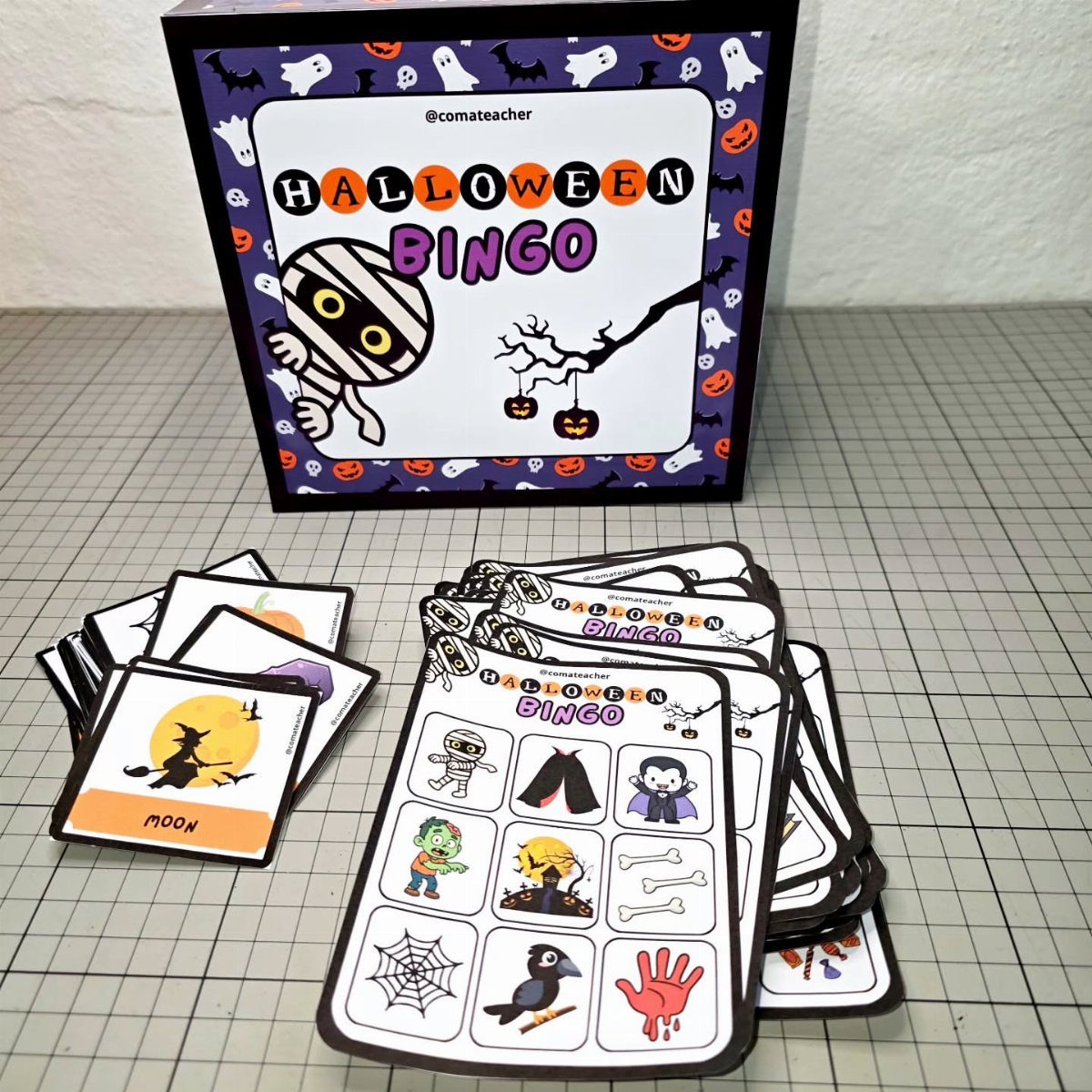
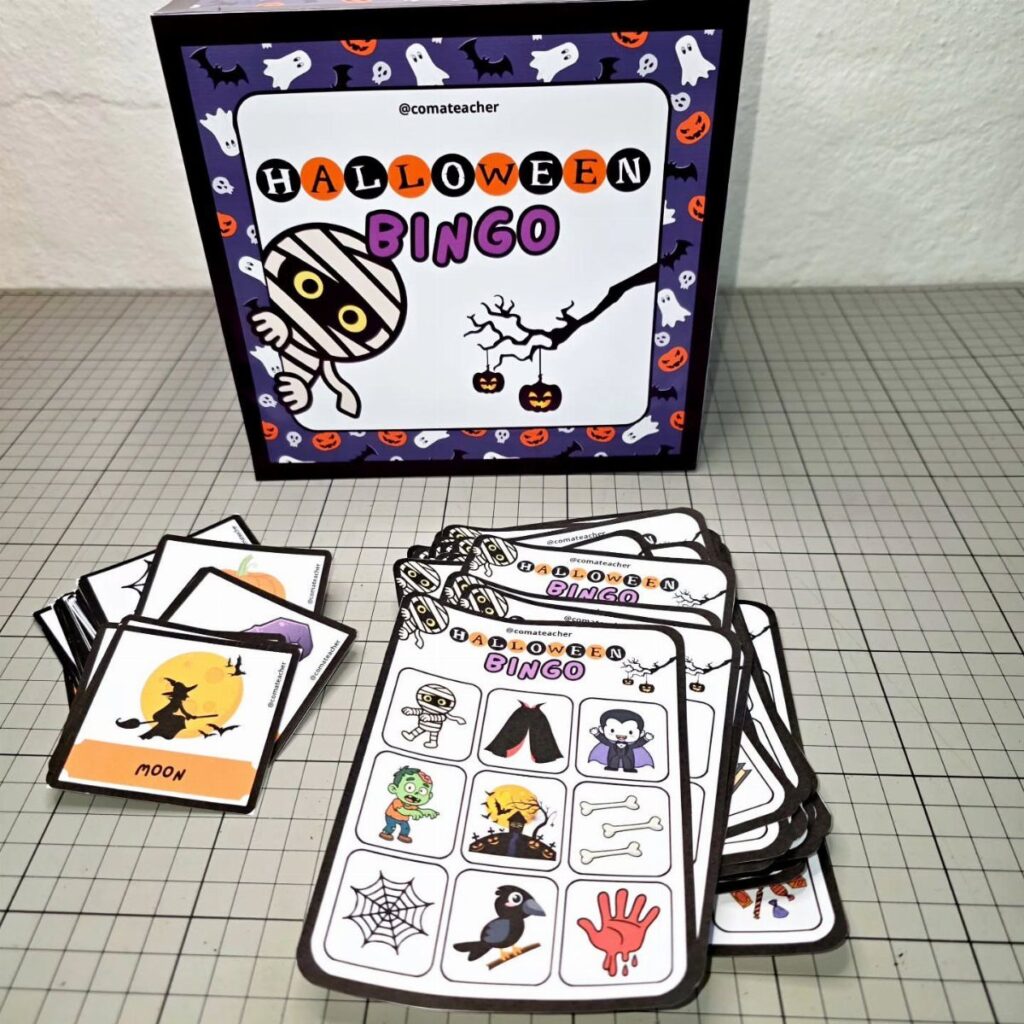
Bingo is the easiest game to run, because the rules are already in every kindergartner’s head. Pick a set with pictures, like the moon on these cards, so nobody needs to read numbers or letters.
Hold up each calling tile and say the word out loud, so early readers can match the picture. Hand out candy corn or pom poms as markers, and keep a small prize for every card, not just the first winner.
Play 2 or 3 rounds. After that, attention drifts.
3. Halloween Sensory Bin
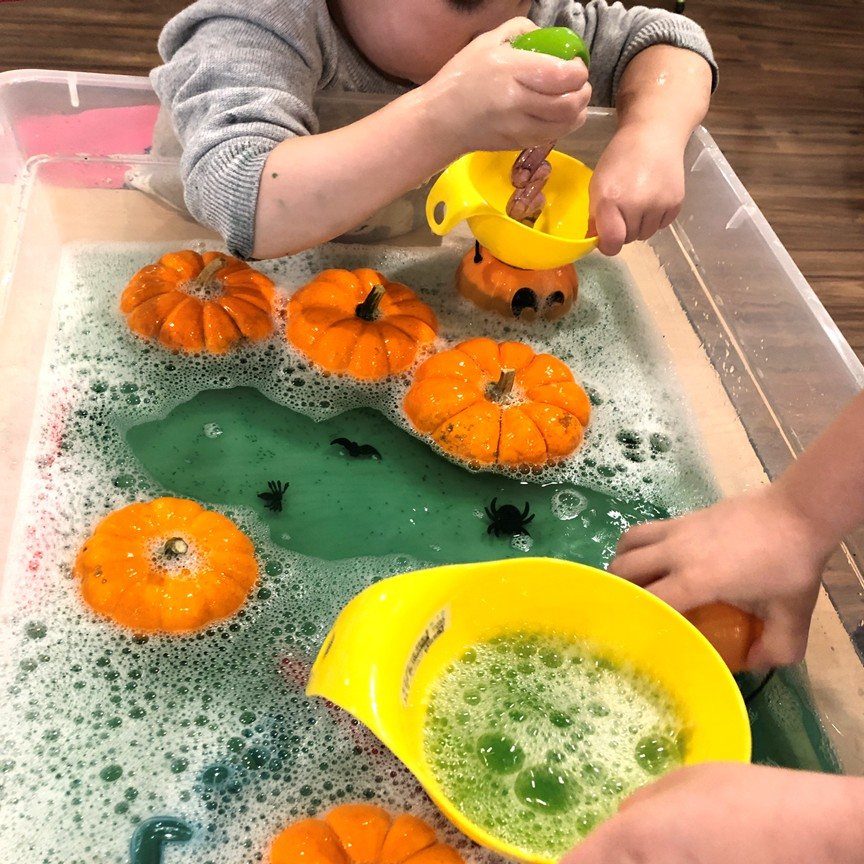
Green soapy water gives a sensory bin its pull: the bubbles feel odd and look like a witch’s brew. Add small pumpkins and plastic spiders, and kids will fish, scoop and sort for a long time.
A clear plastic bin lets you see the objects underneath.
Set it on a towel or a plastic tablecloth, because splashing is guaranteed. Put out one bin per small group so nobody waits long.
Cleanup is the cost here. I would run this one near a sink.
4. Halloween Scavenger Hunt
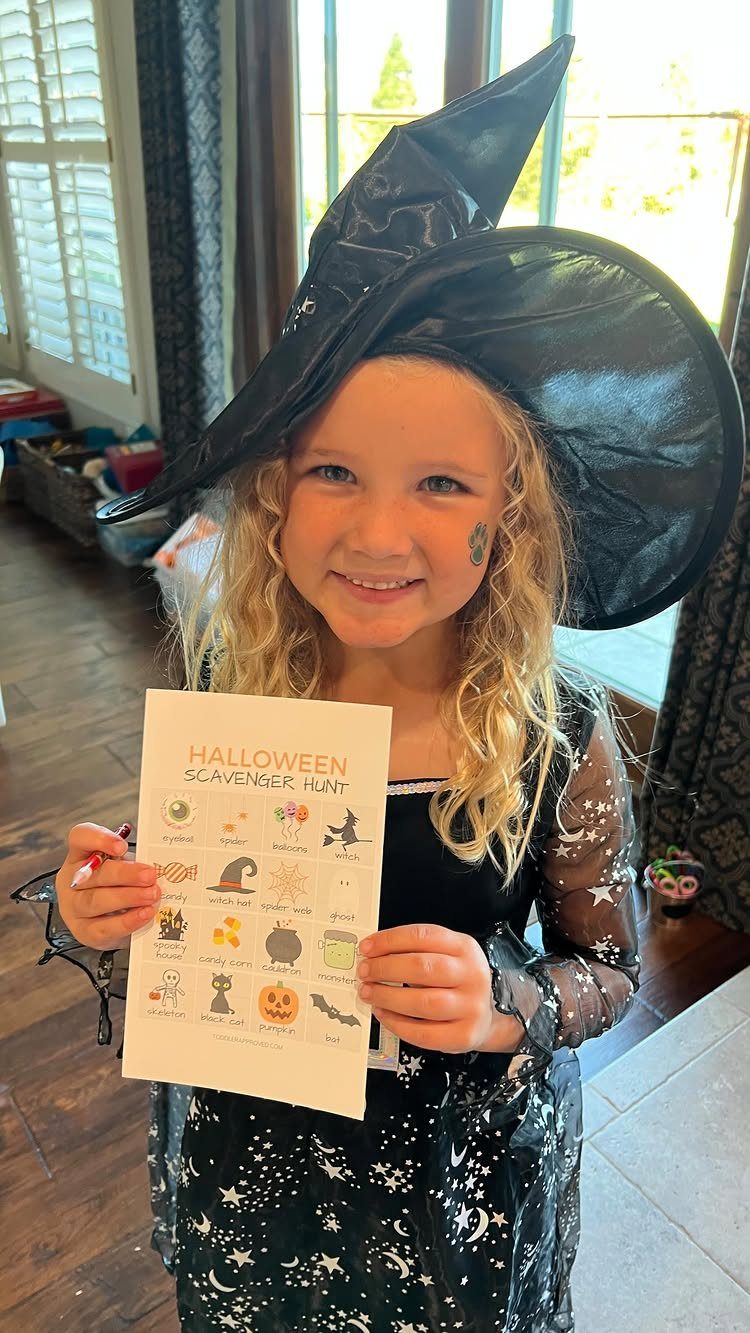
Printed checklists turn a hunt into a quiet, focused activity, and a witch hat on the hunter makes it feel like an event. Pick pictures over words so every child can follow along.
Hide the items around the room at kid height, and give each child a checklist and a crayon to mark what they find. Keep the list short so the hunt ends before the energy does.
Pair kids up if your room is crowded. Finders will be happier sharing than competing.
5. Graham Cracker Haunted House
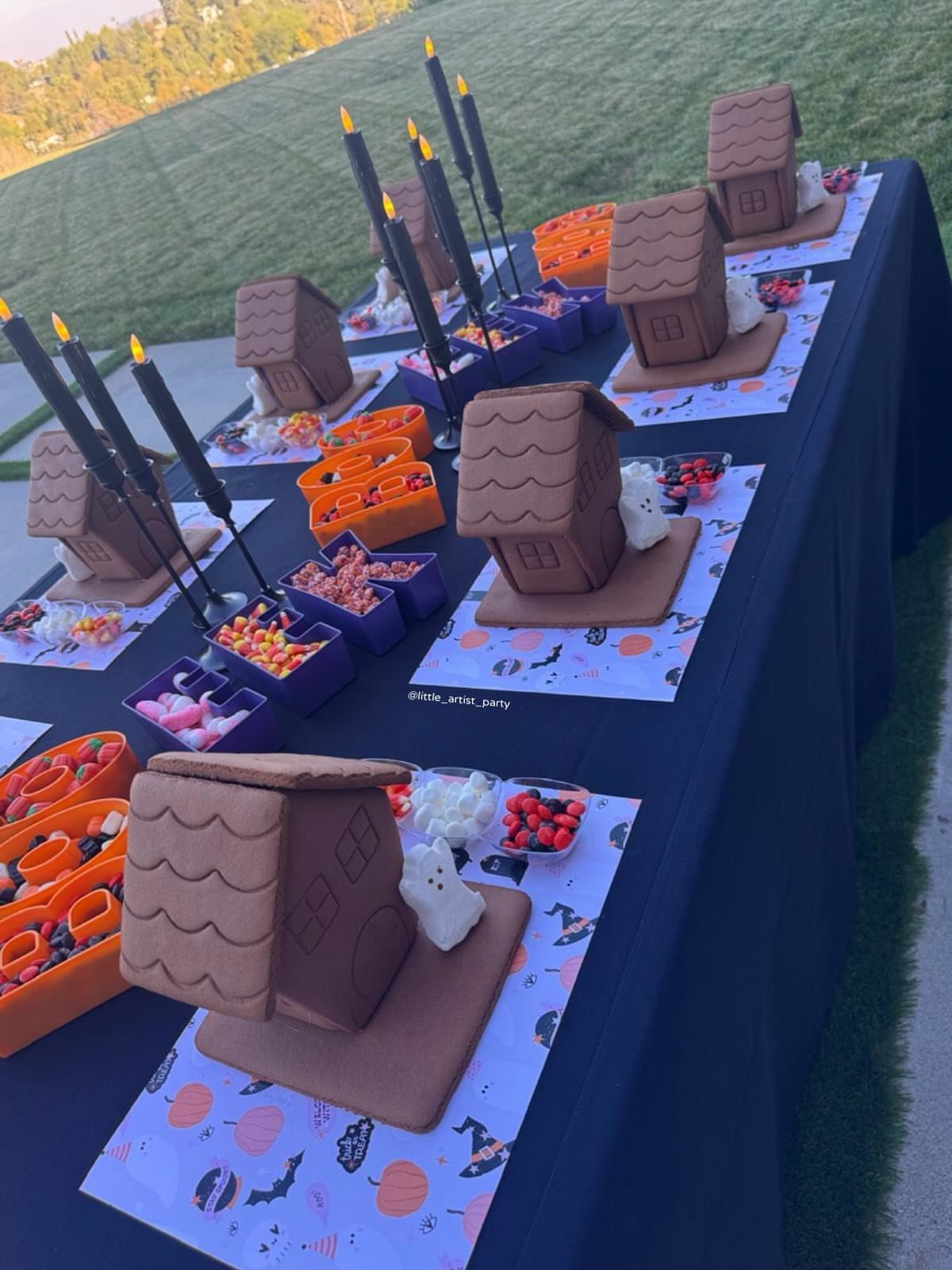
Graham crackers act as the walls and roof, and icing is the glue. Little hands can build a haunted house in one sitting, with candies for windows, doors and ghosts.
Bowls of candy at each seat save the most time.
Pre-squeeze icing into small bags, since a tub and a knife slows everything down. Candles in black add atmosphere to the table, though I would keep them as decoration only, not lit, around kindergartners.
Expect some houses to collapse. Let them dry a few minutes between layers, or just eat the ruins.
6. Halloween Mats
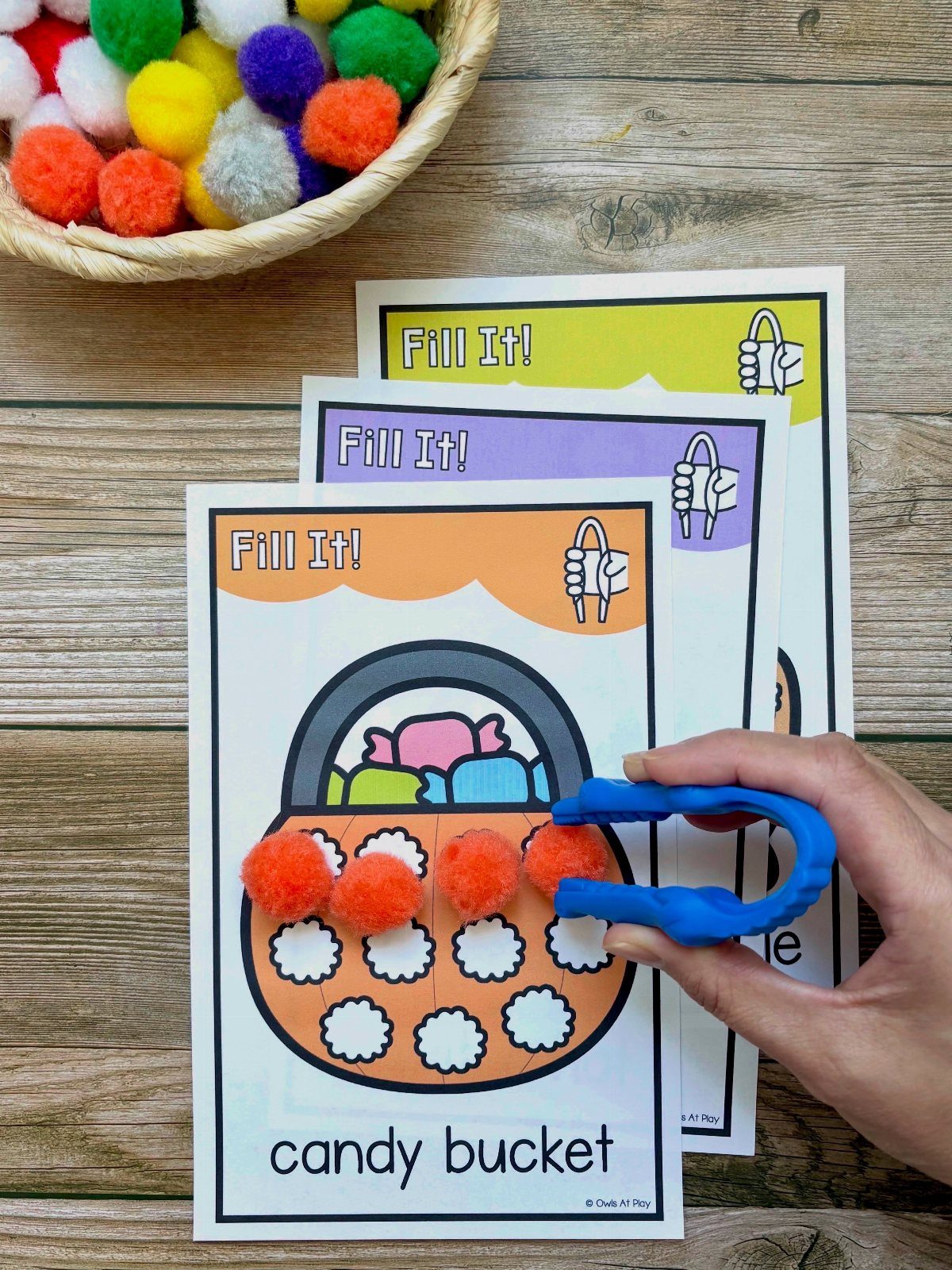
Halloween mats look like play, but they build the grip kindergarteners need for writing.
Chunky tweezers are easier for kindergartners than tiny ones. I would set this out as a quiet station for early finishers.
Laminating makes the mats reusable for next year.
7. Halloween Parade
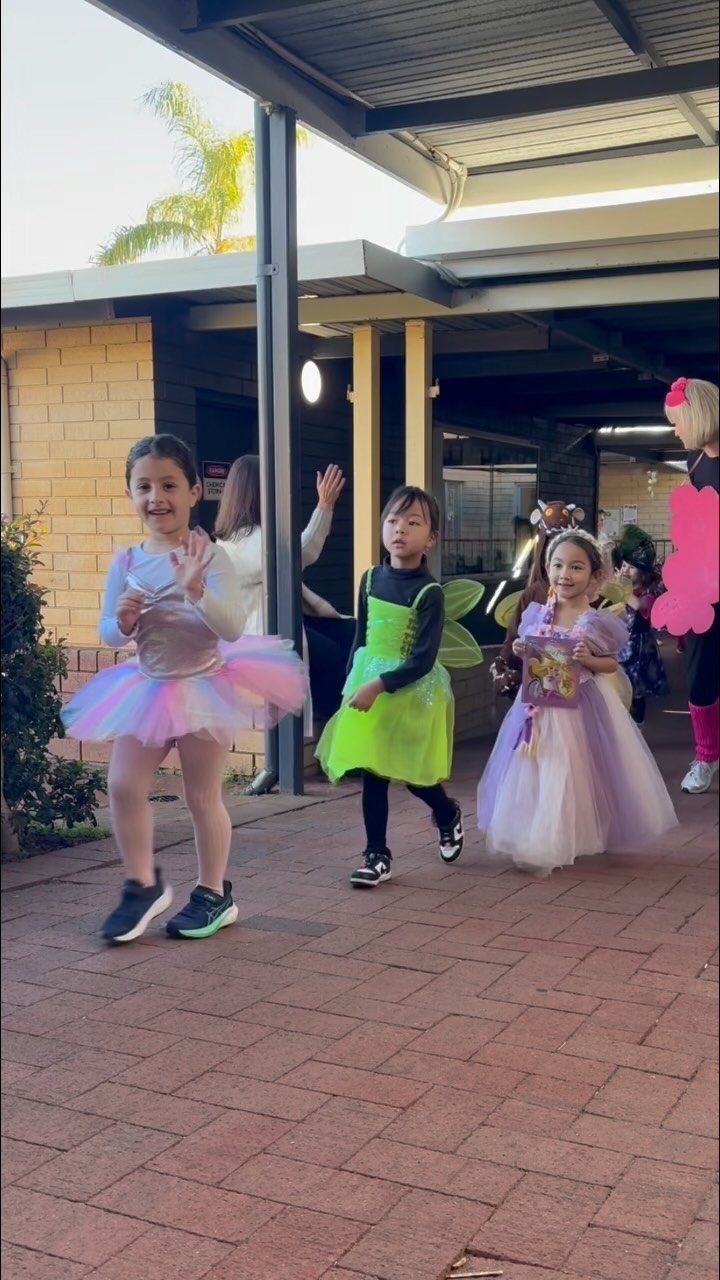
A costume parade needs only a route and a little music.
Line the kids up in pairs and let them march past the other classes or visiting parents. I would keep the route short, since kindergartners tire fast and costumes get hot.
Take photos at the finish, not along the way.
8. Halloween Treat Bags
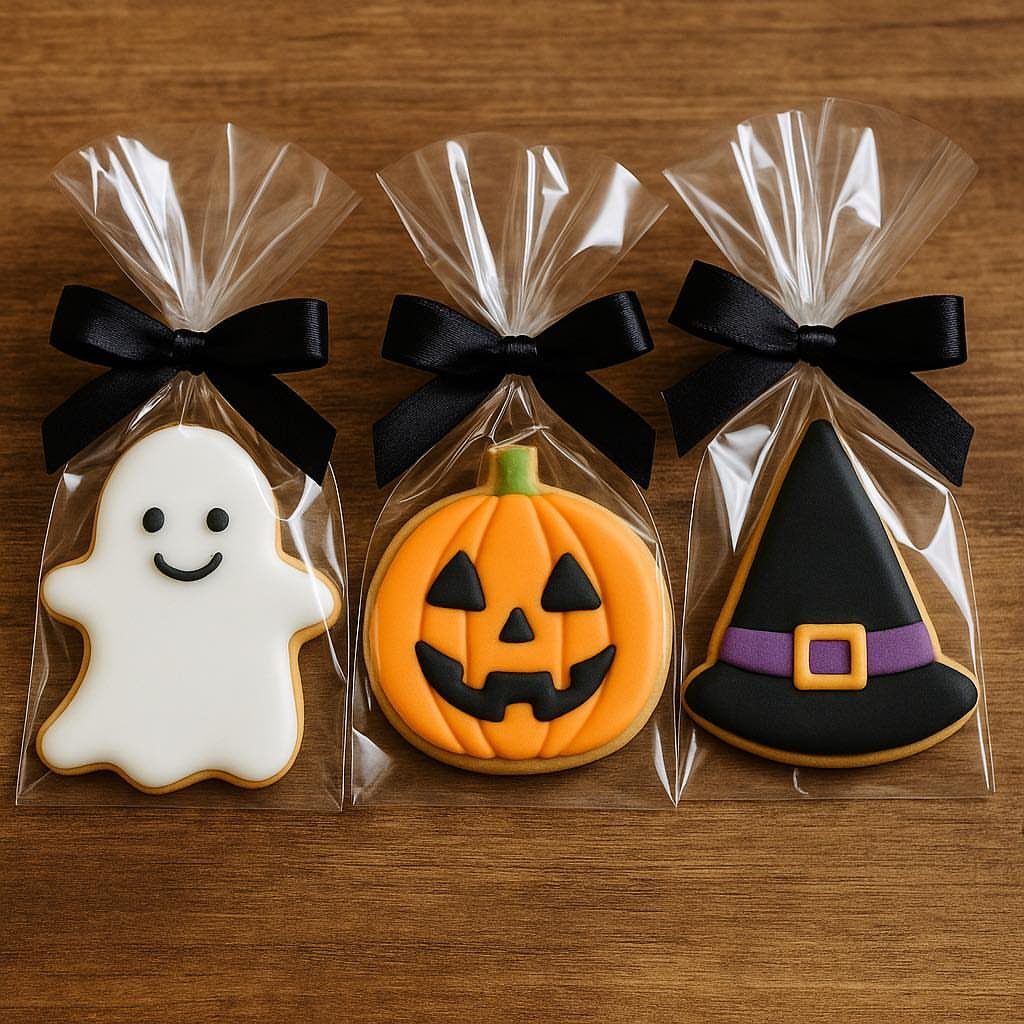
Treat bags don’t have to be candy.
Clear cellophane bags with a ribbon tie let kids see what’s inside, which cuts down on the "what did you get?" questions, and a sugar cookie cut as a ghost, pumpkin or witch hat is the item that makes the bag feel like a real prize.
Pack one cookie per bag, tie it with black ribbon, and make the bags a day ahead so the party morning stays calm. Buying the cookies saves hours.
Check for allergies before you fill a single bag. A sealed, labeled bag makes that easy for parents to read.
9. Halloween Crafts
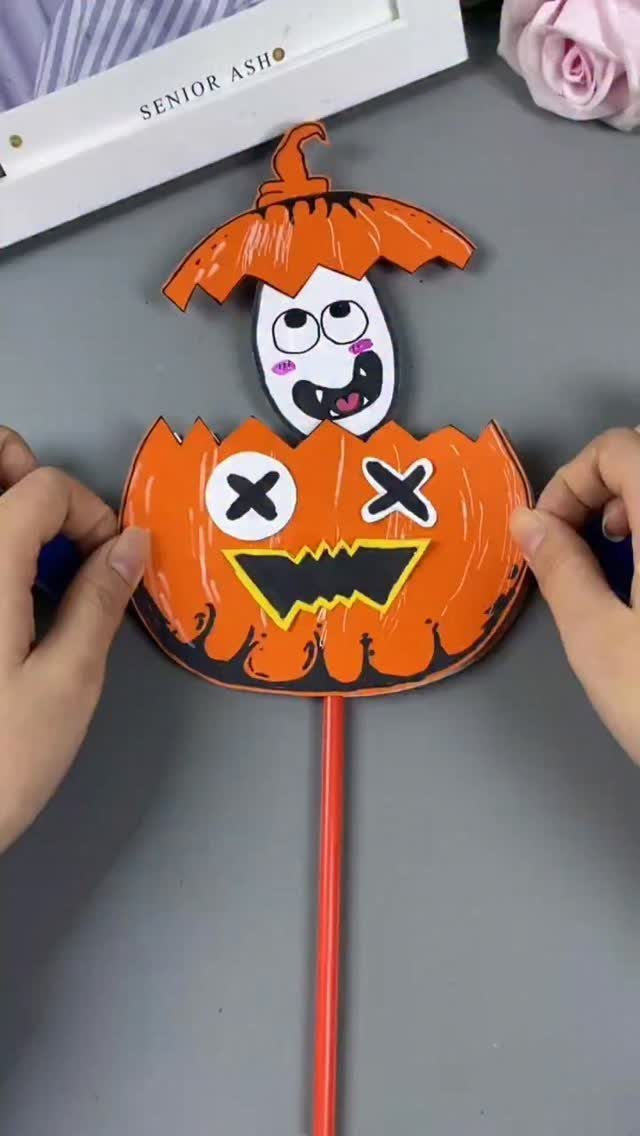
A craft station works best with one main project and a backup.
A paper ghost that pops out of a pumpkin on a stick is a good main one: it is simple to assemble, and kids get to play with it afterward.
Pre-cut the pieces so little hands only have to glue and decorate. Put out crayons, glue sticks and a few extra shapes for fast finishers.
I would cut the pieces the night before. Scissors are the slowest part of any kindergarten craft.
10. Craft Stick Monsters
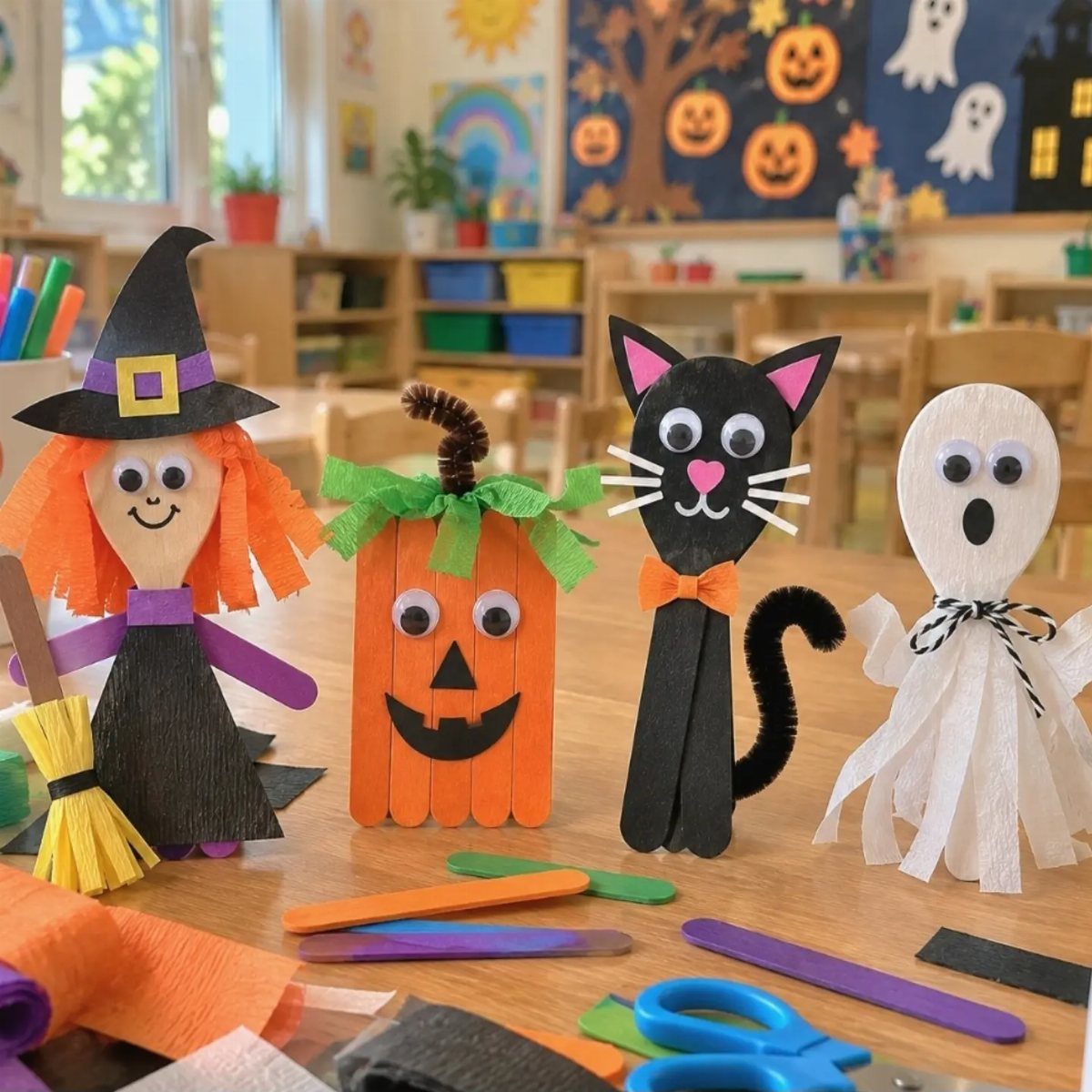
Craft sticks turn into a witch, a pumpkin, a cat or a ghost with paint, markers and a few paper details. They are cheap, flat and easy for small hands to hold.
Put out pre-sorted bowls of sticks and a glue bottle per table.
Let kids pick their character first, then decorate. A finished example on each table helps them see what to build.
Glue needs time to set, so plan these before a snack break and send them home at the end.
11. Witch Hat Ring Toss
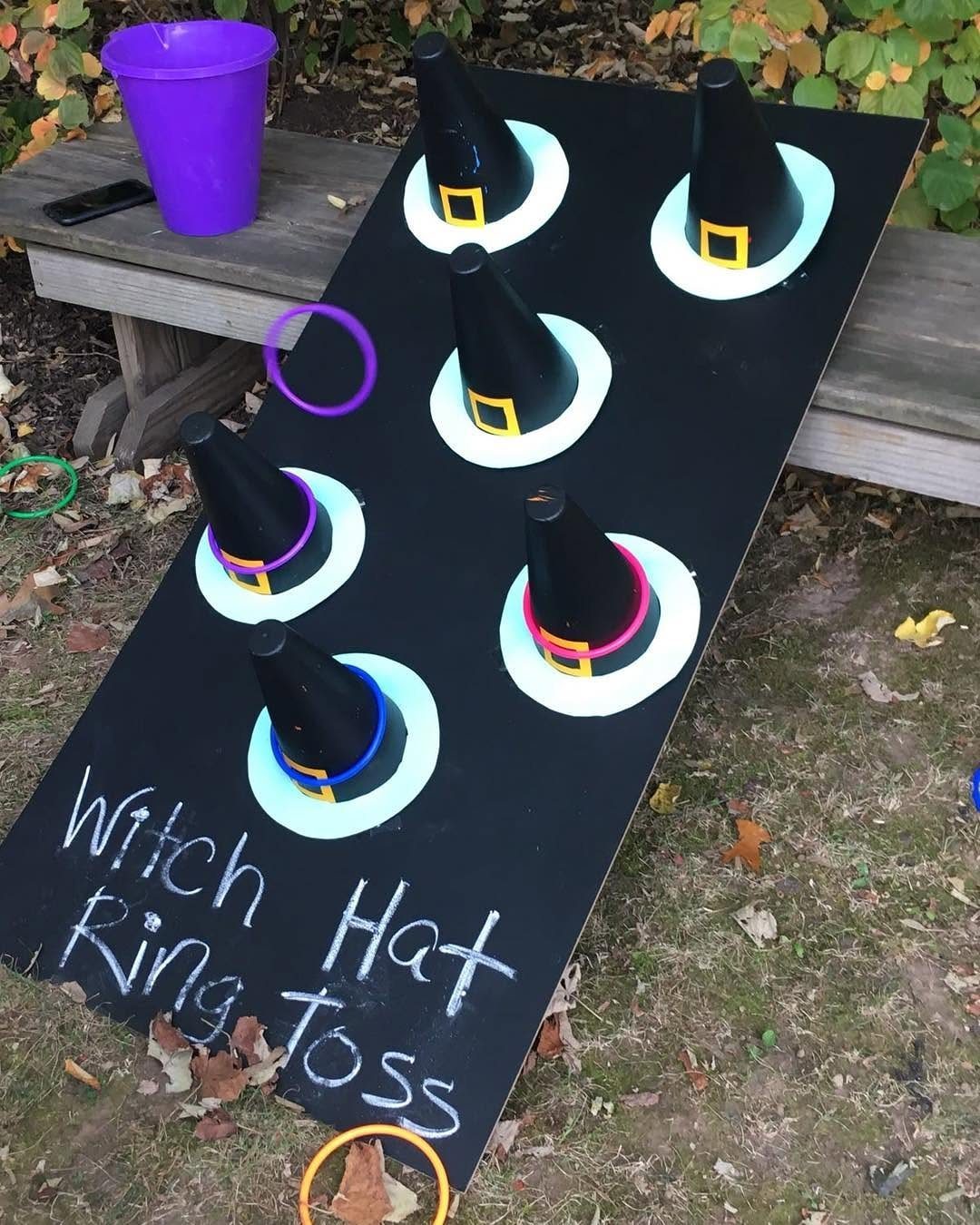
Black witch hats make a ring toss that kids understand at once: throw the ring, land it on the brim or tip. Mount 6 hats on a black board and set a bucket beside it to hold the rings.
Mark a throwing line with tape, close enough that every child scores at least once. Move the line back for a second round.
The outdoor setup suits grass and a bench. Indoors, I would use a rug so the rings don’t roll away.
12. Ghost Bowling
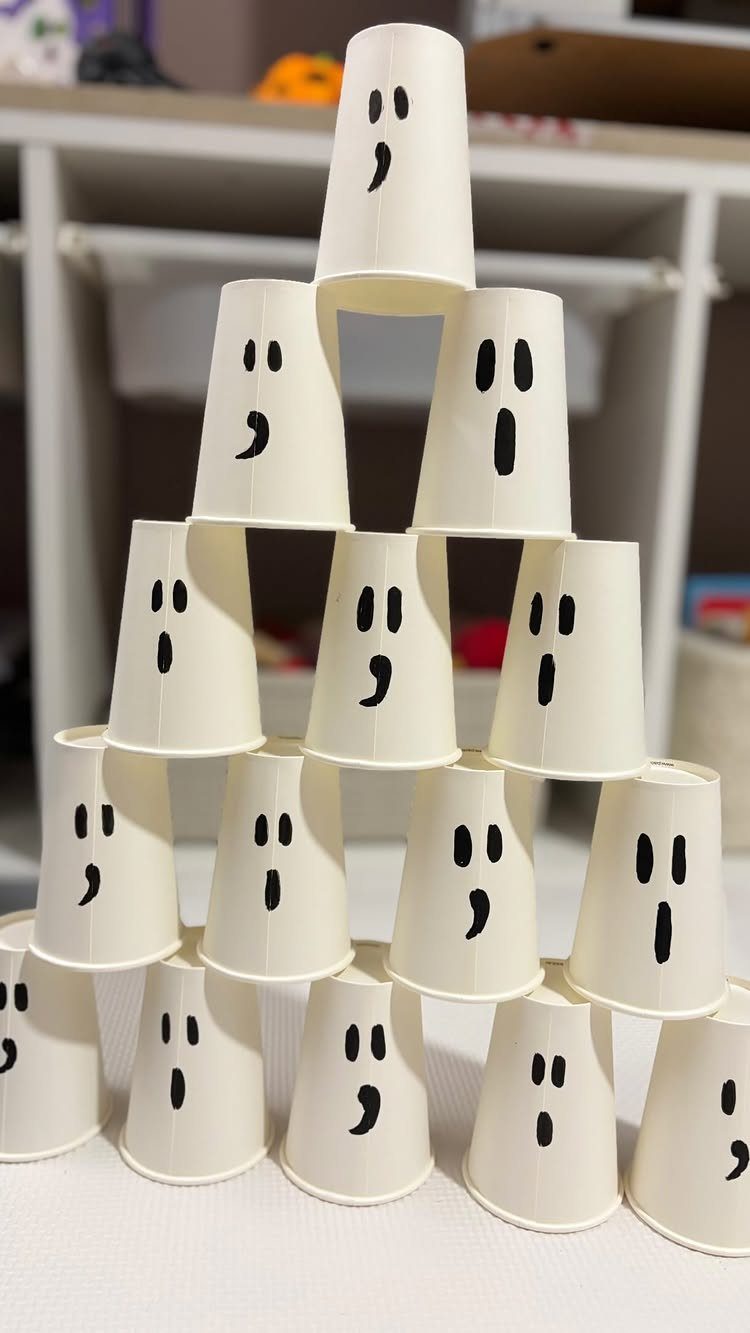
White paper cups with black ghost faces stack into a pyramid, and a soft ball knocks them down with a satisfying tumble. The faces are easy to draw with a marker, so the whole game costs very little.
Stack the cups fresh for each turn and let kids roll from a taped line. Give each child 2 tries, so the line keeps moving.
Cups crush under a heavy ball. I would use a light foam or rubber one.
13. Halloween Word Search
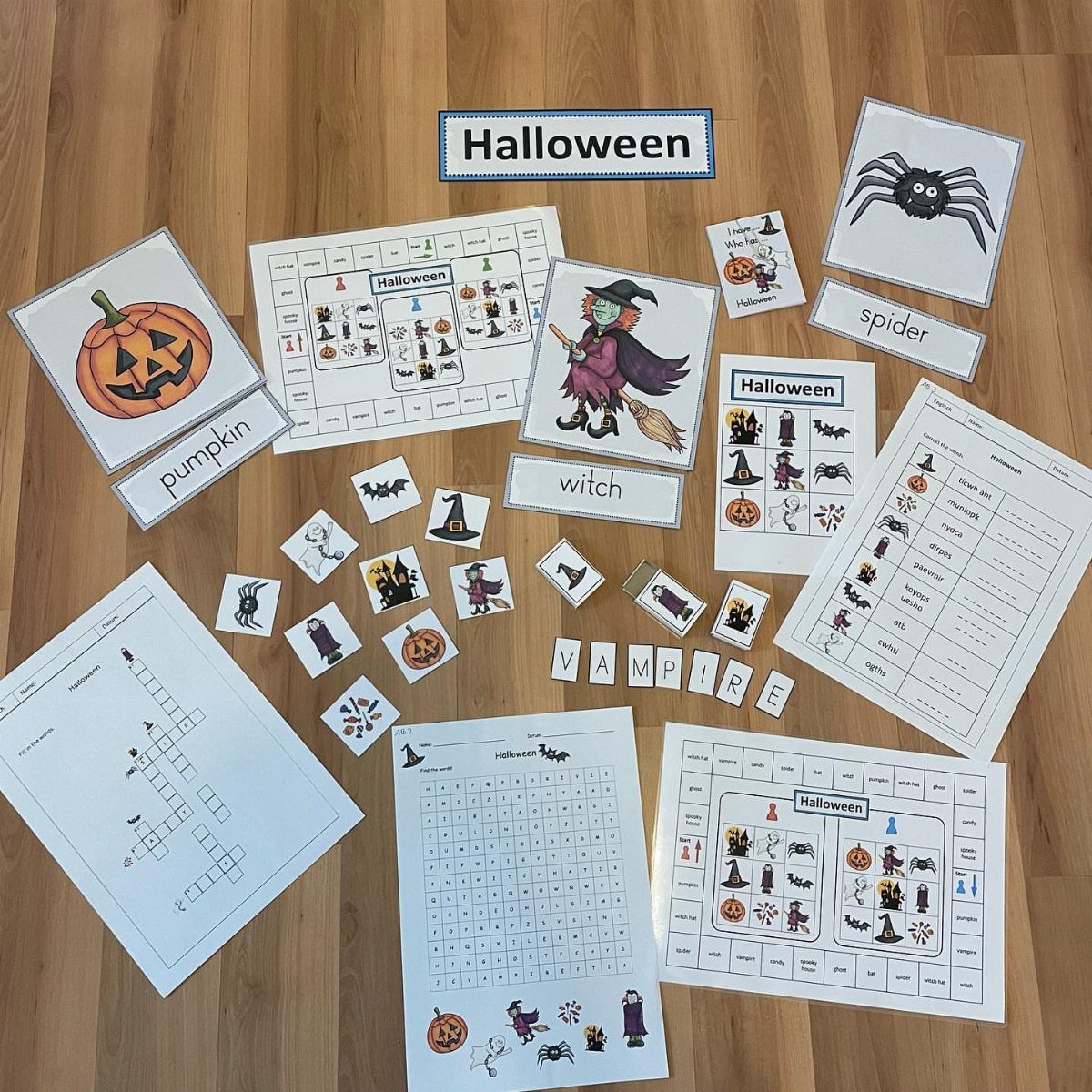
Word searches suit the end of the party, when the room needs to settle.
Pick a sheet with a short word bank and pictures beside each word, like pumpkin, witch and spider, so beginning readers can match shapes instead of decoding.
Hand out crayons rather than pencils, since circling a word with a fat crayon is easier for small hands.
A word search like this works best at a side table, where kids who finish early can settle in without a fuss.
14. Eyeball Toss Game
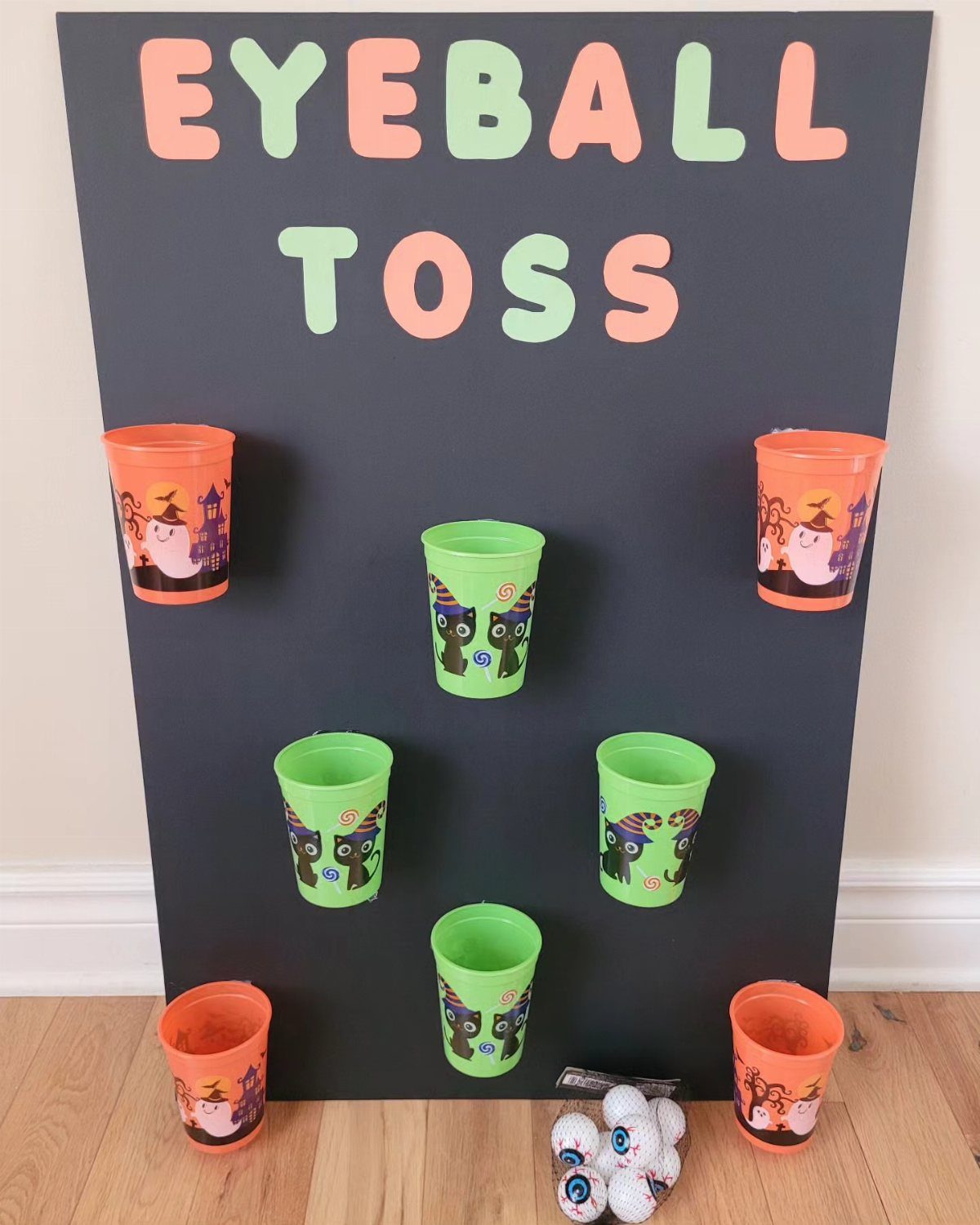
Plush eyeballs are the right ammo here: they are soft, they don’t bounce off the wall, and nobody gets hurt when one flies sideways.
Cups fixed to a black board give kids a target that looks like part of the decor.
Tape the cups on firmly, since a kindergartner will grab one to peek inside. Mark a throwing line on the floor and hand each child a small handful of eyeballs.
I would put the nearest cups at the bottom so every child scores.
15. Pin the Nose on the Pumpkin
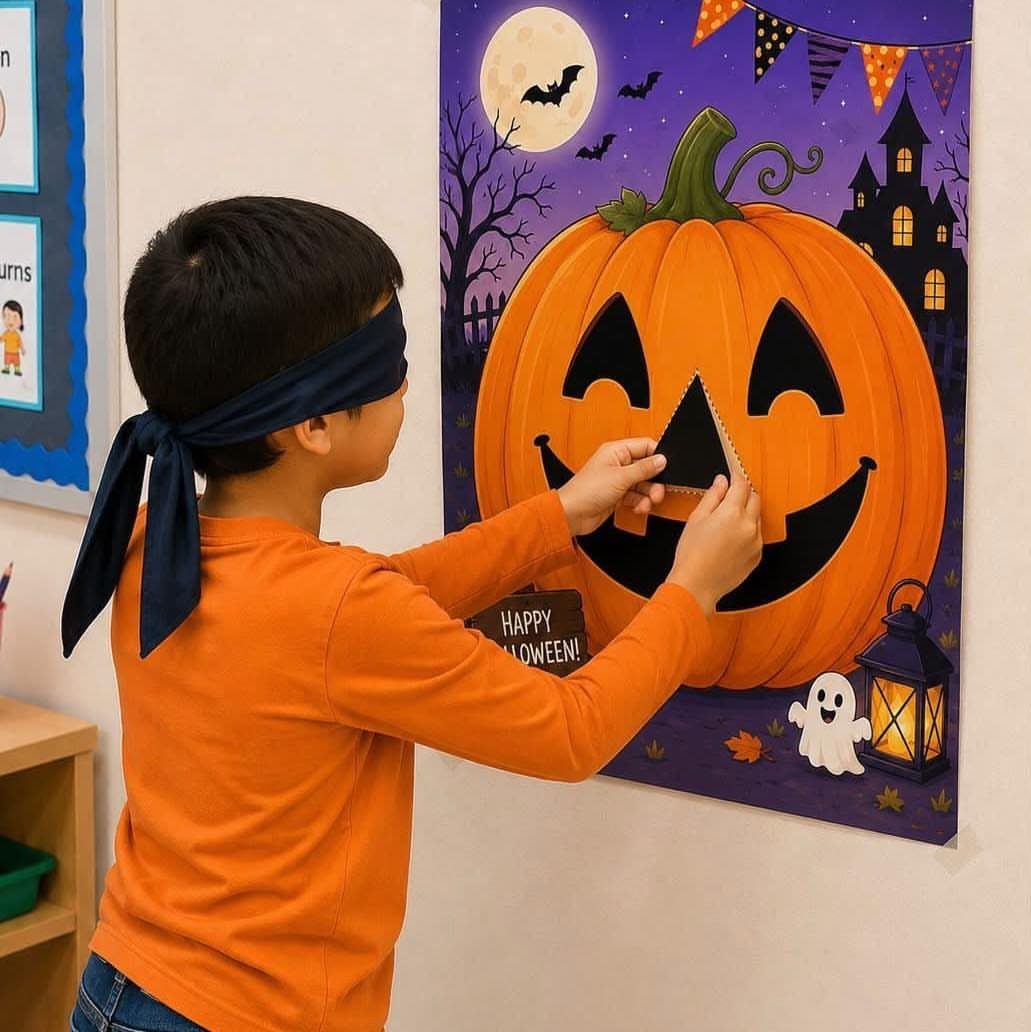
A blindfold turns a simple sticker game into a room-wide giggle, and a big pumpkin poster on the wall gives everyone a target to aim at.
Cut the noses from paper and loop tape on the back before the party starts.
Spin each child once, gently, then let them walk toward the poster. Mark each nose with the child’s name so the closest one is easy to spot.
Some kindergartners dislike blindfolds. I would let them close their eyes or cover them with their hands instead.
16. Boo Guess Who Bulletin Board
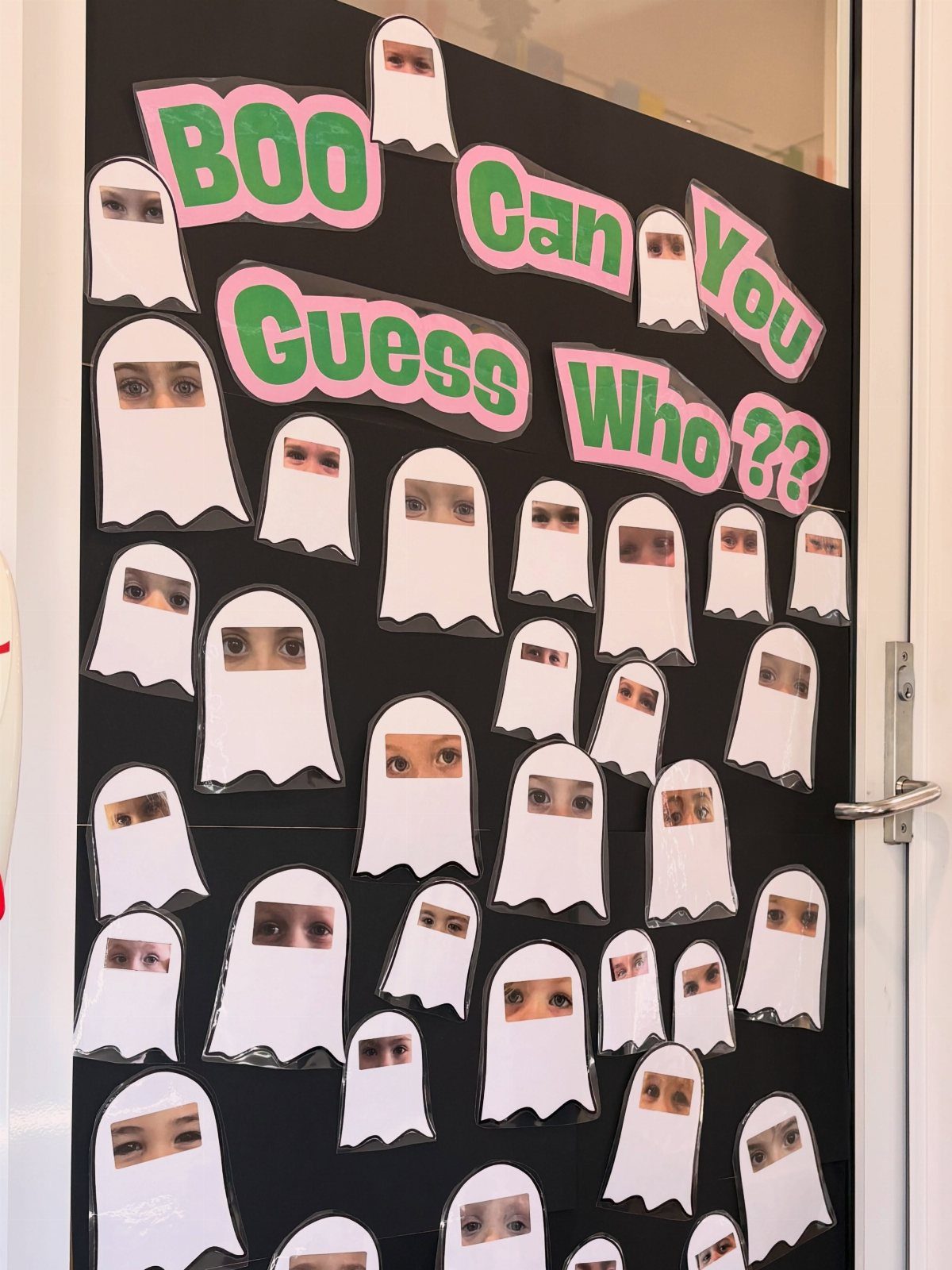
Kids love seeing their own eyes peek out from a paper ghost, and the guessing starts the second they walk past the board. A black background makes the white ghosts stand out.
Take each photo close up, with just the eyes in frame, and print them at the same size so the cutouts match.
Glue the photo behind a ghost-shaped window, and add a small flap if you want kids to lift and reveal the name.
Put the board at child height, on a door or wall by the entrance.
17. Halloween Snack Platter
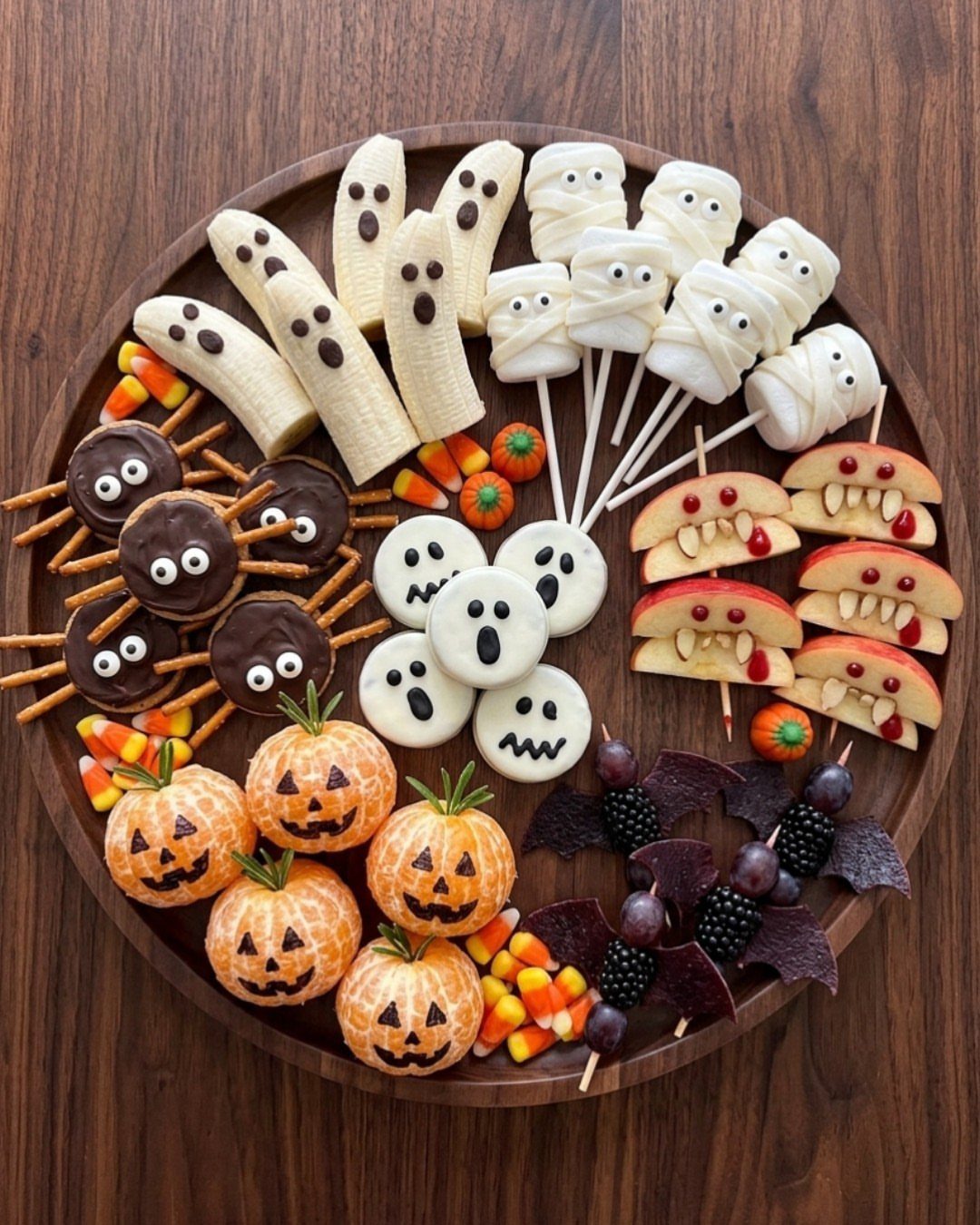
Banana ghosts, marshmallow mummies and apple-slice vampire teeth make a platter that looks like a party and reads as real food. Fruit does the heavy lifting here, so the sugar stays low.
Most of it can be made the morning of: peel and cut the bananas last, since they brown quickly. Chocolate spider cookies and pumpkin rolls can be bought to save time.
Check ingredients before the party and label anything with nuts or dairy.
18. Cardboard Box Haunted House
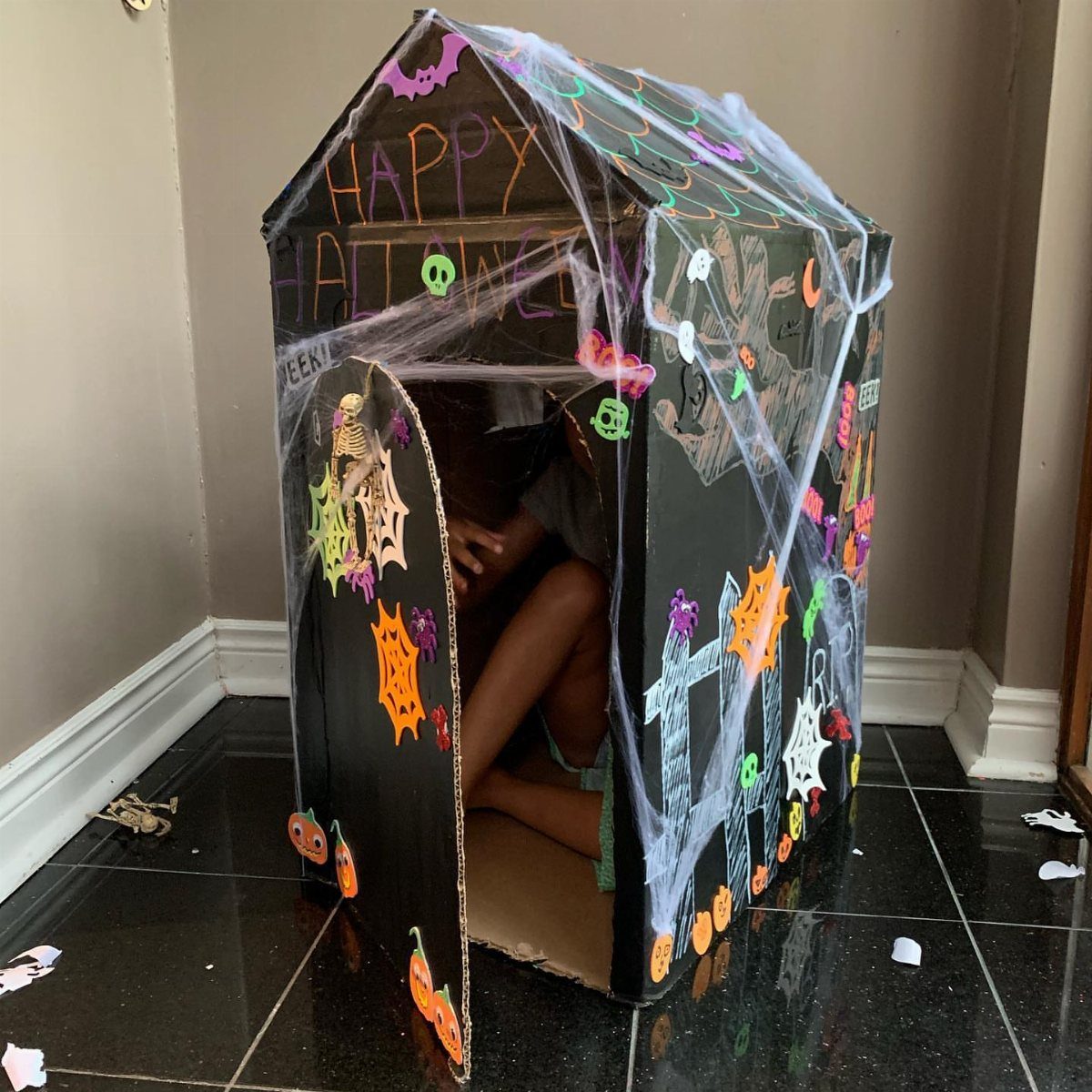
A black cardboard playhouse works as a haunted house a kindergartner can actually crawl into. White spiderwebs and kid-style drawings cover the walls, and a "HAPPY HALLOWEEN WEEK!" message over the door tells everyone what it is.
Let the class draw the decorations themselves with markers or chalk-style pencils, so the house looks like theirs. Add the webs last, once the drawings are done.
Kids will want to go in one at a time. I would set a small floor mat inside and let each child sit for a short turn so the line keeps moving.
19. Decorated Halloween Doughnuts
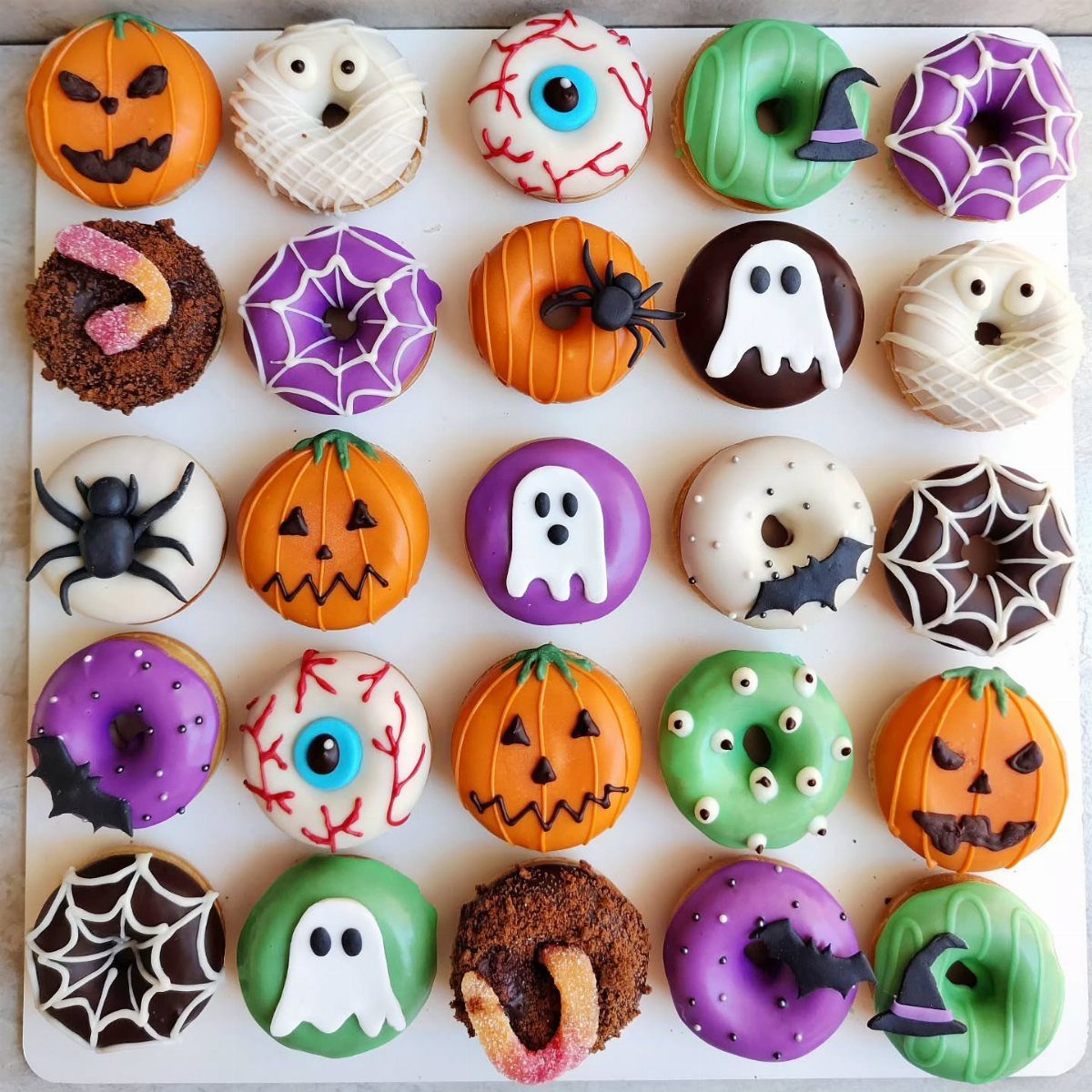
Doughnuts are the one treat where the decorating is already half done. Buy plain glazed or frosted rounds and let the icing do the work: orange for pumpkins, white for ghosts, a dot of black for eyeballs.
Pre-decorate a batch the night before and add a few for kids to finish with candy eyes at the party. Give each child 1 doughnut, since the sugar adds up fast.
Store-bought saves hours.
20. Halloween Cupcake Display
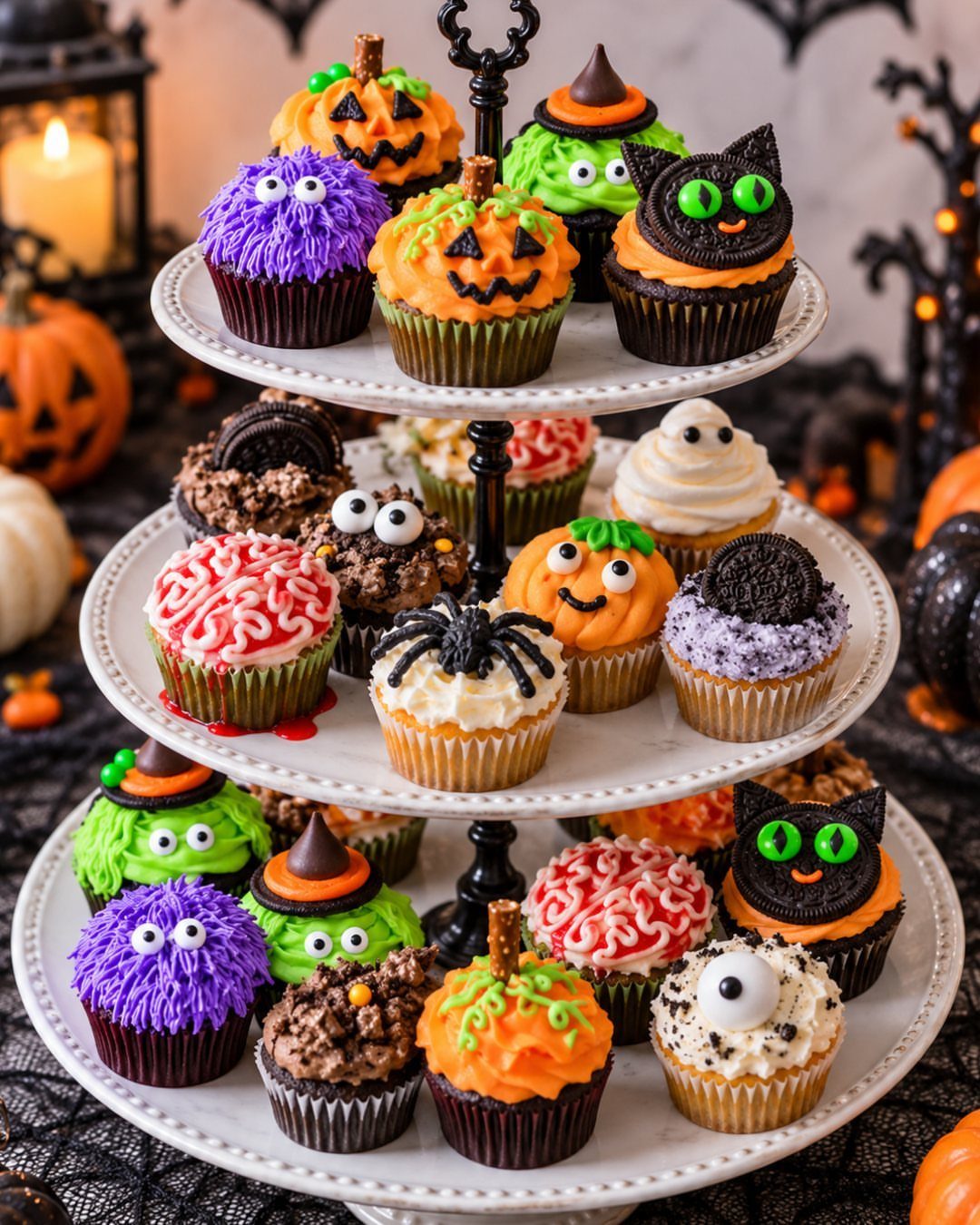
A tiered stand makes ordinary cupcakes look like a party centerpiece. Stack the ghosts, monsters, black cats and pumpkins on 3 levels, and the table needs little else.
Bake or buy plain cupcakes and keep the toppers simple, since a kindergartner will judge a cupcake by its face. Put the stand at the center of the table, out of easy reach, until it is time to eat.
I would pass cupcakes out on napkins rather than let small hands pick from the stand.
21. Paint Splatter Monsters
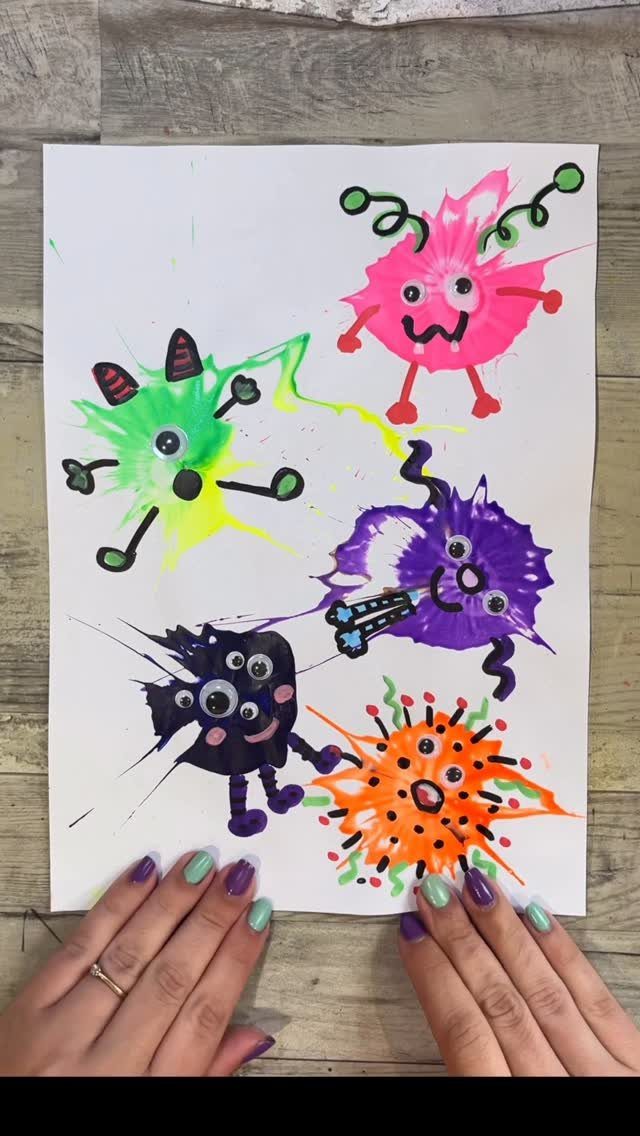
Splattered paint is a rare craft where a mess turns out to be the starting point.
Kids drip or flick blobs onto white paper, and once the paint dries, googly eyes and drawn legs turn each blob into a friendly monster.
Let the paint dry fully before adding eyes, or they will slide. Use washable paint and cover the tables first.
I would do the splatter step first and the monster step after a snack break.
22. Eyeball Ping Pong Stacking Game
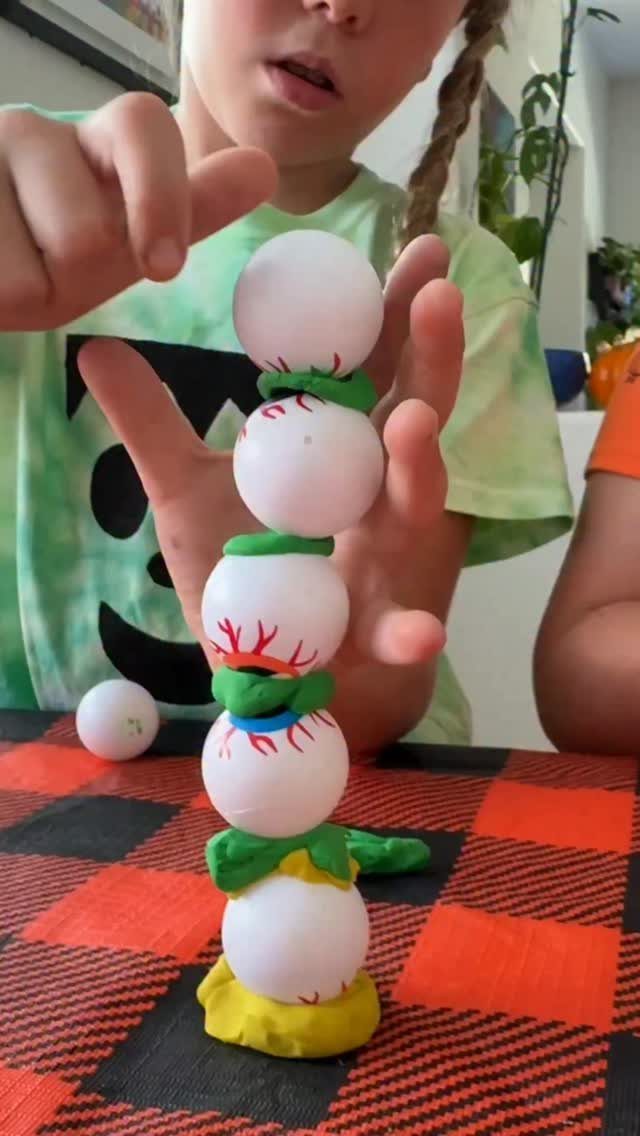
Ping pong balls painted as eyeballs become a stacking challenge when modeling clay is the glue between them. A tower of 5 is a good goal for little hands.
Paint the balls ahead of time and let them dry fully. Give each child a pinch of clay per joint, and a few extra balls for the ones that topple.
Set this on a flat table, not the floor, so the tower has a chance. Rolling balls will escape, so I would keep a bowl nearby.
23. Pumpkin-Shaped Finger Sandwiches
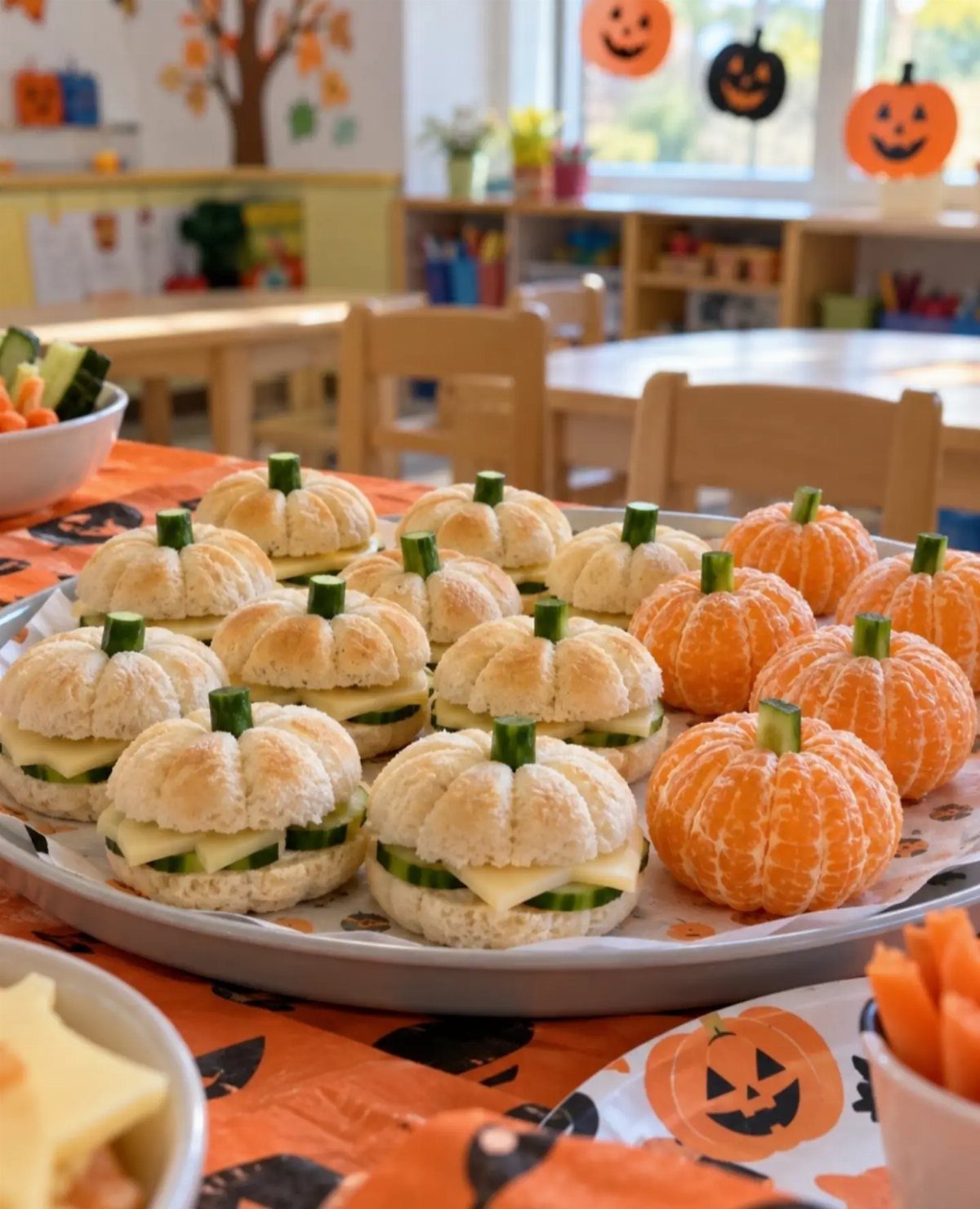
Cookie cutters turn plain sandwiches into little pumpkins, and peeled mandarin oranges make a matching fruit side. Both are easy for kids to pick up and eat.
Use a pumpkin cutter on soft bread and pick a filling most kids like, such as cheese or jam. Cut the sandwiches the morning of the party so they stay soft.
Check for allergies before choosing fillings, and label the tray. Crusts left over from cutting make a good snack for the helpers.
24. Pretzel Broomstick Treats
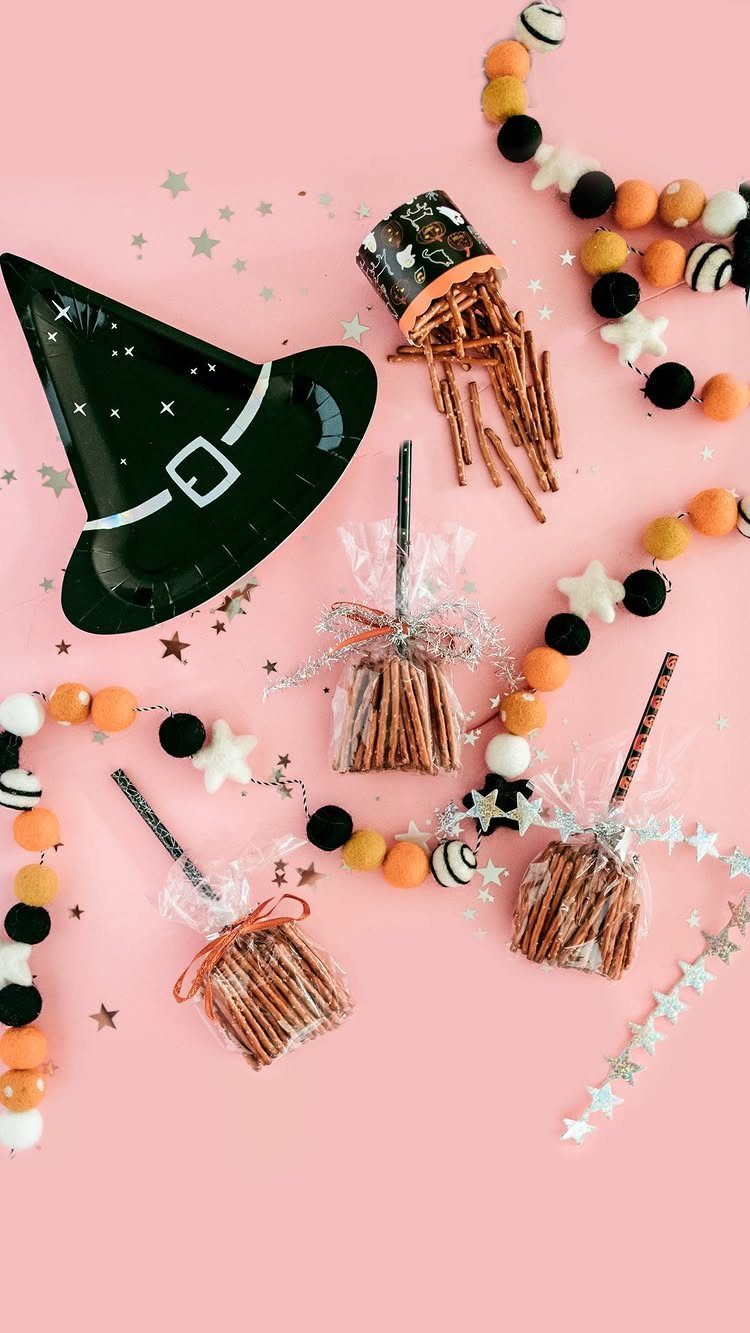
Pretzel sticks bundled with a ribbon become tiny brooms, and a straw handle completes the look. Each one goes in its own bag, so no one has to share a bowl.
Tie the bundle at one end, then fan out the bristles. These are quick to assemble in a batch, so I would make them a day ahead.
Pretzels are a lighter pick than candy, which makes them a good swap for treat bags.
Peanut and tree nut allergies show up in nearly every kindergarten class, so read the pretzel and cheese stick labels first and tag each bag with its contents.
25. Gym Pumpkin Throw Game
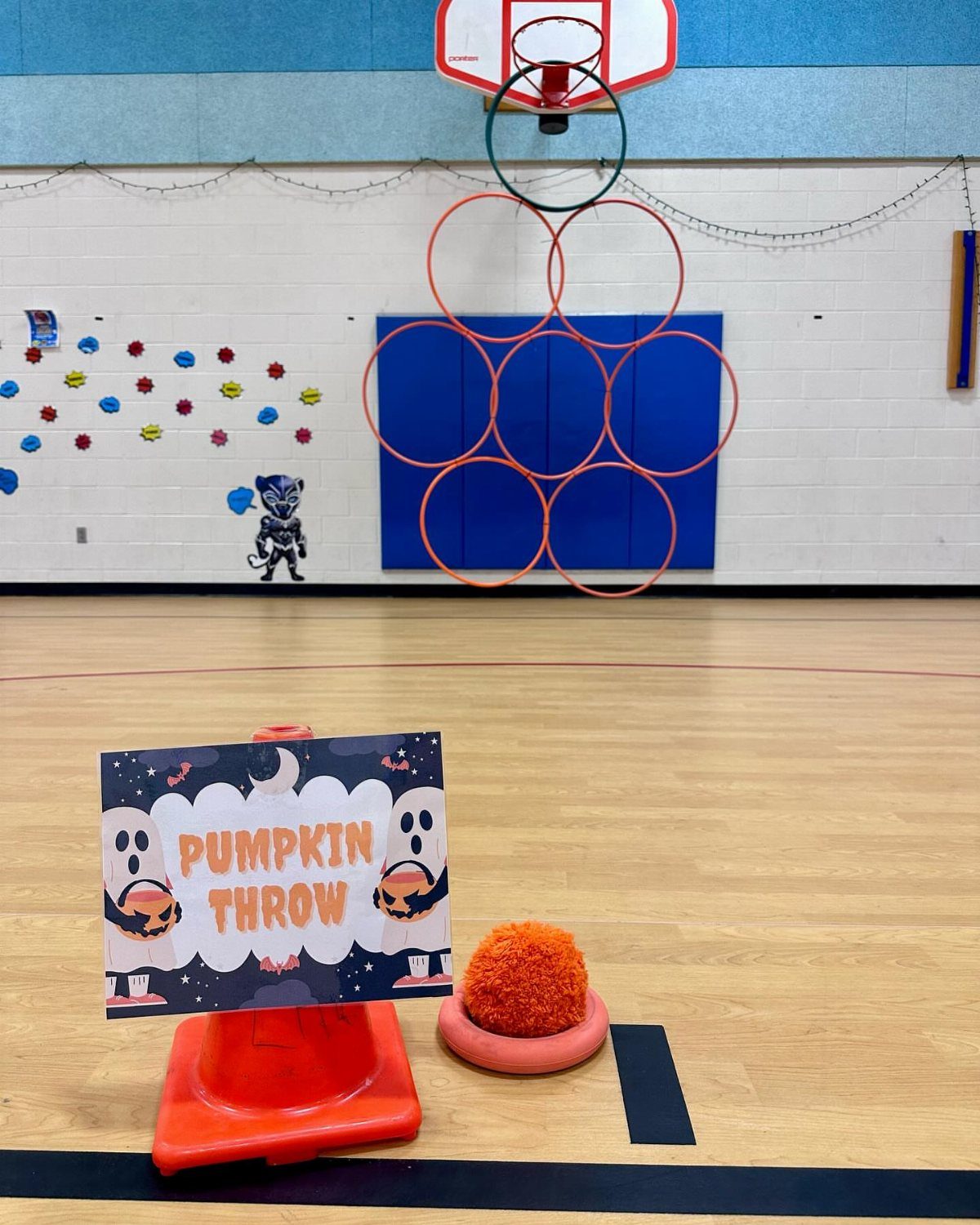
Upright hula hoops turn a gym into a throwing range: kids toss a plush pumpkin through the hoop, and the soft landing keeps the game friendly for the youngest players.
Stand each hoop on its edge, or hang it from the hoop’s own support, and tape a throwing line on the floor. A big "PUMPKIN THROW" sign tells kids where to line up.
Plush is the right choice indoors, since a pumpkin that bounces off a wall hurts nobody. I would keep a basket nearby for retrieving strays.
Planning and Preparation Tips
Order the party before you buy anything. Eat first, move around second, and finish with a craft or a table activity, so the kids wind down as the party ends.
Then run each game with your class a day or two early. Kindergartners who already know the rules and what you expect of them need far less explaining on party day, and you spend that time helping instead of herding.
Gather every supply into one bin per activity ahead of time. When the party starts, you hand out bins instead of hunting for glue.
Snack Ideas
Many schools require snacks to be prepackaged and allergy friendly, so ask the teacher about the rules before you plan a single item. Follow the school’s guidelines even when a homemade idea looks better.
A snack table lets kids take a break from activities, sit down with their friends and get their energy back. Pair fruit or a veggie platter with one small treat, and the sugar crash stays manageable.
Setting out a teal pumpkin tells families you have non-food treats available for kids who can’t have certain foods. Creepy-crawly toys or small crafts work well, and nobody feels left out.
If you send invitations, ask guests about dietary requests there.
Decorations
Classic Halloween imagery covers the room with little effort: bat balloons, plastic spiders, cobwebs, skeletons, a cauldron, pumpkin string lights and window clings. Pick 3 or 4 of these instead of all of them, and the room still looks festive.
Mini pumpkins do double duty as a craft and as decor. Painting is much faster than carving, so put out paint, stickers, googly eyes and sequins.
If they can’t decide what to draw, suggest a ghost, a robot, or their future job. Set the finished pumpkins by the classroom door or send them home for the front step.
A memorable Halloween party is one that will keep your guests engaged all night long. This means hosting fun games throughout the day, from pin the spider and spooky bingo to a pumpkin sweep race and costume contest.
Frequently Asked Questions
What are some fun Halloween activities for 5-year-olds?
Halloween bingo with picture cards and a witch hat ring toss are two of my favorites, because kindergartners already understand how both work.
Picture bingo works for kids who can’t read yet, and a ring toss keeps everyone happy if the line is set close enough that each child lands at least one ring. Keep each game short so the energy lasts.
What are some Halloween treat ideas for kindergarteners?
Decorated doughnuts and pretzel broomsticks are easy winners. Buy plain glazed or frosted doughnuts and add orange, white or black icing, giving each child 1 so the sugar stays in check.
Pretzel sticks tied with ribbon into little brooms are lighter than candy, but read the labels first, since nut allergies are common in kindergarten classes.
What are some fun Halloween party ideas for schools?
Pick a mix of one snack, one or two games and a craft, and order them so kids eat first, move second and wind down with a table activity.
A scavenger hunt with picture checklists, a costume parade and a paper ghost craft all suit a classroom.
Food comes last in my planning, because many schools only allow prepackaged, allergy-friendly snacks and the office can tell you the rules in a minute.