Classroom looks in this list run from a printer-only Composition Notebook wall to a Space ceiling of hanging planets or an Under the Sea ceiling of turquoise fabric, and from a single door to a full Treehouse Reading Nook.
1. Rainbow Classroom Theme
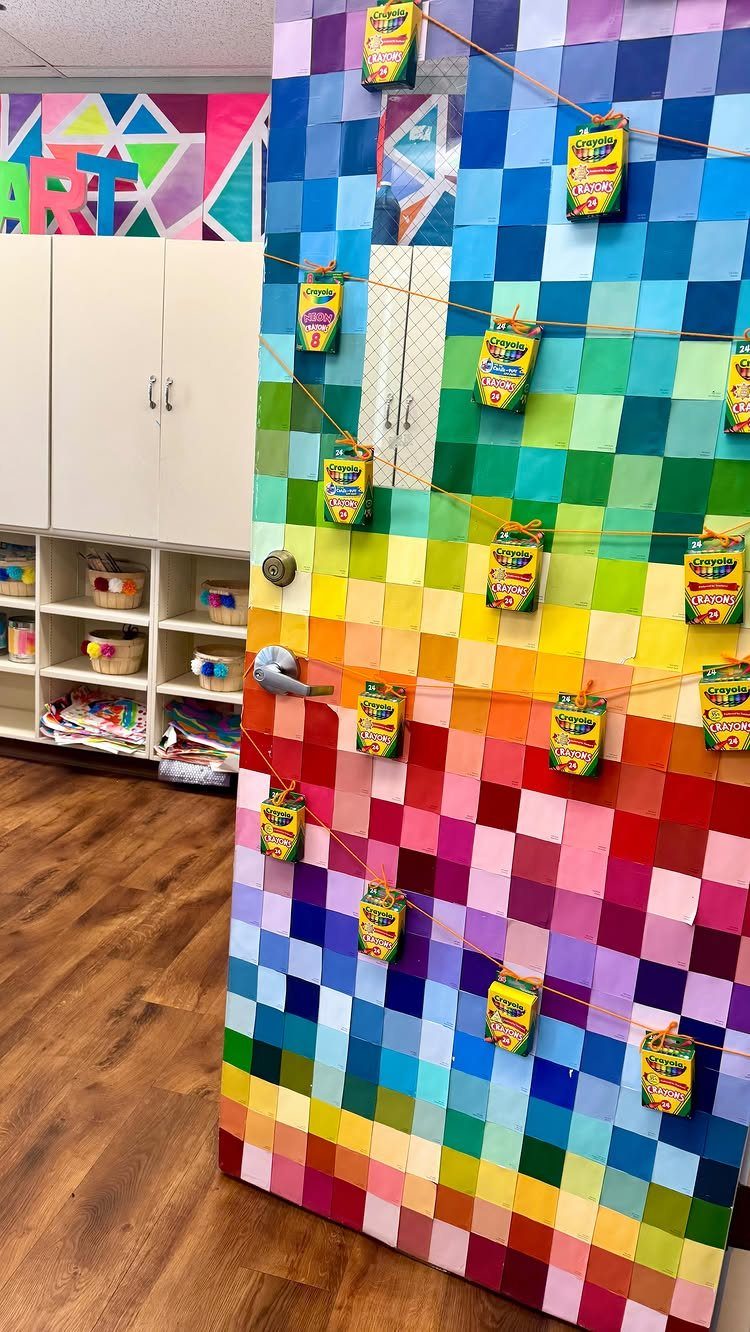
Crayon boxes hanging from orange strings turn a plain wall into a supply station, and that is why this rainbow works for organization.
Each color square can mark a zone: a spot for snacks, a spot for supplies, a spot for notes.
Paper squares cost very little, so this suits a tight budget. Short strings, cut so the ends hang within a child’s reach, let kids touch and rearrange the pieces without a chair.
2. Boho Rainbow Theme
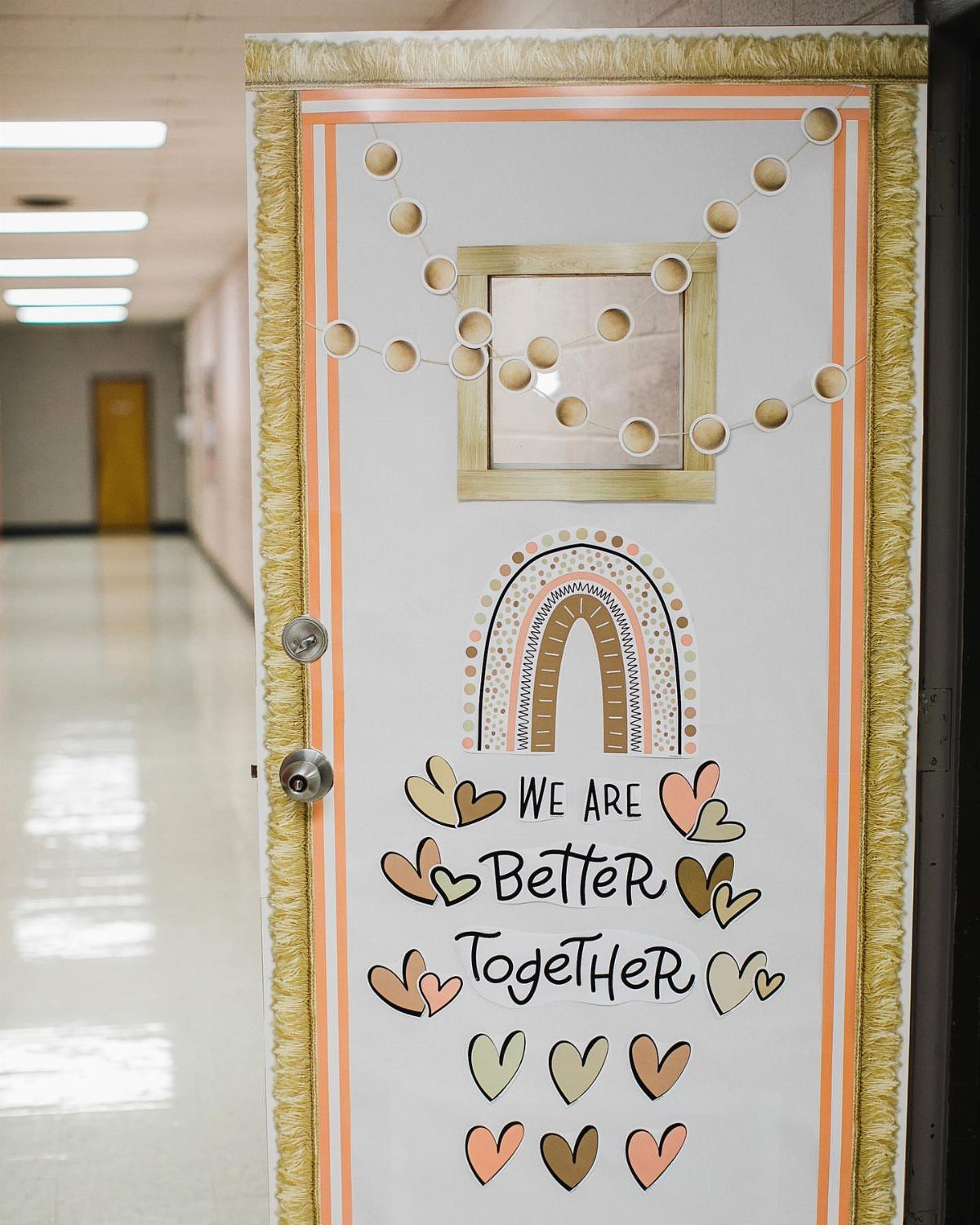
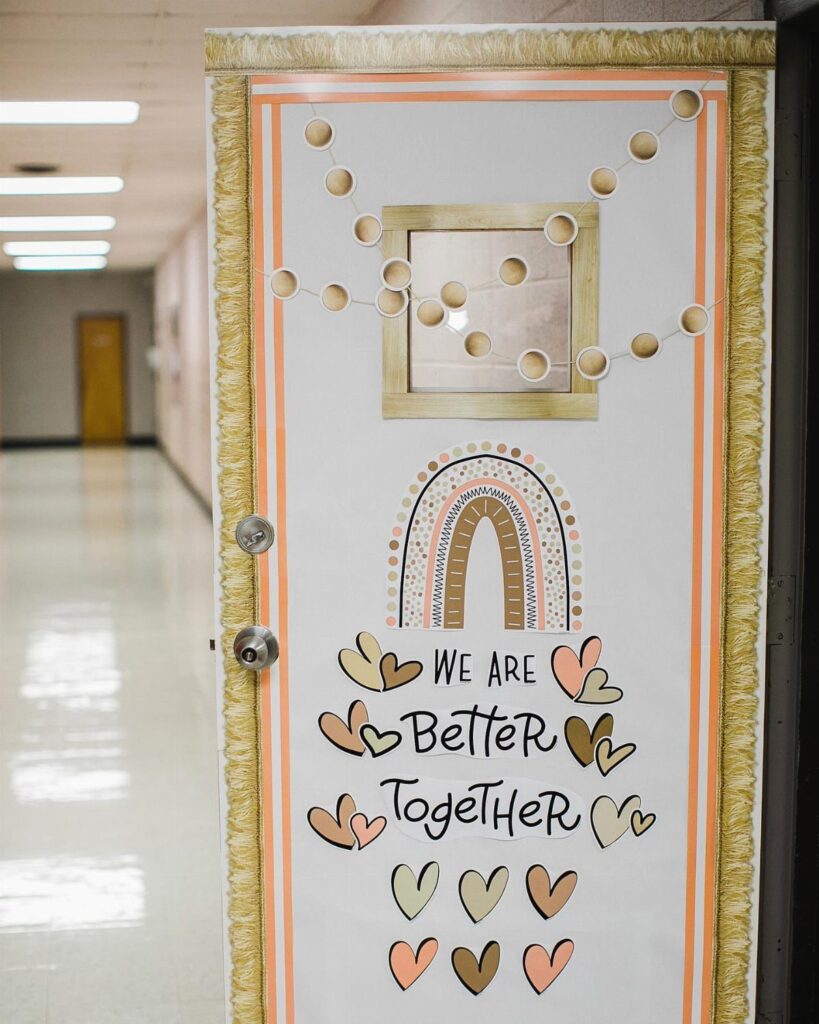
A door is the cheapest place to try a boho look, since one rainbow arc, a few hearts and a white garland carry the whole theme. Muted, soft-edged colors keep it calm rather than loud.
Cut the arcs from construction paper in nested bands, then add the message last so you can size it to the space left. "We Are Better Together" is a line I would copy as is.
3. Wildflowers and Butterflies Theme
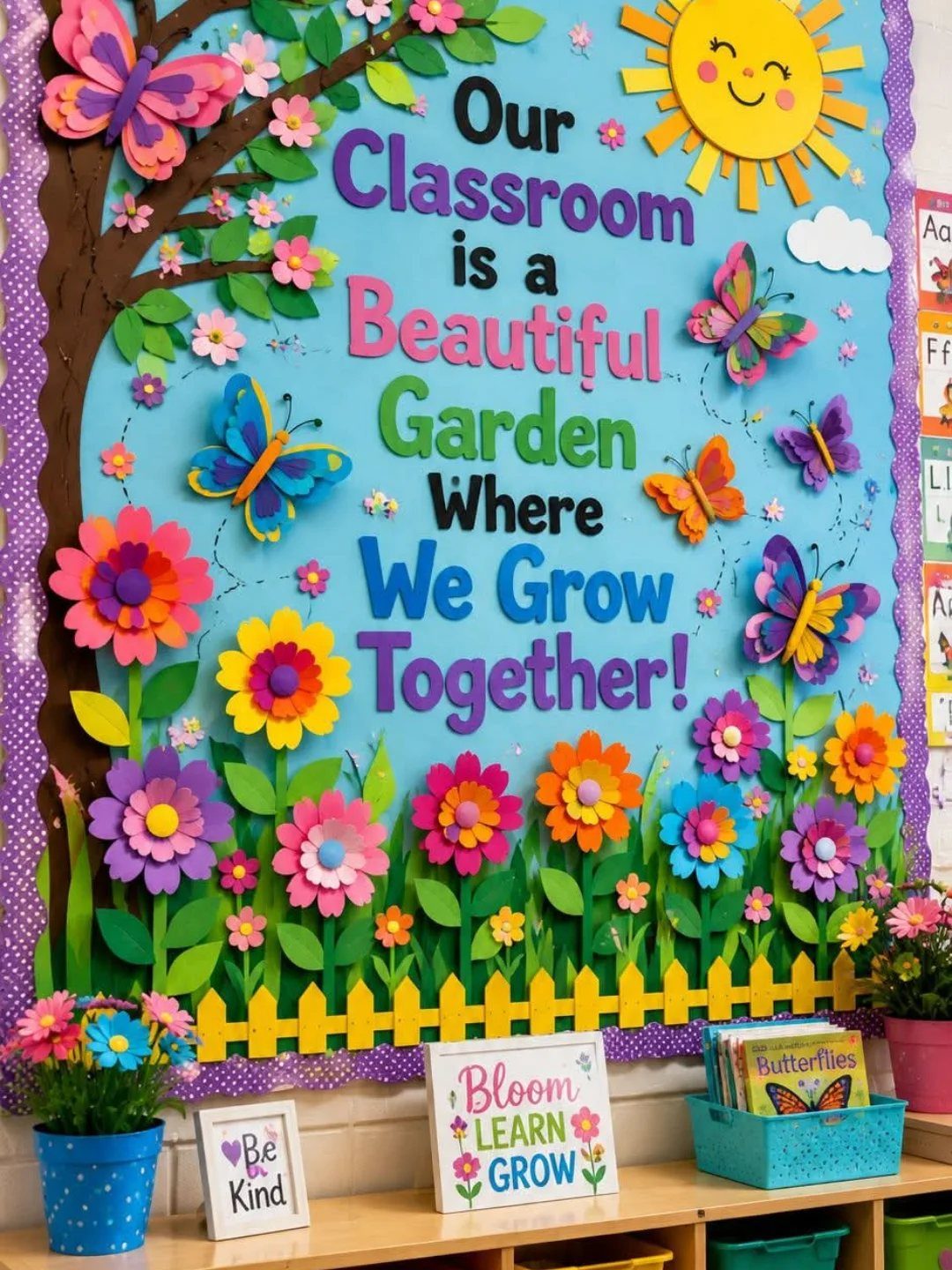
Garden themes ask for layers, so build the board in stages: tree and sun first, then flowers, with butterflies added last. Paper cutouts do the job, and students can make the flowers and butterflies themselves, which saves you hours.
Short phrases like "Bloom, Learn, Grow" read well from across the room. A soft palette makes the board read as a garden and not a craft fair, so pastels and muted greens win over bright primaries.
4. Superhero Classroom Theme
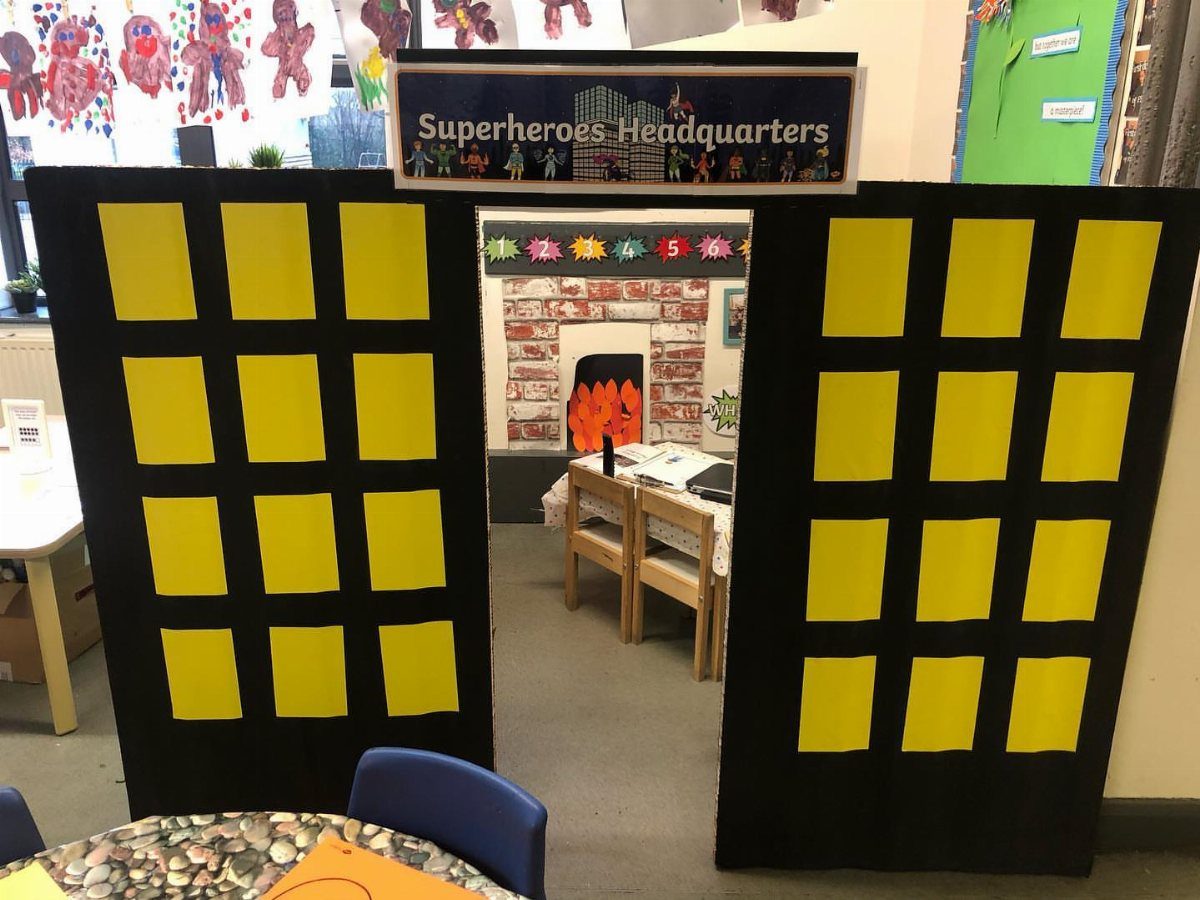
Black and yellow grid panels give a superhero corner a comic-book look at a glance. Hang them as curtains around a reading spot and the space reads as a headquarters.
Add a sign, some paper stars and a backdrop, and you have an entrance students will want to walk through.
Of everything here, I would spend the most effort on that sign, because it sets the tone for the whole room.
5. Chalkboard Theme
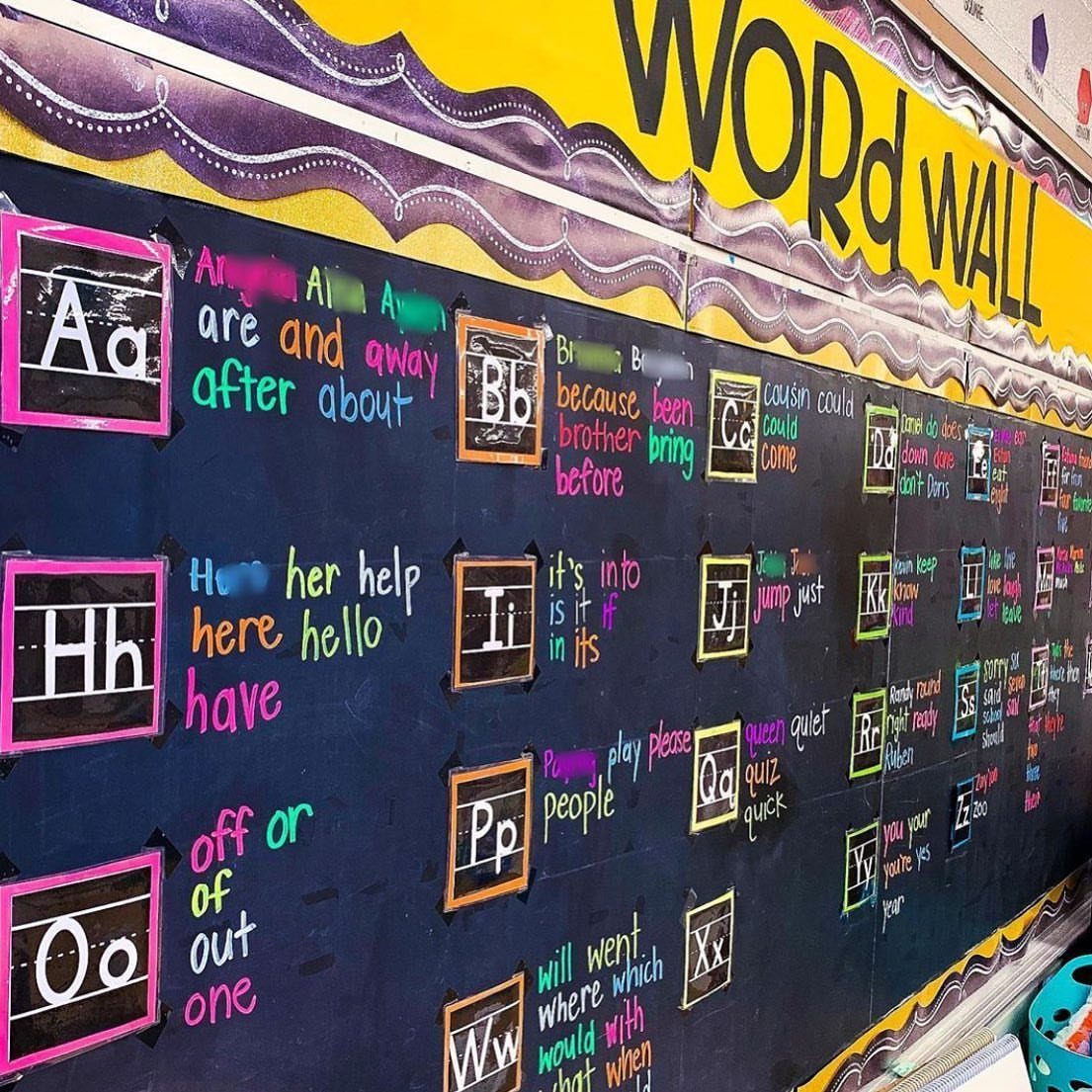
A dark chalkboard background makes bright lettering pop, which is why a word wall suits this theme so well. Give each letter its own column of vocabulary words, and the wall becomes a daily reference tool, not just decor.
Neon or white lettering reads best against black.
6. Under the Sea Theme
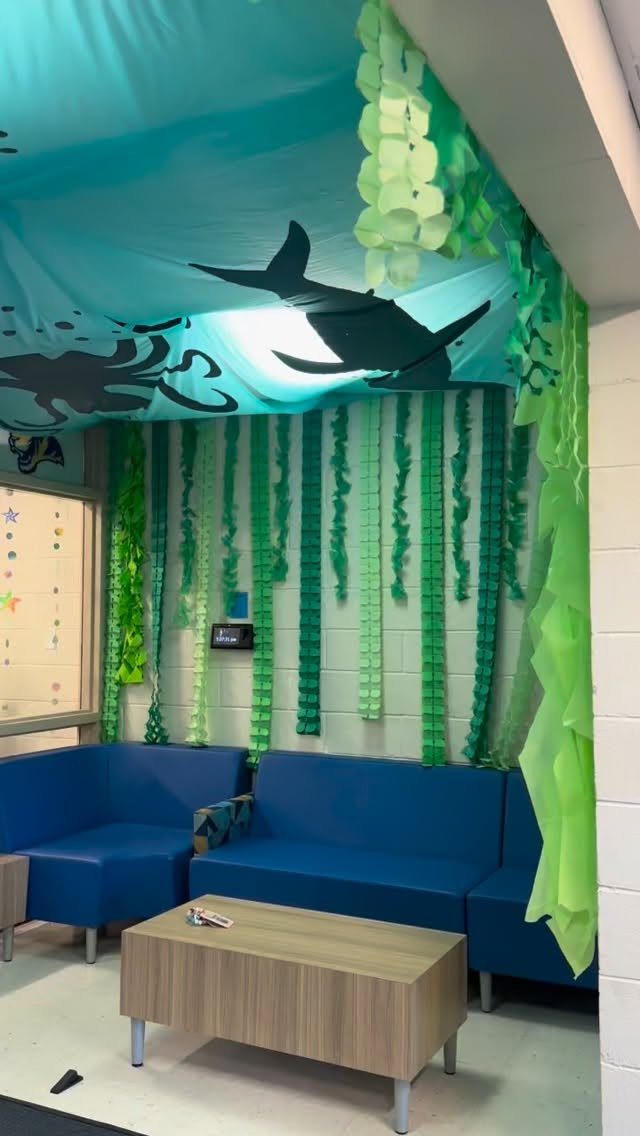
Fabric overhead does most of the work in an ocean room. A turquoise ceiling with black shark and octopus cutouts makes students feel they are under the water, and green streamers hanging down read as seaweed.
I like this version because the big effects sit up high, leaving floor space free for learning.
7. Groovy Retro Theme
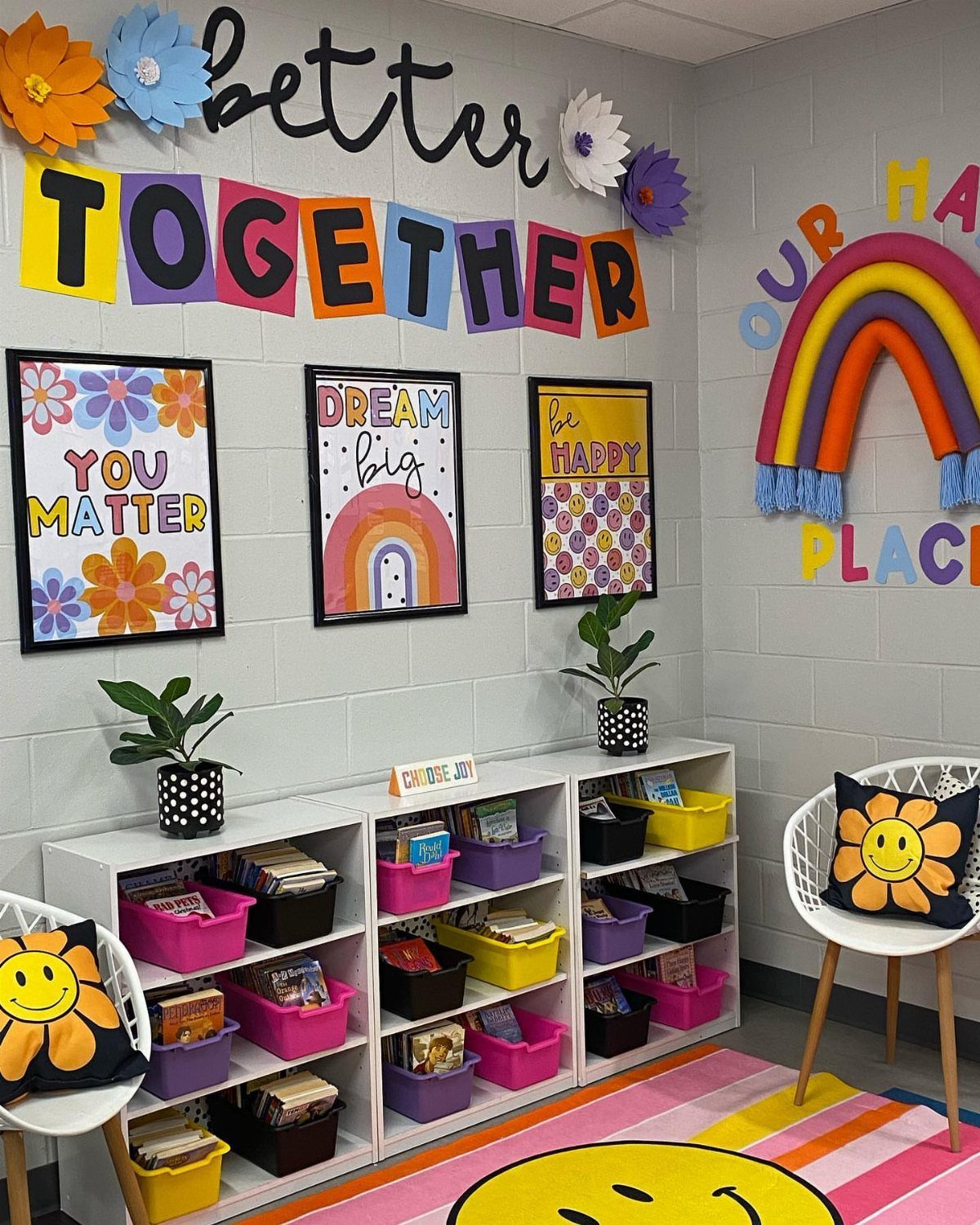
Smiley face pillows and a rainbow on the wall tell you this corner is groovy before anyone reads a sign. Short, upbeat phrases like "You Matter" and "Dream Big" keep the retro look friendly.
White shelves and colorful bins give the bright colors a calm base, so the corner stays cheerful rather than busy. I would copy that balance: let the bins and pillows carry the color and keep the furniture plain.
8. Composition Notebook Theme
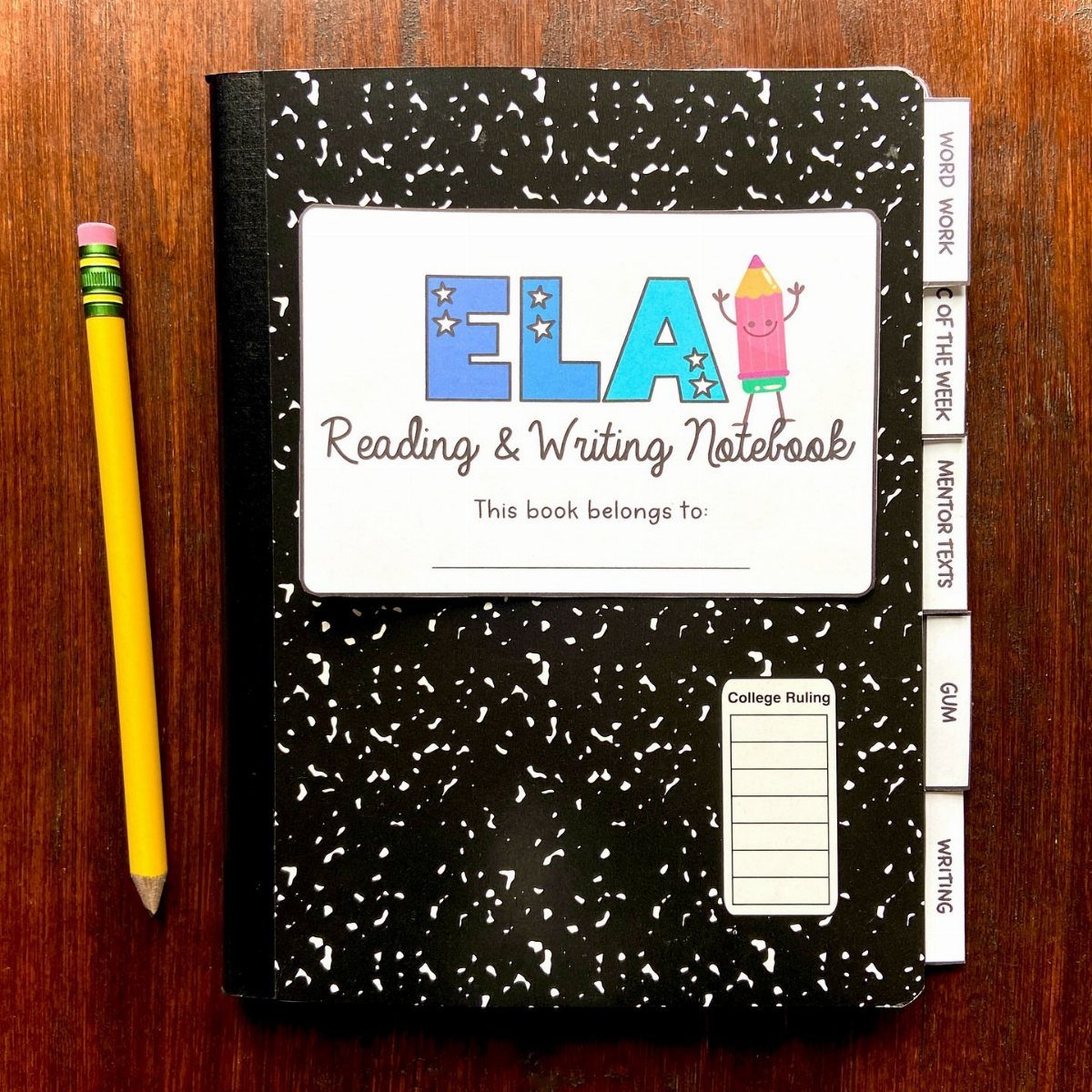
A composition notebook cover is a theme you can build with a printer. A speckled black and white pattern, a label and some tabs turn a student notebook into a class-wide look.
Labeling by subject, like "ELA Reading & Writing Notebook," makes the idea useful as well as cute, since students can find their own book at a glance.
Bright tab colors give you the pop of color, and the classic notebook design keeps it tidy.
9. Camping Classroom Theme
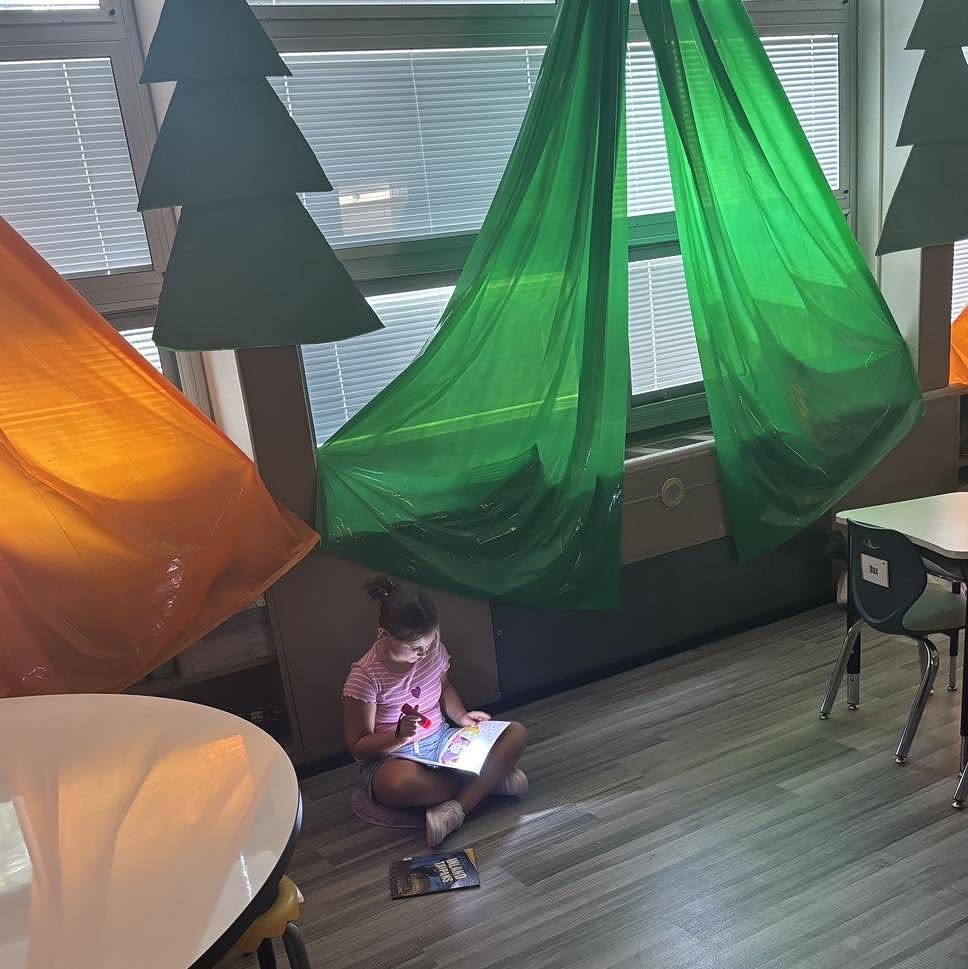
Fabric tents and cardboard pine trees give a reading spot a campsite feel without a single outdoor supply.
Cardboard trees are free if you save shipping boxes, which suits a small budget. Keep the tents low and the floor open so the corner stays a cozy place to read.
10. Safari Classroom Theme
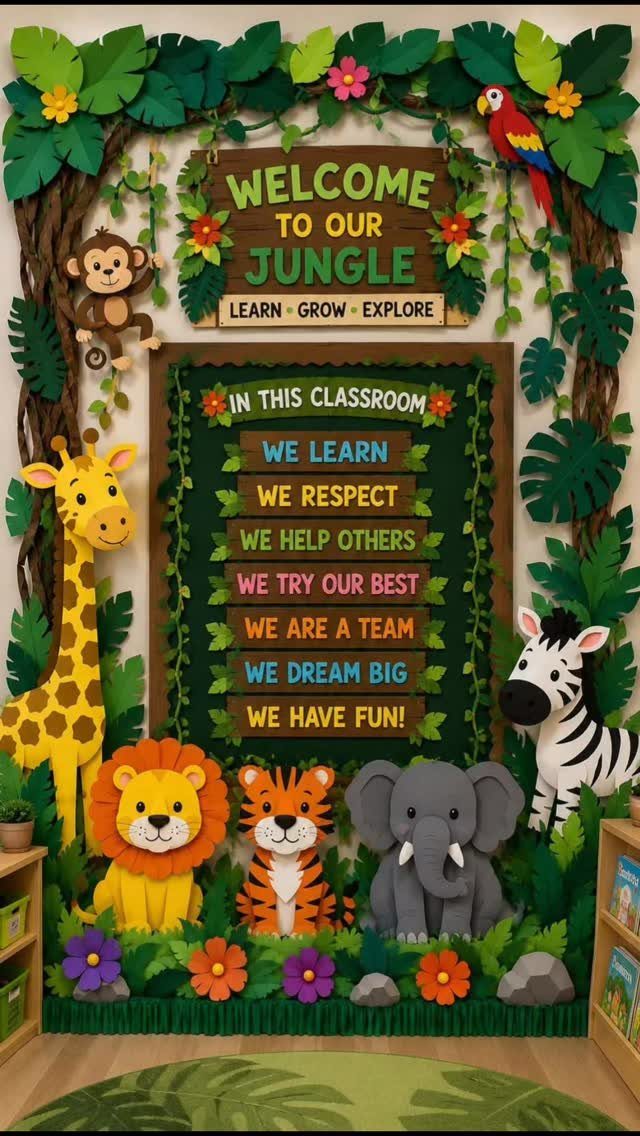
The welcome sign reads from the doorway, and the animals and leaves fill in around it.
Putting the class rules on the same board is a smart use of space: students see them beside the cartoon animals, not on a separate poster.
11. Donut Classroom Theme
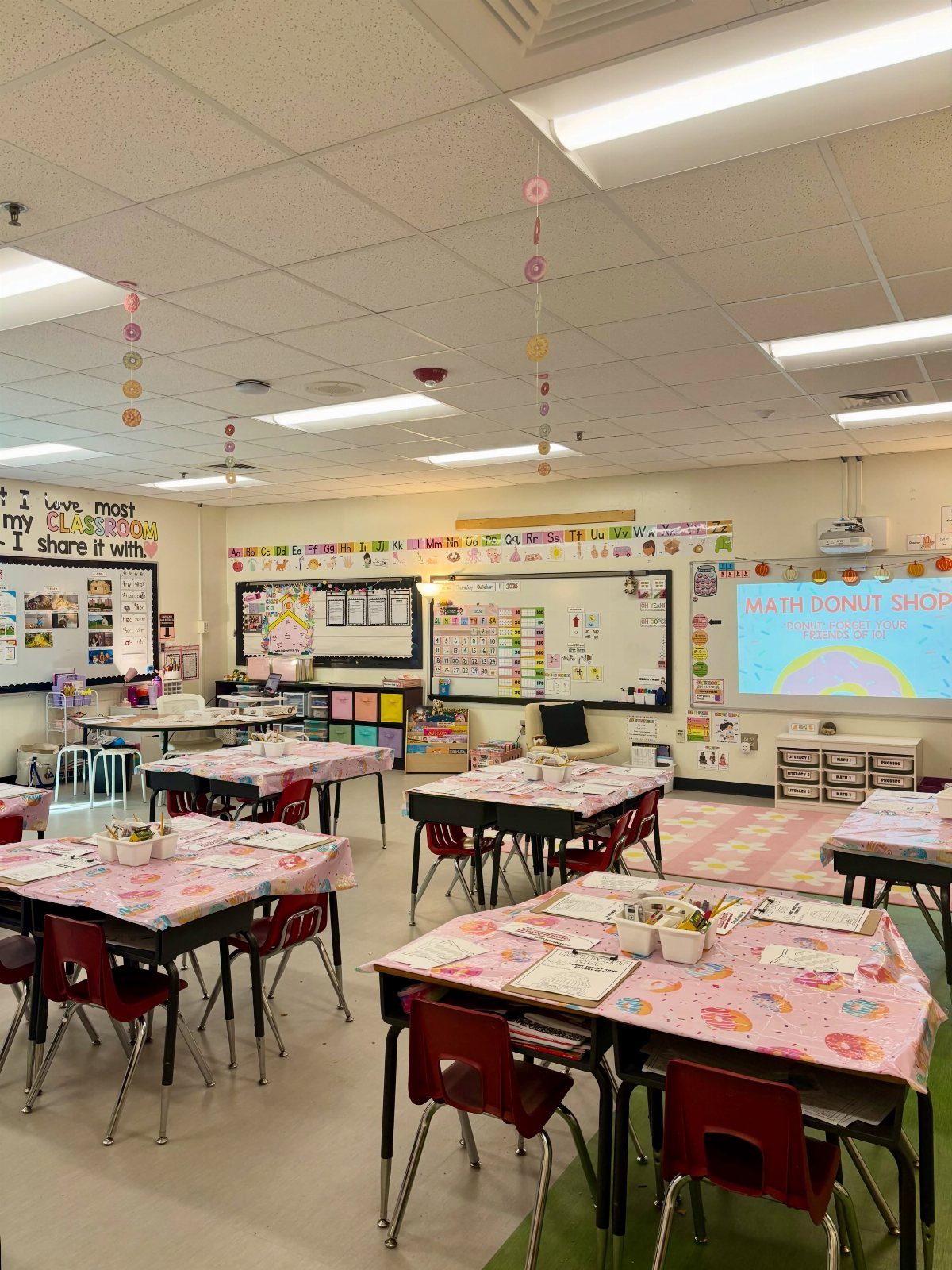
Add hanging donut garlands overhead and the room looks sweet from every angle.
My favorite touch is turning a subject into a shop, like "MATH DONUT SHOP" on the screen. It gives students a playful name for the daily lesson at almost no cost.
12. Owl Classroom Theme
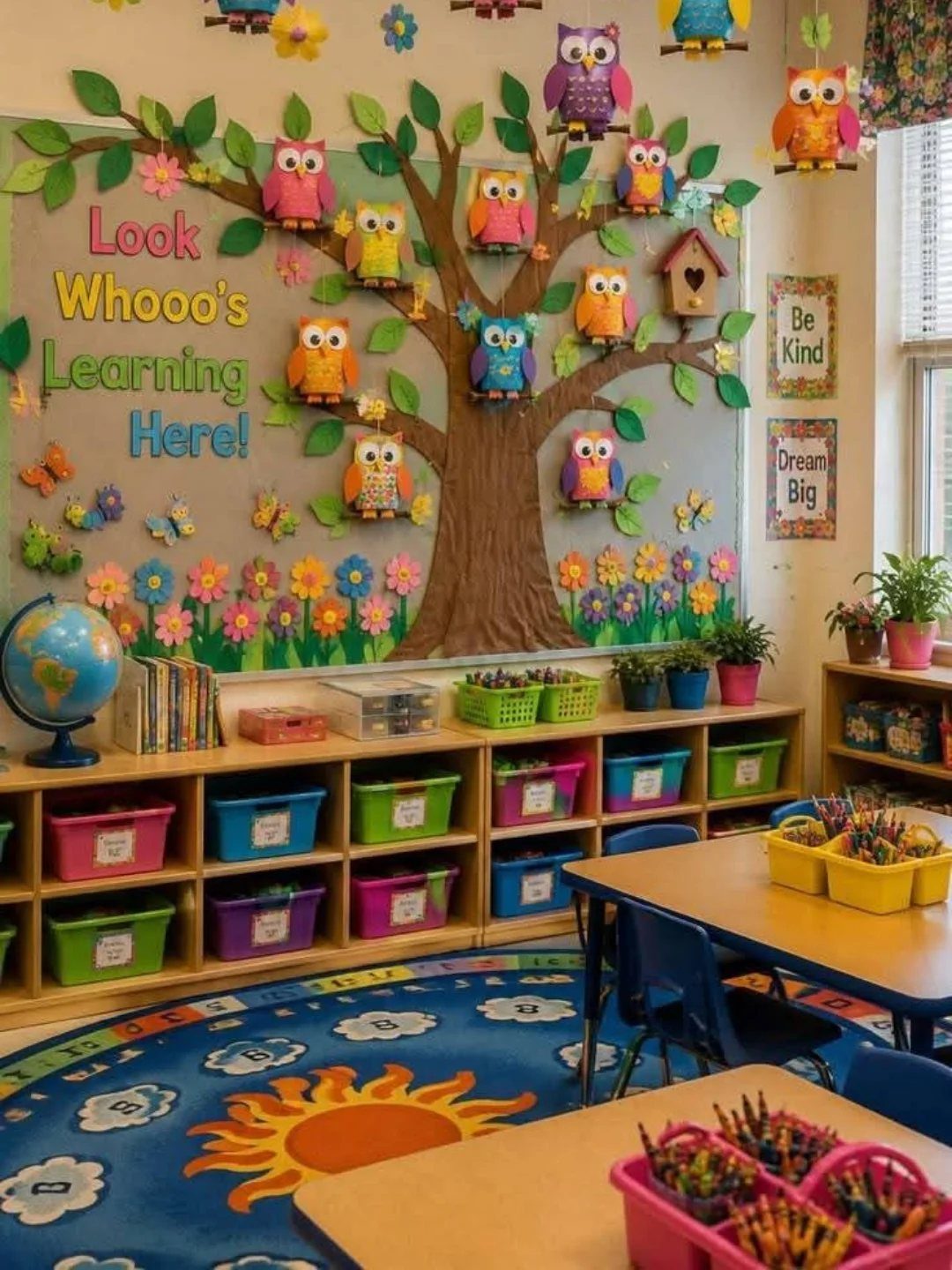
"Look Whooo’s Learning Here!" is the kind of pun line I would happily put over a classroom door or board. It sets the owl theme in one glance.
A large tree mural can hold the whole display: paper owls perch on the branches and flowers fill the gaps. Students can make the owls themselves, so the wall grows through the year.
13. Beach Classroom Theme
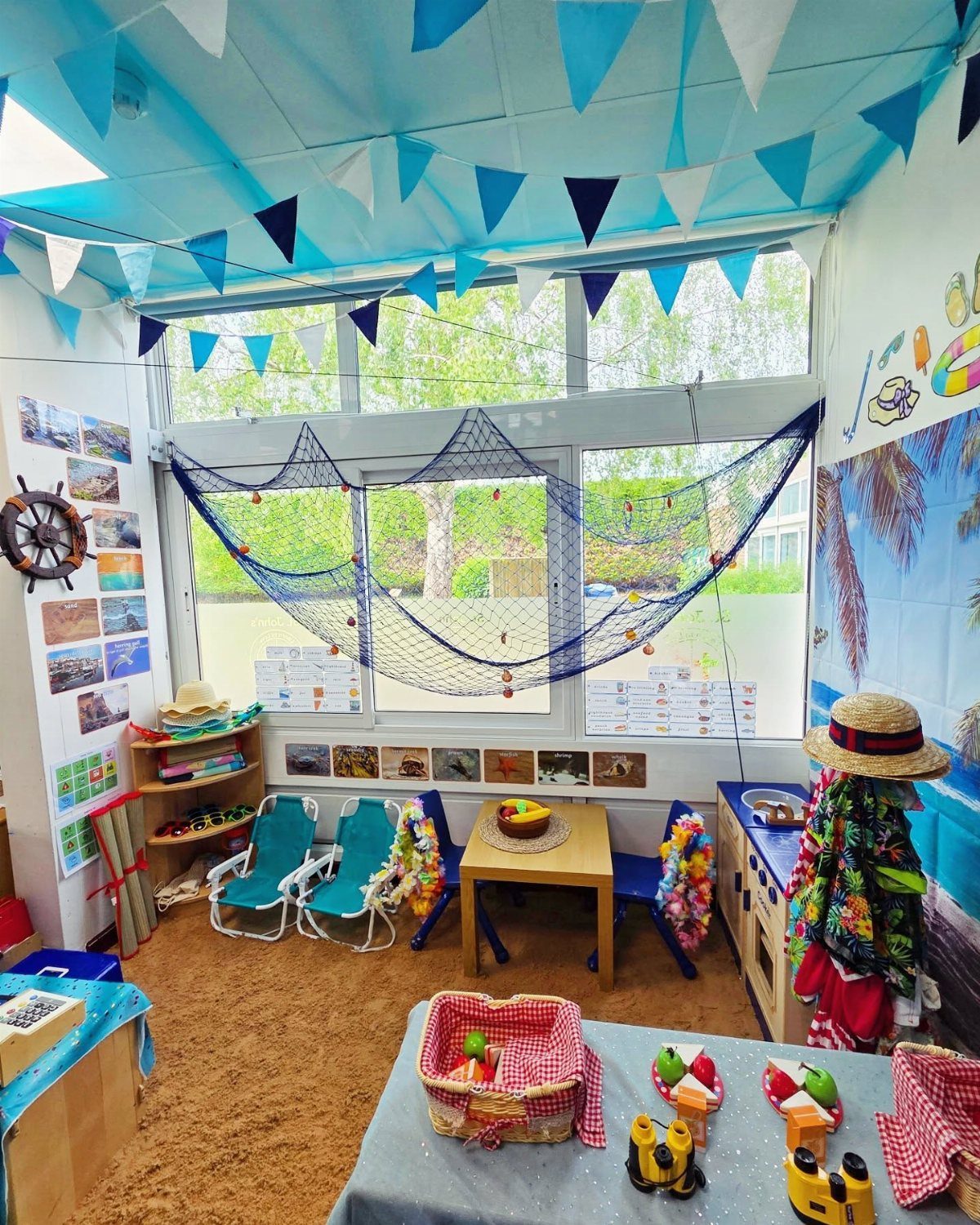
Sand-colored flooring does the heavy lifting in a beach room, and it costs less than you might guess if you use paper or fabric in place of anything permanent.
A play kitchen stocked with toy food becomes a snack shack with no extra work. I would add the beach chairs as a reading spot, since students pick a seat there without being told.
14. Circus Classroom Theme
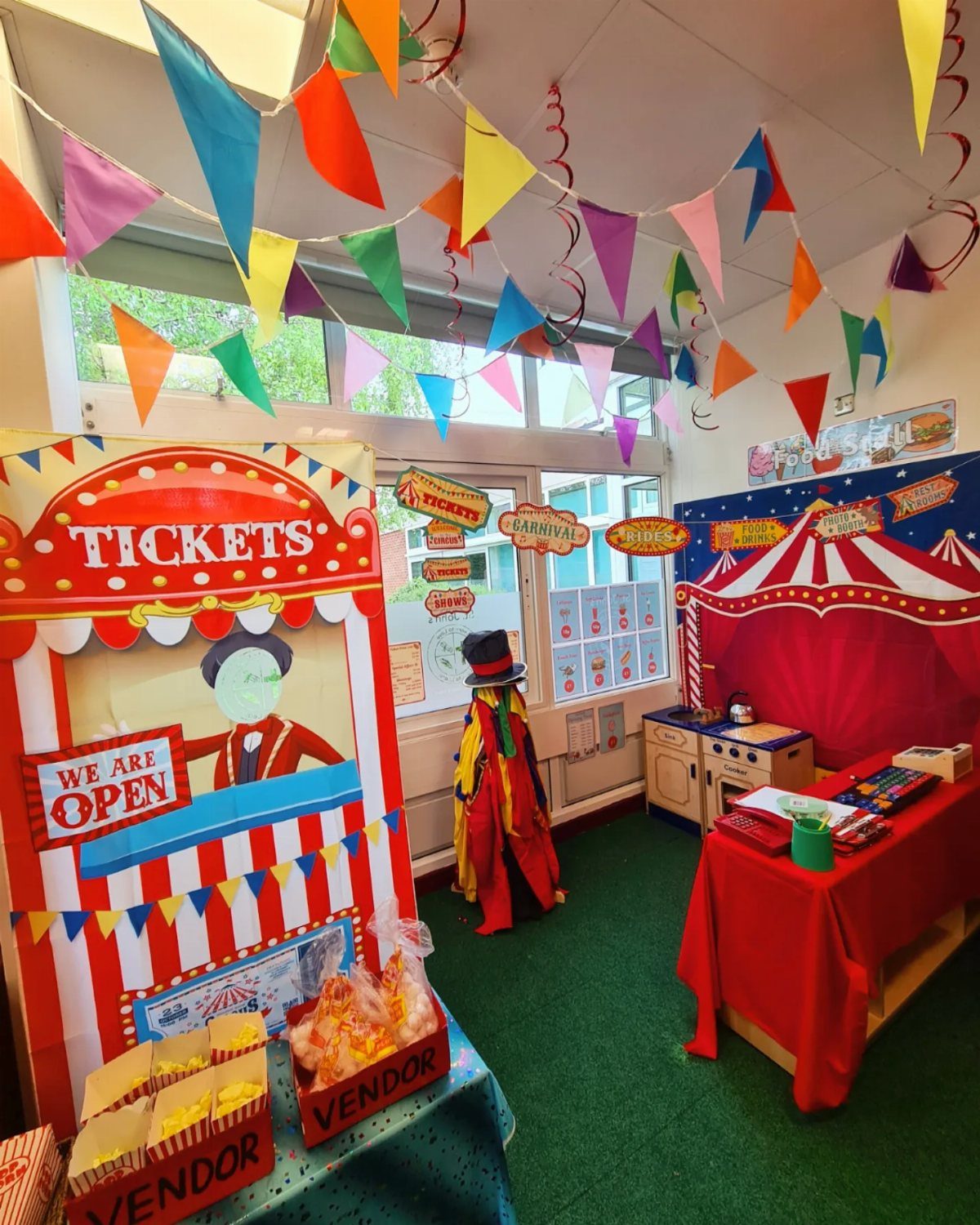
A ticket booth tells students where the fun starts, and a sign reading "TICKETS" is the cheapest way to build one.
Cover a table in red cloth, hang a "WE ARE OPEN" sign, and the corner becomes a stage for classroom jobs.
Labels like "VENDOR" give kids a role to claim, so the theme works as a helper chart too. Colorful bunting ties it together for pennies.
15. Space Classroom Theme
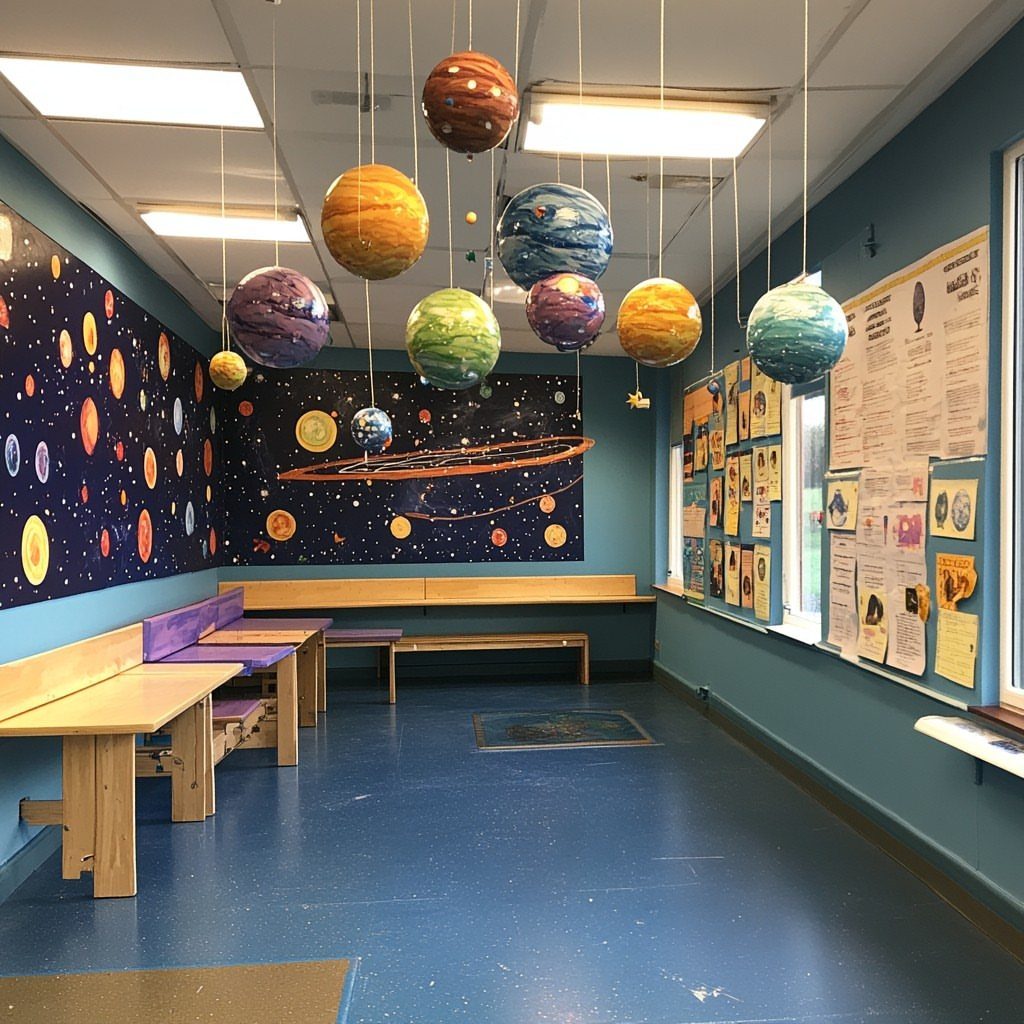
Hanging planet models are the move for a space room, because they fill the ceiling and leave the walls free for posters.
Paint a mural on blue walls for the cosmic backdrop, or tape up a printed one if time is short.
16. Pirate Classroom Theme
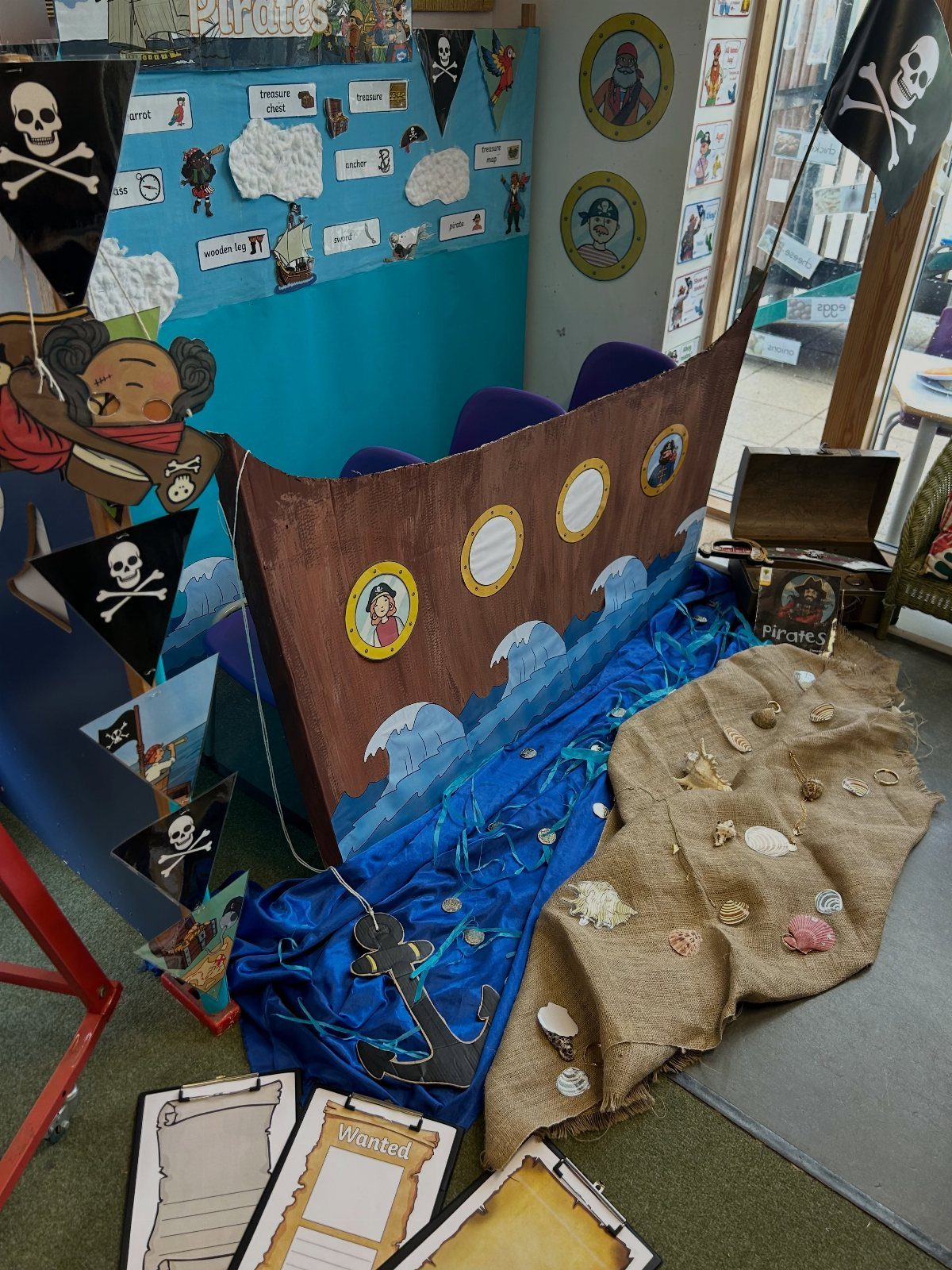
Blue fabric rippling around a cardboard ship reads as open water, and a strip of burlap under the treasure chest gives you a dock. Cardboard costs almost nothing if you save boxes.
"Wanted" posters are my favorite piece: print one per student and the wall doubles as a class roster.
Pirate flags fill the gaps overhead. Build the ship first, then size the waves to fit around it.
17. Farm Classroom Theme
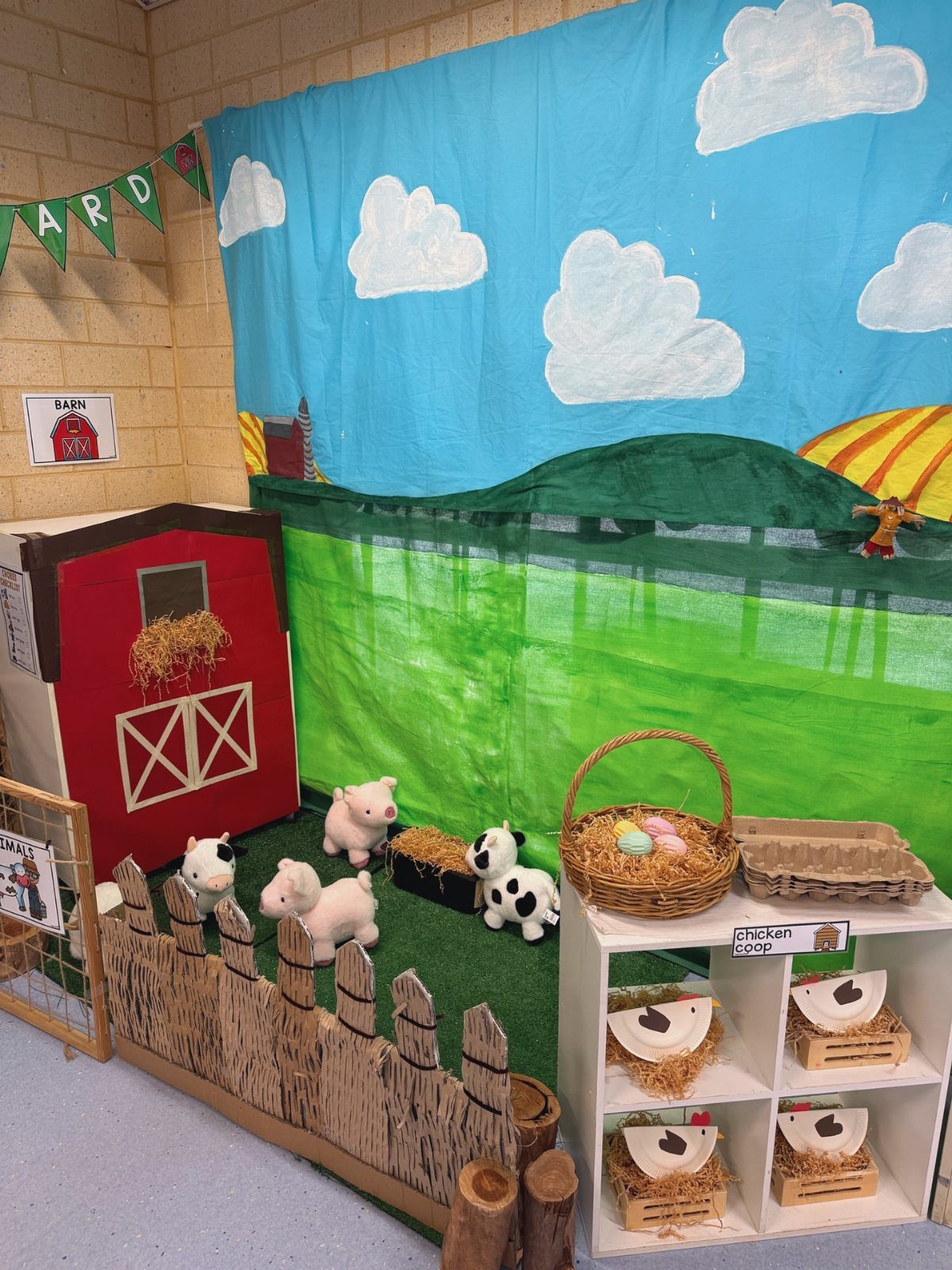
A red cardboard barn is the anchor of a farm corner, and a wooden fence in front of it gives toy animals a place to stand.
Calling a shelf the "chicken coop" is a nice touch, since it turns storage into part of the story. I would use that idea for any bins you already own.
18. Minimalist Theme
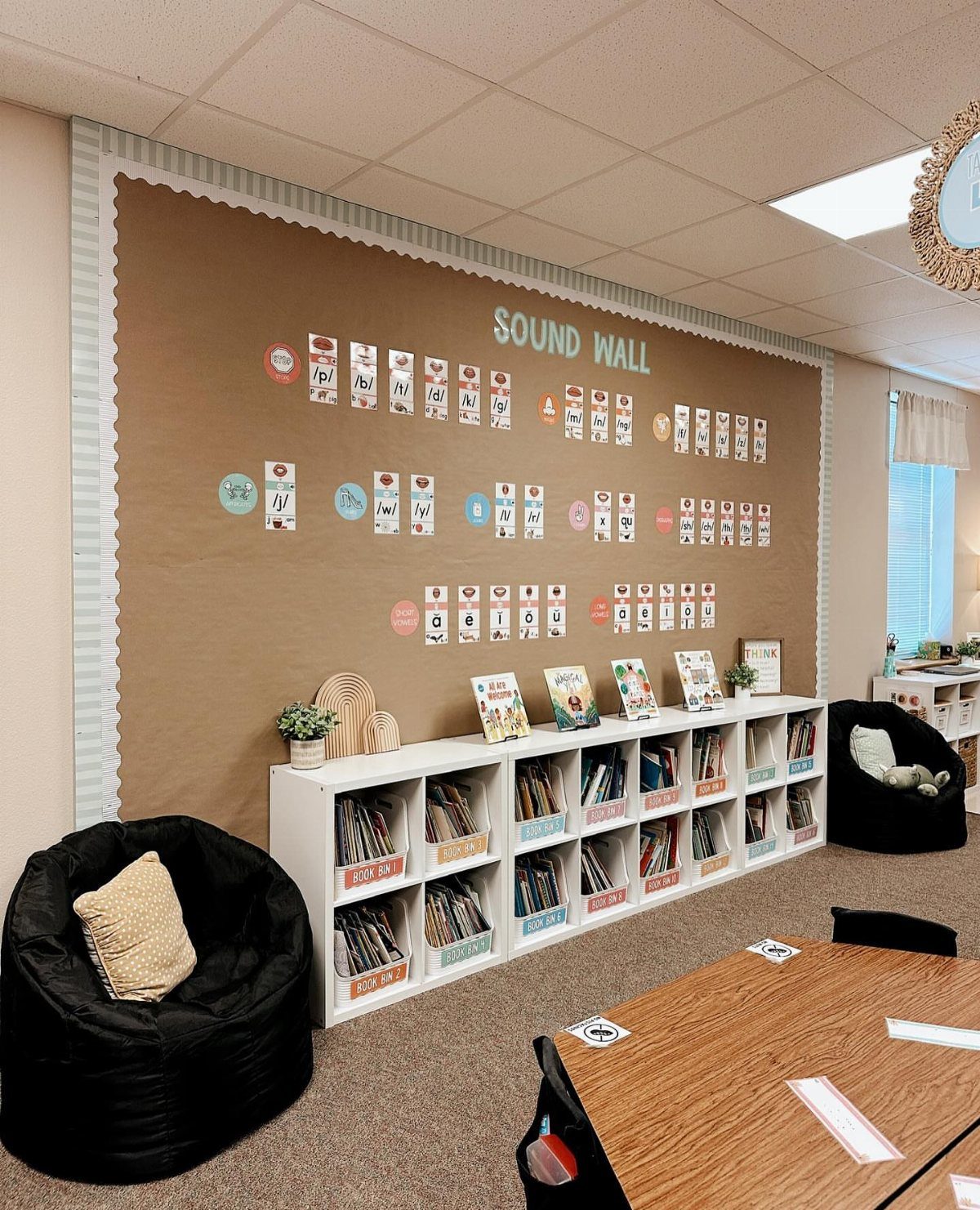
Neutral tones keep a minimalist room calm, and a brown "SOUND WALL" display shows how a working tool can serve as the decor.
This is the cheapest theme on the list to maintain: few items, each with a job, and nothing to take down in June.
19. Candyland Theme
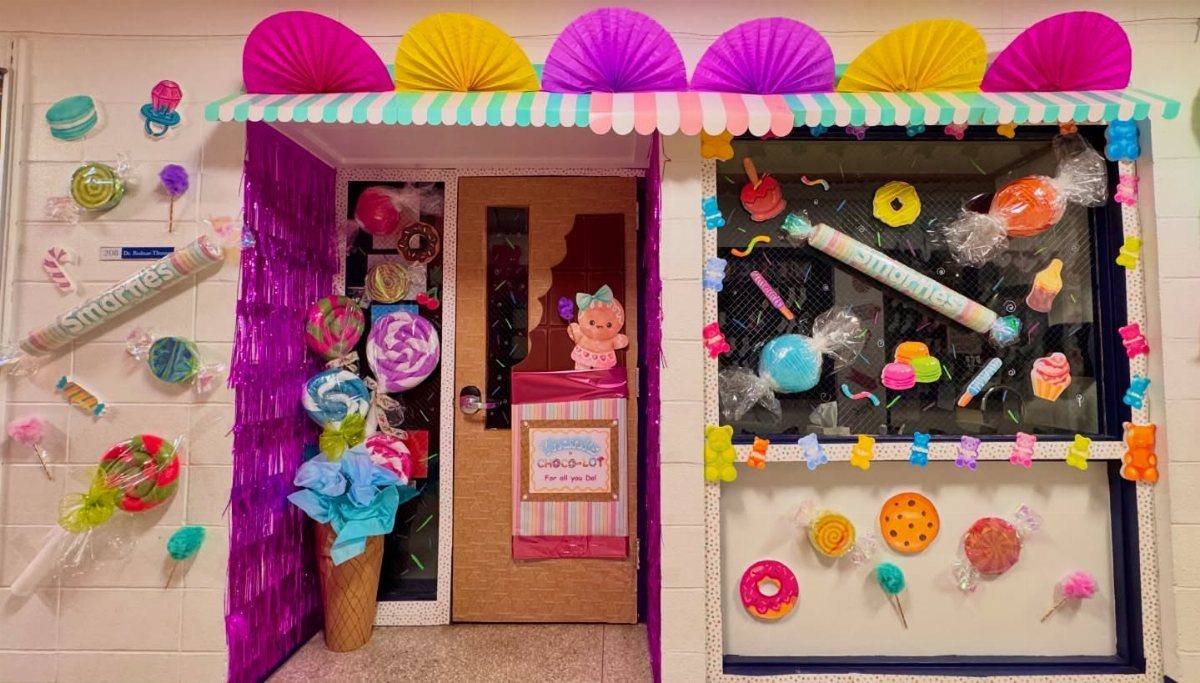
A striped awning, colorful paper fans and a sign reading "CHOCO-LOT" make the entrance read as a sweet shop before anyone steps inside.
Paper and cardboard keep the cost low, and big, few props read better from the hallway than many small ones.
Add a second sign naming the room, such as a "candy shop" label, if you want the joke to carry through the day.
20. Autumn Classroom Theme
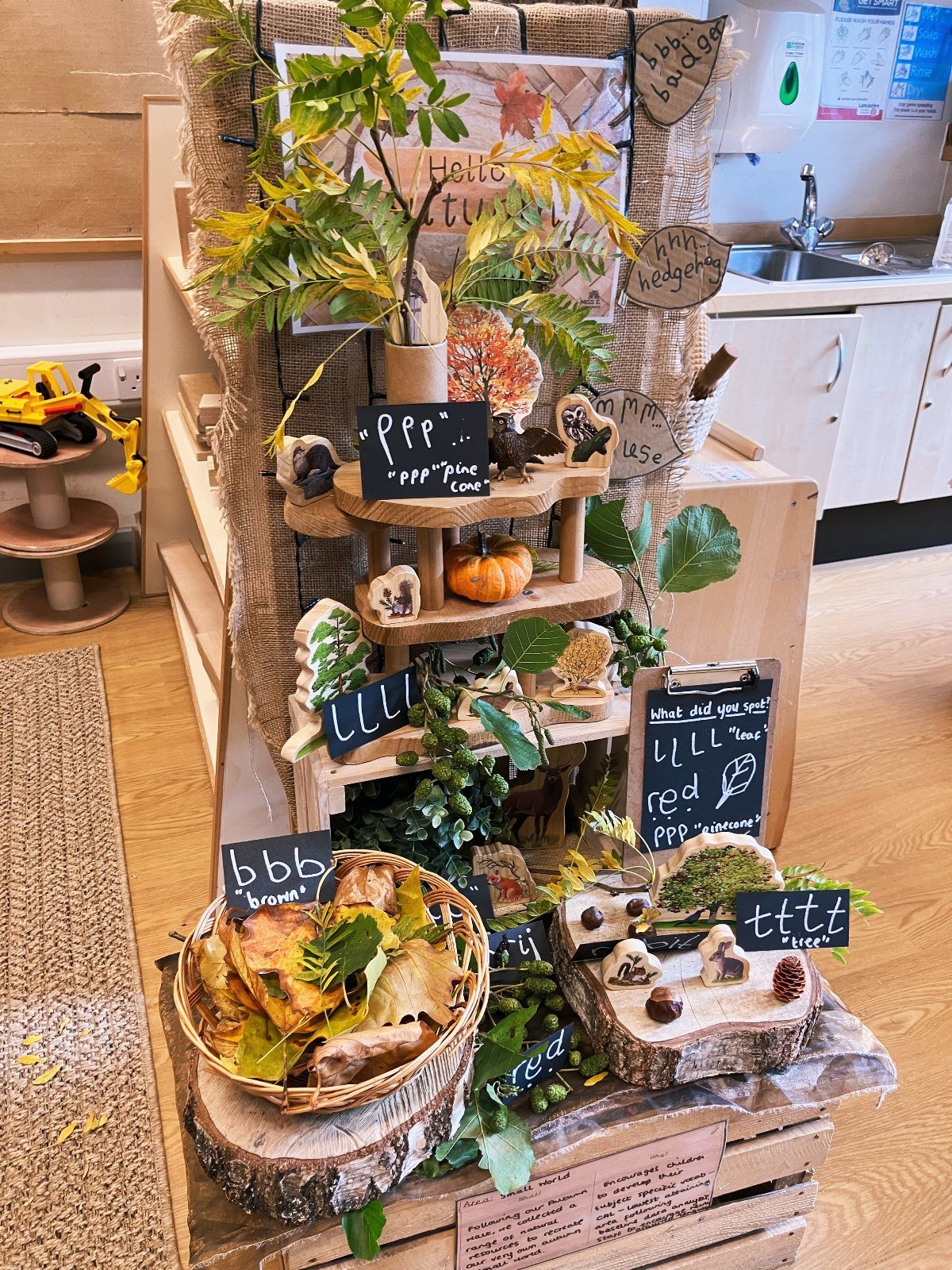
Small chalkboards turn a seasonal shelf into a teaching tool. Labels like "ppp pine cone" and "bbb brown" tie each fall object to a letter sound, so the display earns its space.
Stack the tiers with leaves, mini pumpkins and wood slices, and lay burlap under them to soften the wood.
I would pick one letter per object and keep the words short. Swap the chalkboard words every week or two, and the shelf never goes stale.
21. Treehouse Reading Nook Theme
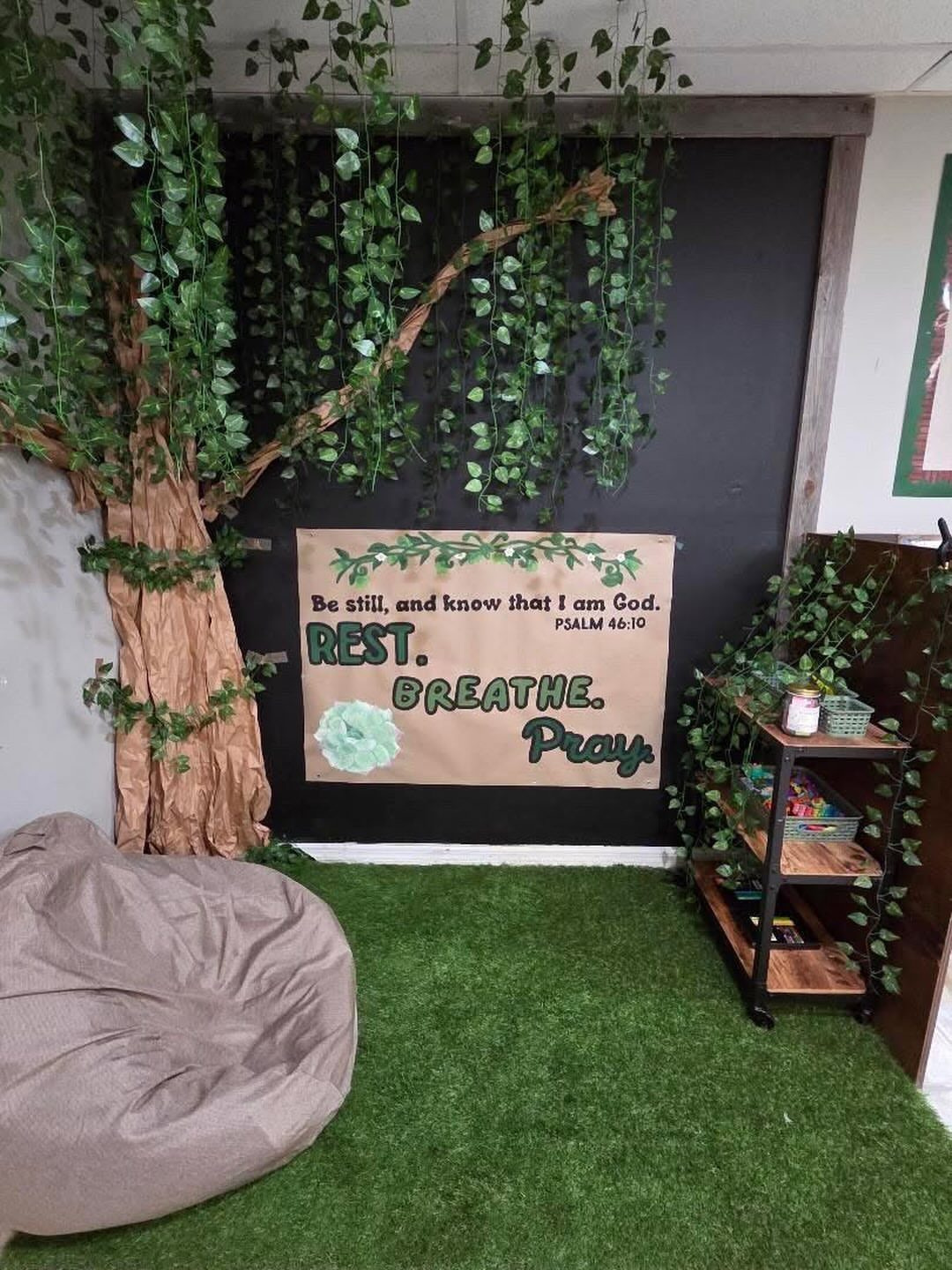
A faux tree with a patch of artificial grass beneath it gives a reading nook a clear edge, so students know where quiet time starts. Add a beanbag chair and the corner is ready.
A banner behind the tree sets the tone, and a short calming word like "Rest" suits a reading corner. Breathe.
Pray." That wording suits a faith-based classroom, and for a public school I would print a calm phrase of your own, like "Rest.
Breathe. Read."
22. Daisy Sunshine Theme
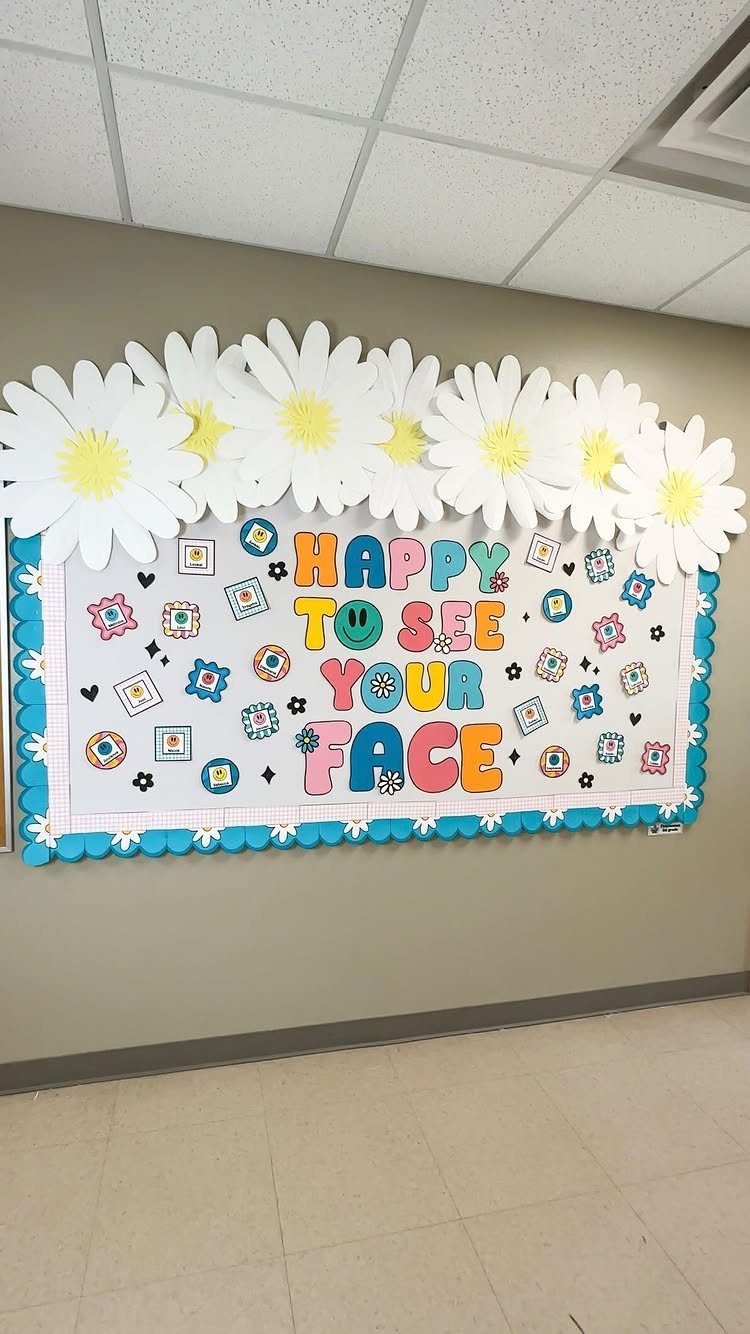
"HAPPY TO SEE YOUR FACE" is a welcome line I would put on a board without changing a word. Large white paper daisies around it make the greeting feel like a garden.
Cut the petals from white paper, add a scalloped border, and use bright lettering so the words read from the door.
Daisies are simple shapes, so students can help cut them, and a grey wall makes the white petals stand out.
23. Apple Classroom Theme
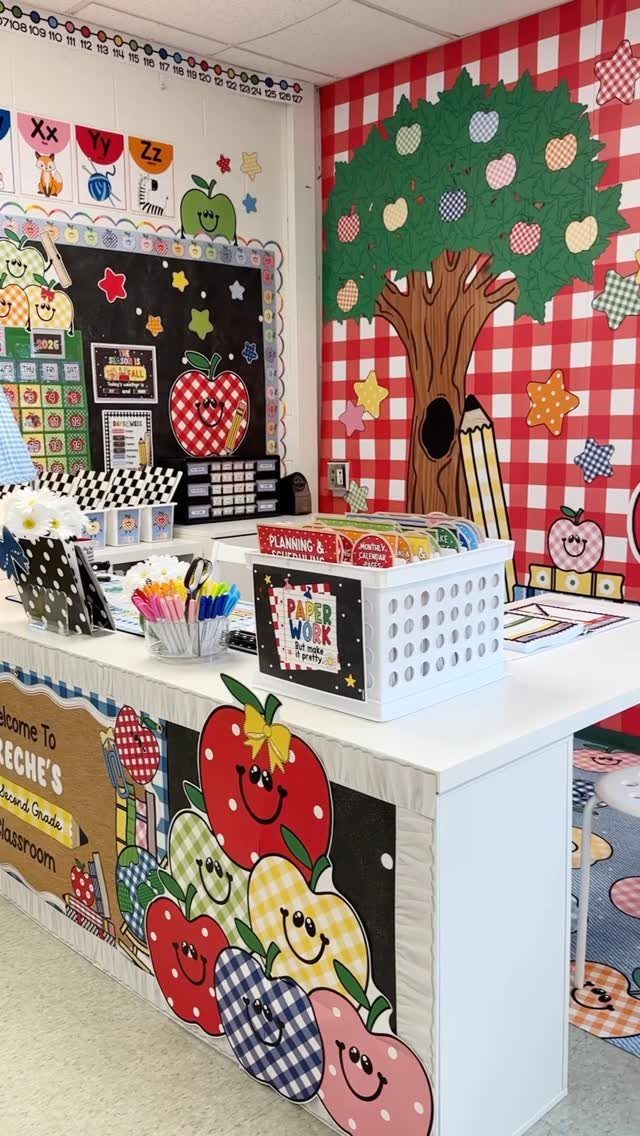
Red and white gingham on the walls tells students "apple" before any apple appears. Then a paper tree plus some matching apple decals on the teacher’s desk finish the corner.
Use decals for the desk since they cost little and stay put.
Put your welcome sign, with the class name, right at the desk so the whole setup reads as one spot. Gingham works best as the only pattern, with the apples as the accent.
24. Enchanted Forest Classroom Theme
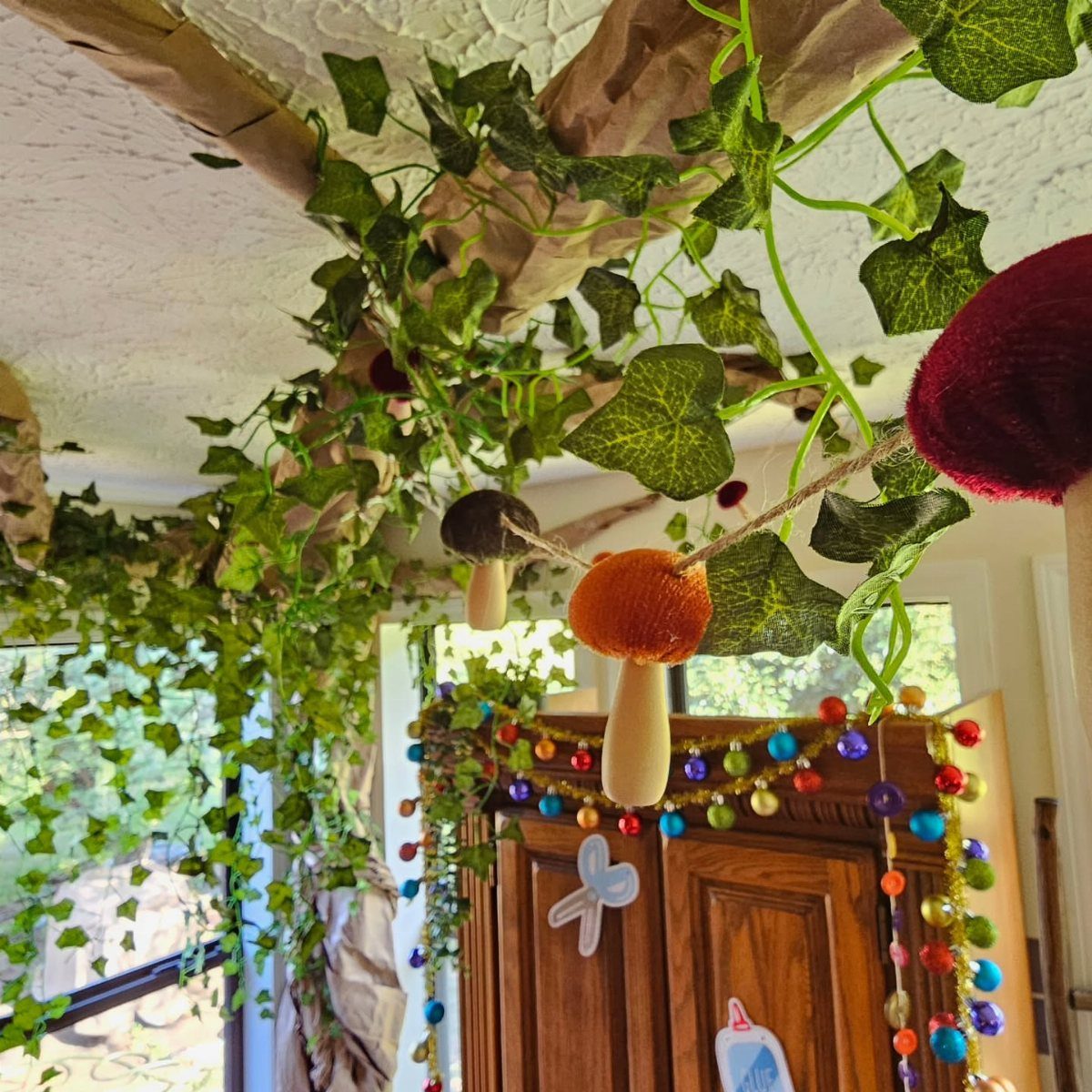
Ceilings are where an enchanted forest comes together. Artificial ivy draped overhead, brown paper wrapped into branches and felt mushrooms hanging down make the room feel like a woodland canopy.
Brown paper is the budget move here: twist it around tubes and it passes for bark. Hang the mushrooms at different heights, but keep everything above head level so the floor stays clear for students.
25. Glow in the Dark Theme
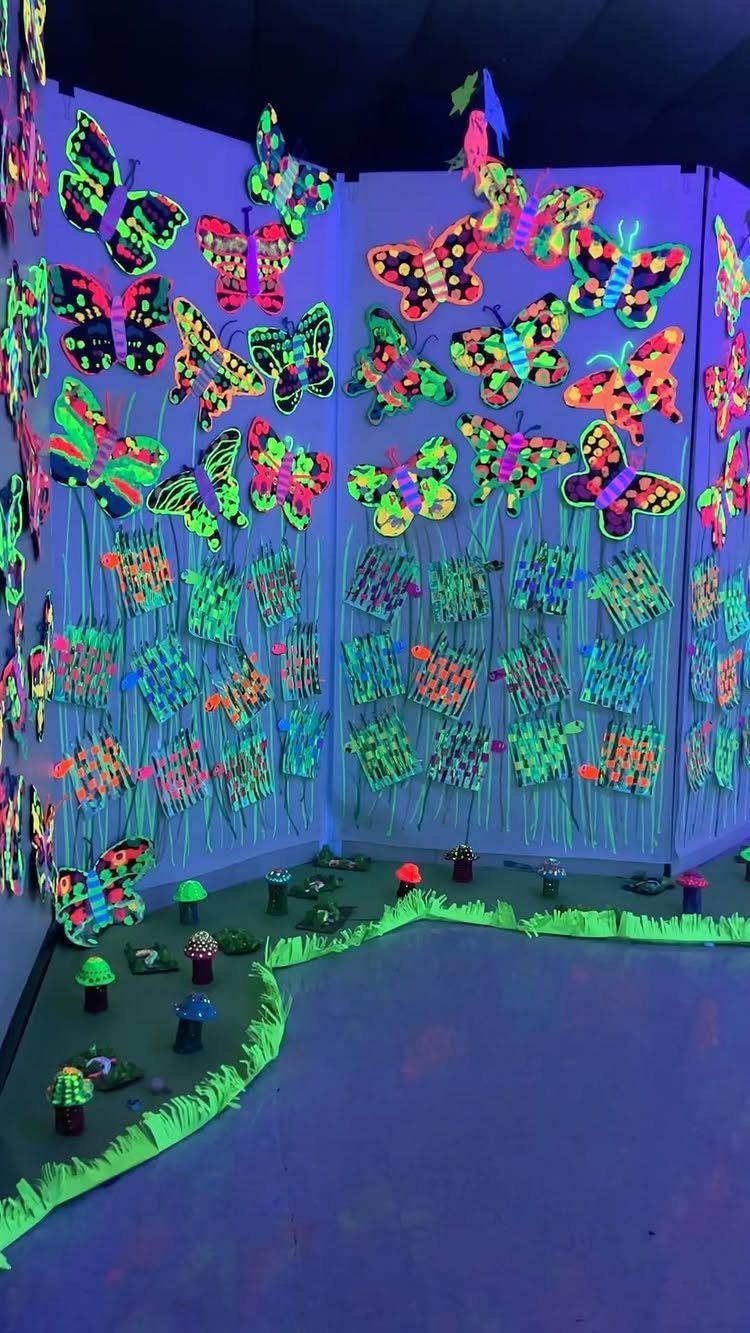
Neon butterflies on a dark wall are the whole theme: the darkness makes every cutout look lit from inside. Keep the background black or deep navy, since a pale wall would wash the color out.
Cut the butterflies in a few sizes and scatter them unevenly, then run a matching border of grass shapes along the floor line so the wall feels planted.
Fewer, larger butterflies read better from across the room than a crowd of small ones.
I would save this for a corner or one wall. A whole room in black gets heavy fast.
Choosing a Classroom Theme
Pick a theme you can live with every school day, not just on the first one.
If calm spaces suit you, go neutral. For a room that feels loud and cheerful, a rainbow scheme or a seasonal look does the job, and both are easy to build from store-bought borders and bulletin board paper.
Pick 3 colors and hold the whole room to them. That one rule keeps a room cohesive even when the props vary, and it makes shopping easier because every item either fits the 3 or stays on the shelf.
Before you commit, think about the students too. Ask whether the theme gives them something to do or take part in, and whether it suits how the room is used each day.
Benefits of Classroom Themes
A theme gives you a plan, and a plan beats a color scheme or no direction at all. It lets you work in items you already own, plus whatever party stores and dollar stores stock.
You also don’t have to finish in one weekend. Add pieces slowly through the year, starting with the door or one board.
A cohesive room tends to earn compliments from parents and administrators, and it shows creativity when testing and standards crowd the school year.
Students gain from it too: they take more pride in the room, stay focused longer, get less visual clutter to pull their attention, and the space feels a little like home.
Mixing Themes
Two themes can share one room if their colors match, so I would check the palettes side by side before buying anything.
Pair a rug from one set with cutouts from another, and the room still looks planned if both share a palette.
Where I would hold back is the number of motifs. Several competing themes can pull attention away from the lesson, and busy walls are hardest on students who are easily distracted, including those with learning disabilities.
If you want to blend, choose one main theme and let a second one appear only in small accents, in the same colors. When in doubt, a single theme is the clearer choice.
Frequently Asked Questions
What are some good elementary school themes for 2026?
Boho rainbow, groovy retro and composition notebook are the three I would look at first.
For boho rainbow, one door is enough to begin: a single rainbow arc, 3 or 4 hearts and a strand of white garland. Retro lets plain shelves and colorful bins carry the color.
Can I mix two classroom themes in one room?
Yes, if the two share a color palette.
Pick 1 main theme and keep the second to small touches like a bulletin board border or a few labels, since two competing motifs draw the eye away from the lesson, and kids who lose focus easily feel it most.