The ideas here run from a single jobs board to a full safari or camping theme, and the cost sits mostly in time rather than money: composition notebook cutouts, chalkboard brights and student artwork all stay cheap.
The rule that picks one is how much wall you have to give, because a theme like safari or camping works best kept to one corner, while a jobs board or cupcake birthday wall fits any room.
Whatever you choose, I would leave some wall bare until the children arrive with work of their own.
1. Purposeful Decor
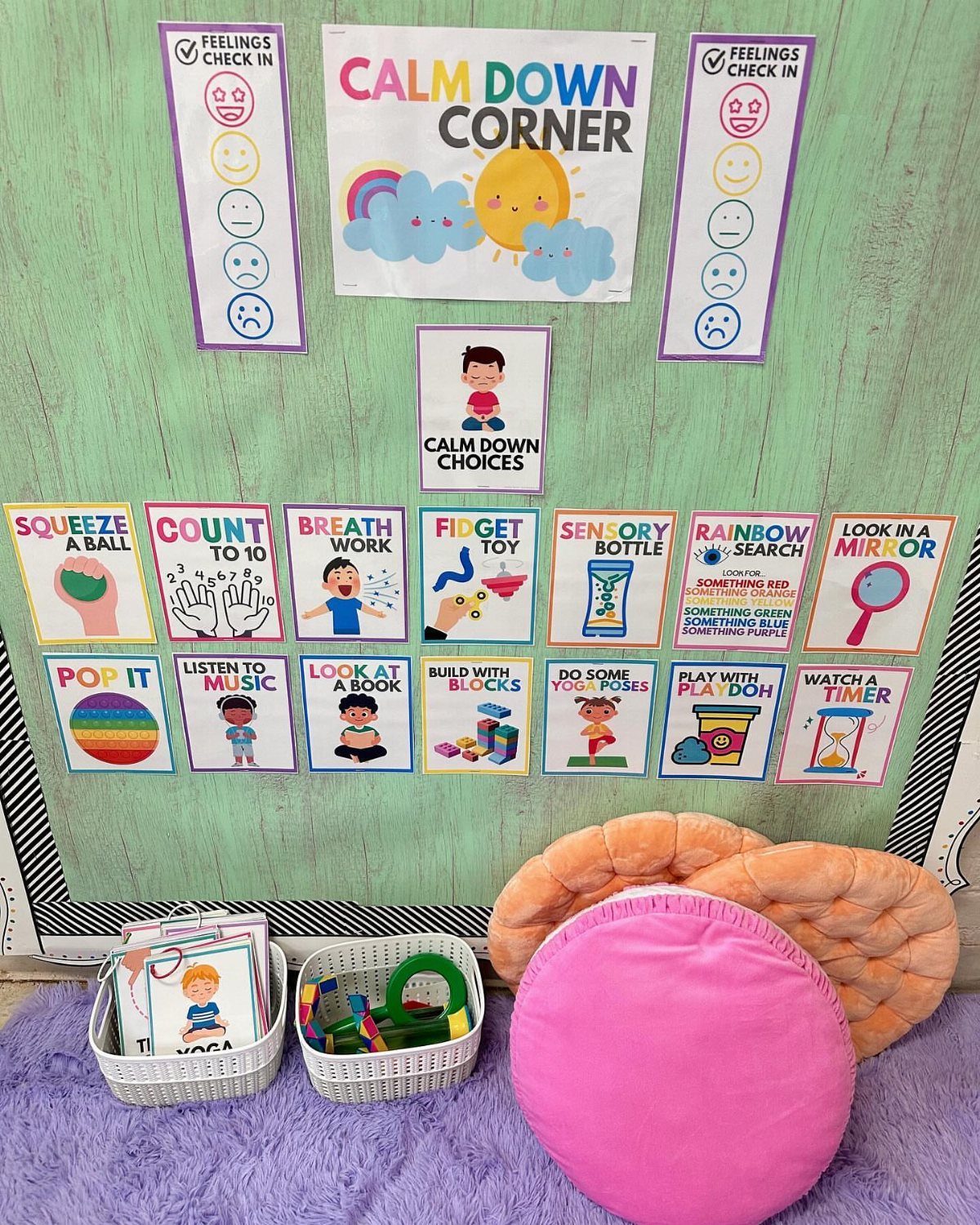
A calm down corner is decor with a job.
Before buying anything, I ask what each item teaches. Cushions give a soft place to land, and the cards give a child something to choose without needing words.
Pretty wall filler that teaches nothing can wait until the learning pieces are in place.
2. Interactive Learning Areas for Reading, Art, and Play
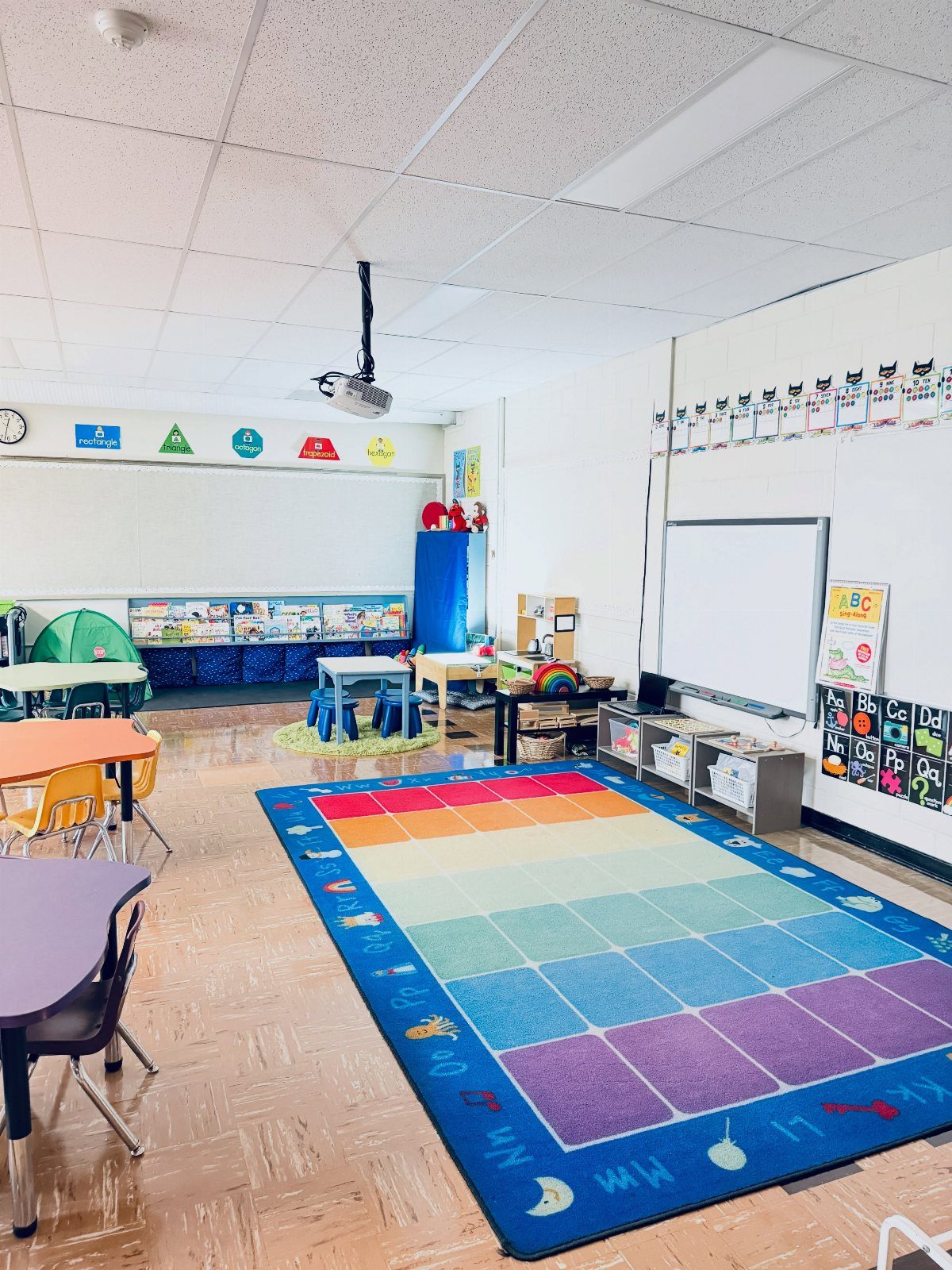
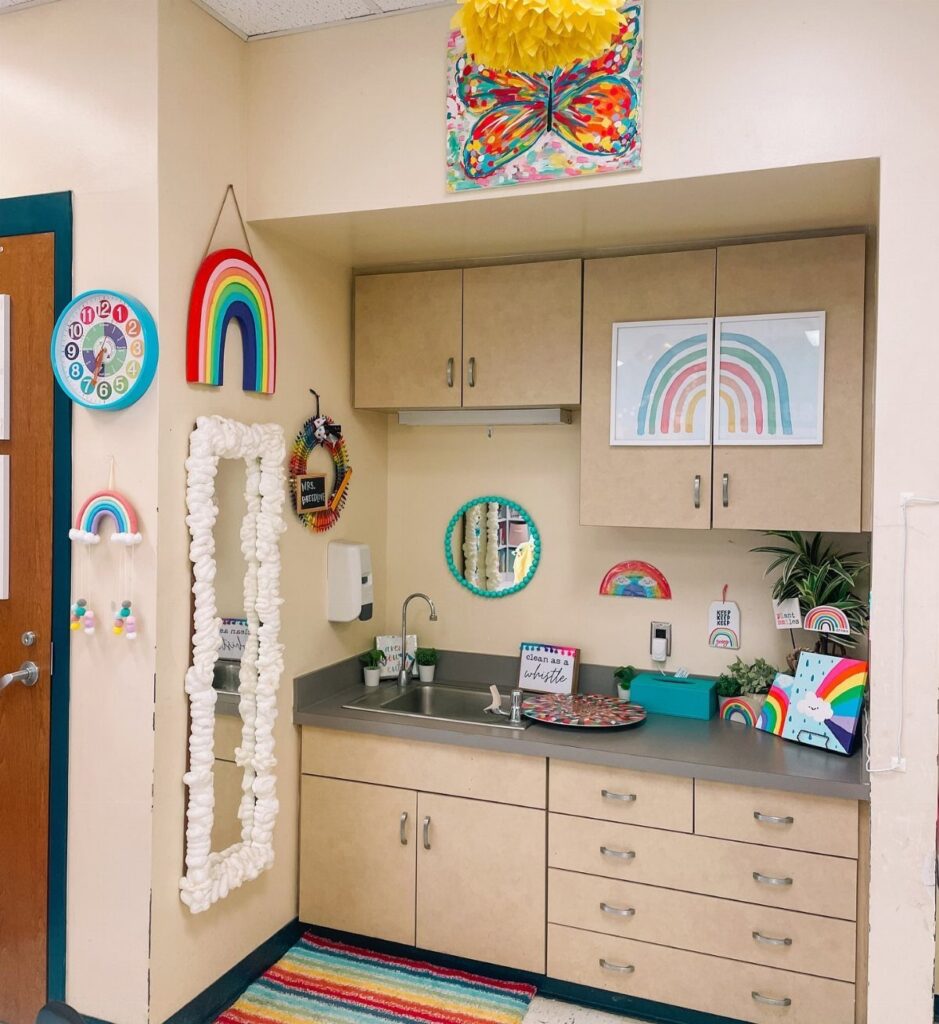
Rugs, tents and tables do the zoning for you in a kindergarten room. A rainbow rug marks the gathering space, a tent says "quiet reading here," and small tables say "art happens here."
I like to give each area one clear purpose and keep it separate from the others, so children always know where they are. A shelf or a rug edge works as a boundary.
Start with reading, art and play, then add more stations once those three run smoothly.
3. Composition Notebook Themed Classroom
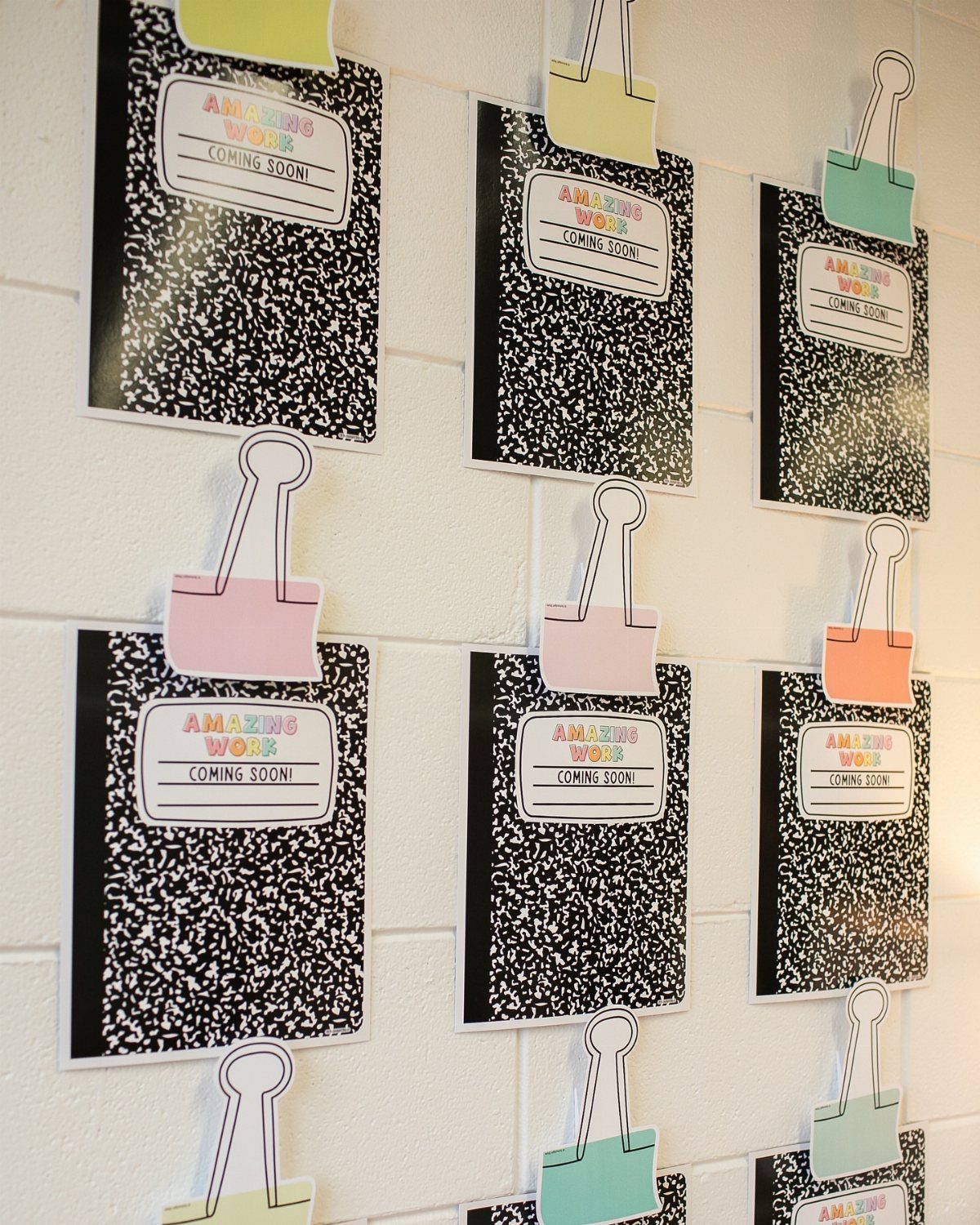
Composition notebooks make a surprisingly good theme because the black and white marbled pattern settles a room down. Pretty, but purposeful: the colorful binder clips add the cheer while the paper stays calm.
To make it, cut notebook shapes from marbled paper, add a label strip, and clip them to the wall.
A "Amazing work coming soon!" label turns each one into a spot for student work later, so the decor waits for the children.
I would choose this over a loud theme for a calmer room.
4. Chalkboard Brights
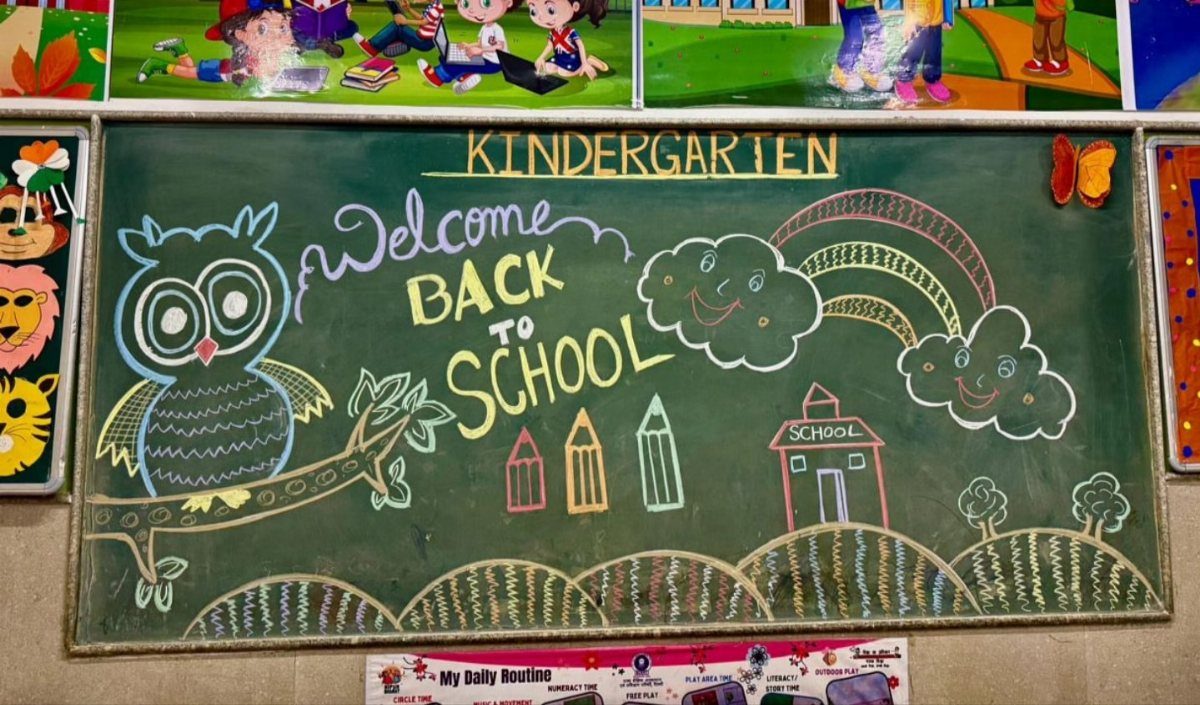
Chalkboard brights pair a dark board with saturated chalk colors, and the contrast keeps a welcome message readable from the doorway or the back rug. An owl, a rainbow and a little schoolhouse give the board personality without crowding it.
Hand-drawn art is the main cost here: time rather than money. A "My Daily Routine" chart beneath the drawings keeps the board useful after the first week.
If drawing feels intimidating, I would trace a few simple shapes first and fill them with color.
5. Student Artwork Bulletin Boards
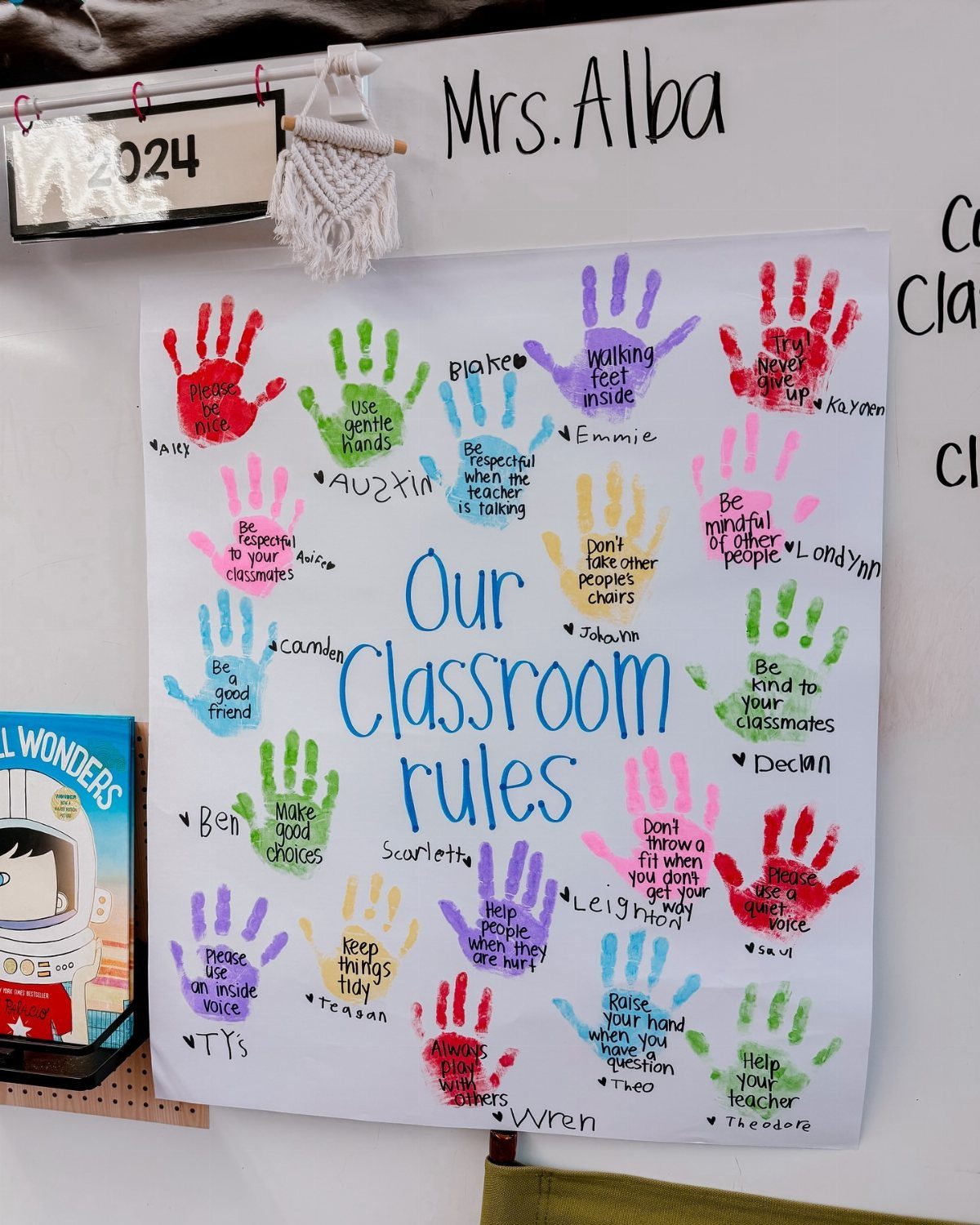
Handprints are the easiest way to put children into the decor. Each child presses a painted hand onto a poster, then adds a name beside a classroom rule, so the rules belong to them.
Buy washable paint, set out wipes before anyone starts, and write the rules in marker beforehand for the children to trace or sign. A small group at a time keeps the mess manageable.
I prefer this to a store-bought rules poster, since children actually point to it.
6. Safari
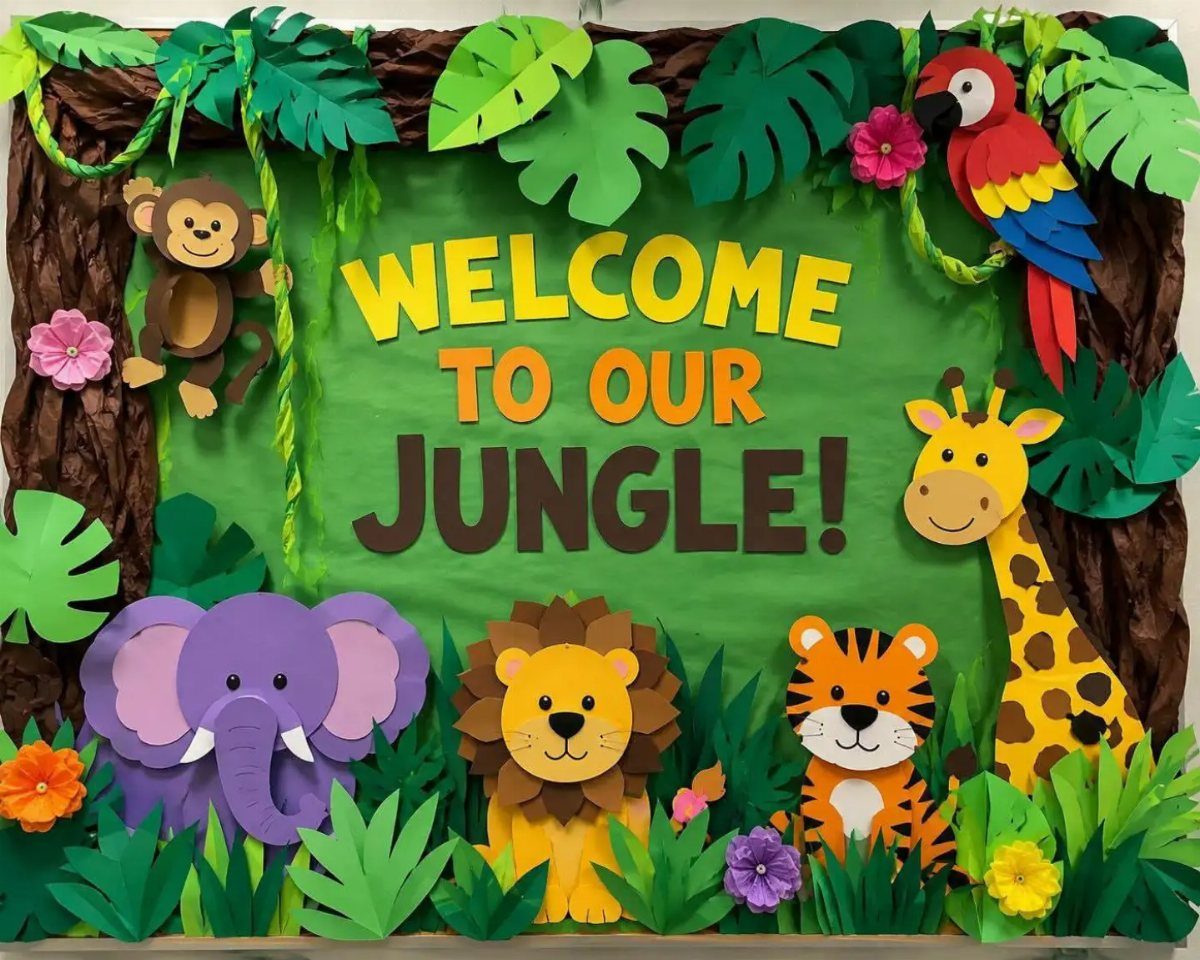
Safari works in kindergarten because children already know the animals. A monkey, parrot, giraffe, tiger, lion and elephant each give a child something to name on sight.
On a green bulletin board, paper animals and leaves cost very little. I would cut the leaves in two or three greens for depth, and keep the lettering big enough to read from the rug.
The theme also carries into other corners of the room, such as a reading area or a labeled cubby row, without much extra spending.
7. Camping Classroom Theme
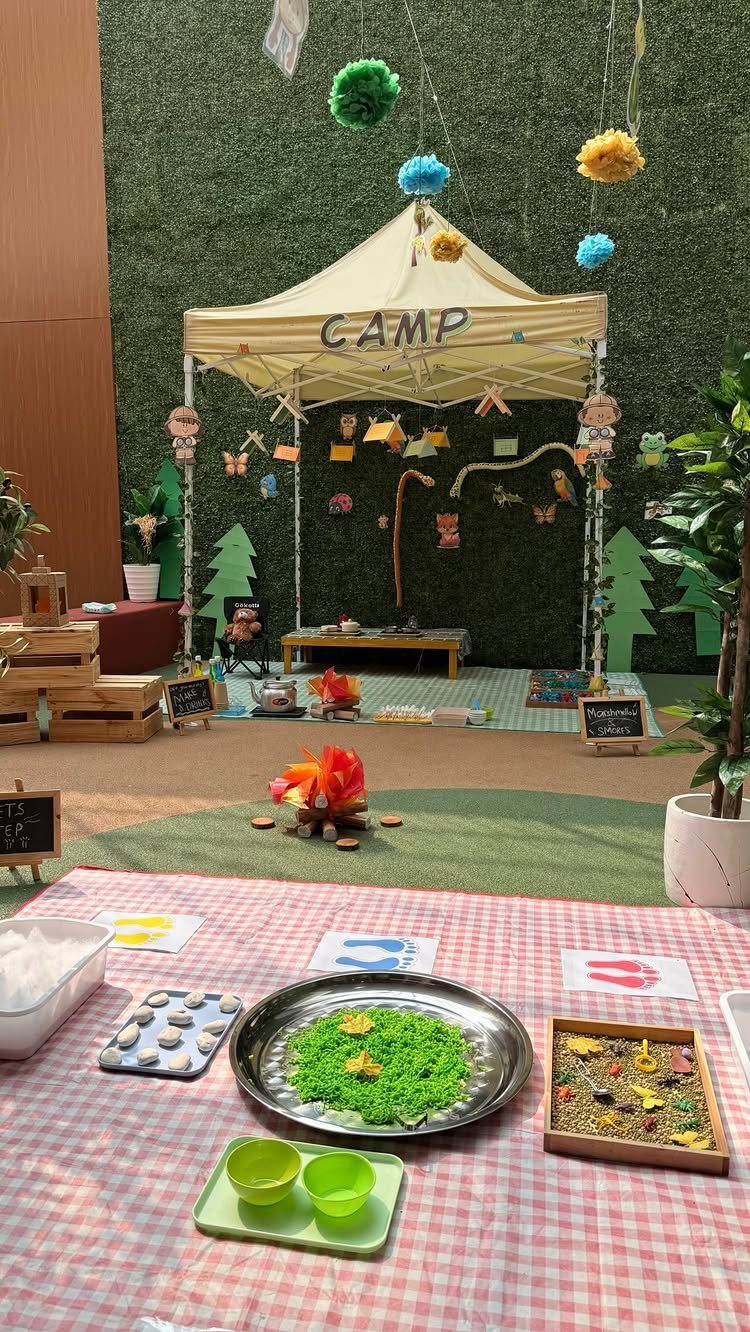
A small tent with "CAMP" on the front, a patch of artificial grass and a fake campfire turn one corner into a campsite.
A red checkered cloth under the sensory bins gives a camping corner its picnic feel, and it wipes clean after the sand and water play.
An editable decor kit saves the most time, since you can change the wording and print only what you need. I would keep the campsite to one corner so it reads as a single play spot.
8. Nature Classroom Theme Bundle
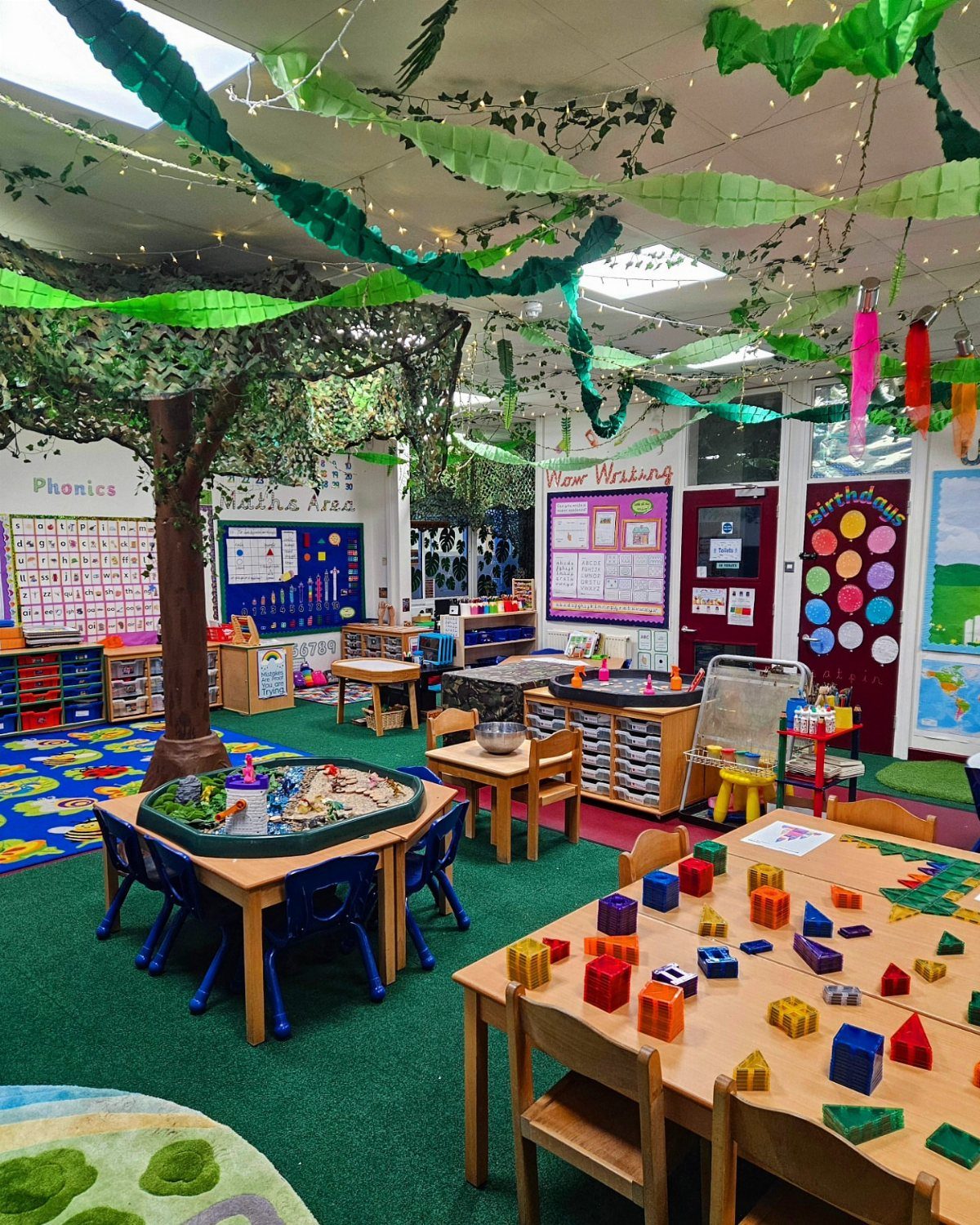
Signs such as "Phonics," "Wow Writing" and "Birthday" sit naturally among the branches, so the labels do double duty.
Buying a themed bundle for the forest, mountains and outdoors keeps the colors and style matched, and I find that easier than collecting single pieces from different shops.
I would put the tree where children gather and hang the leaves low enough to see.
9. Colorful Welcome Signs and Vibrant Banners
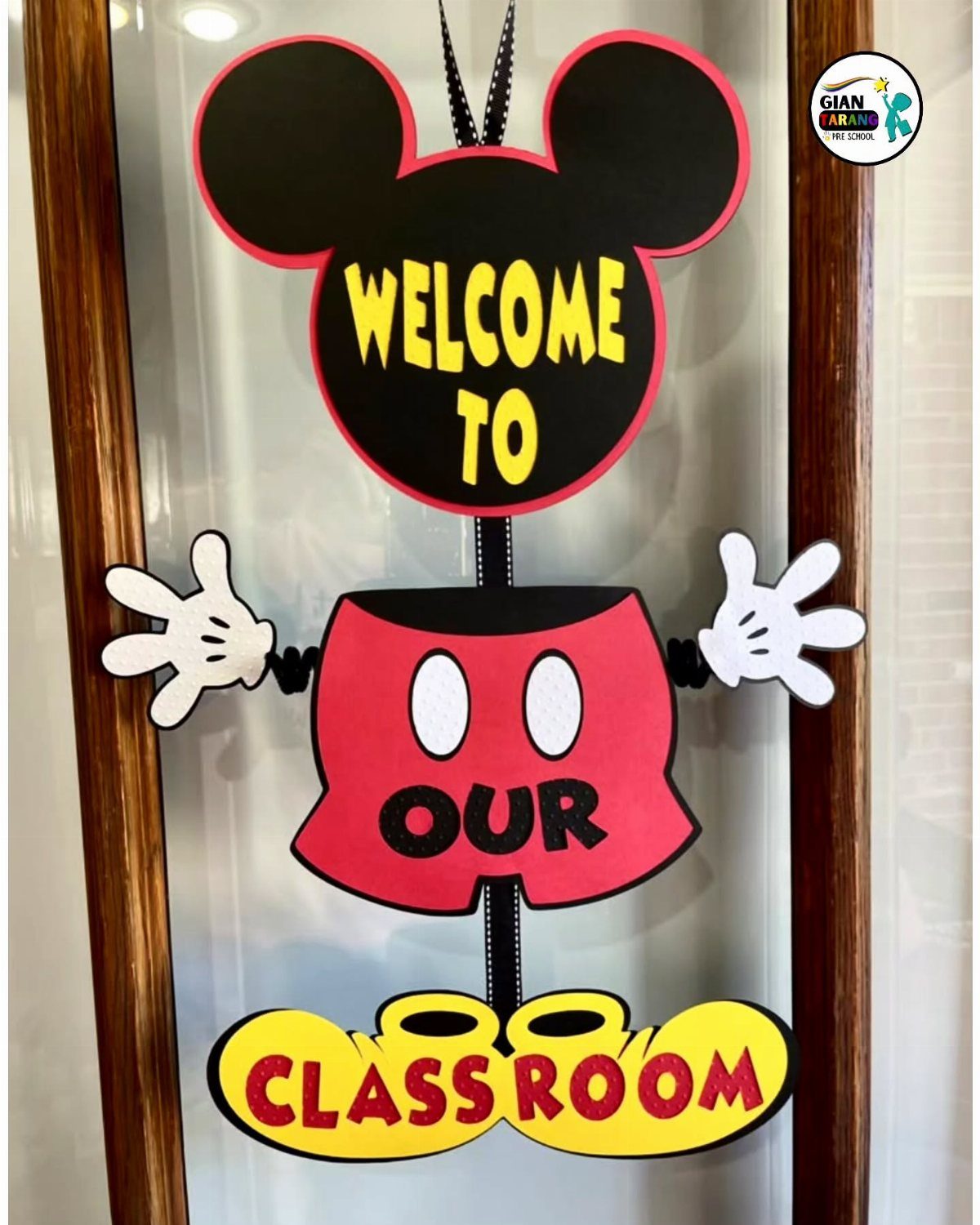
A character-shaped welcome sign on the door tells children the room is theirs before they step inside. Bright yellow letters on black stay readable from the hallway.
Cut the shape from poster board, then add big letters in 2 strong colors.
Keep the words short. I would choose one bold sign over several small ones, because a crowded door gets ignored.
10. Cupcake Birthday Display Wall
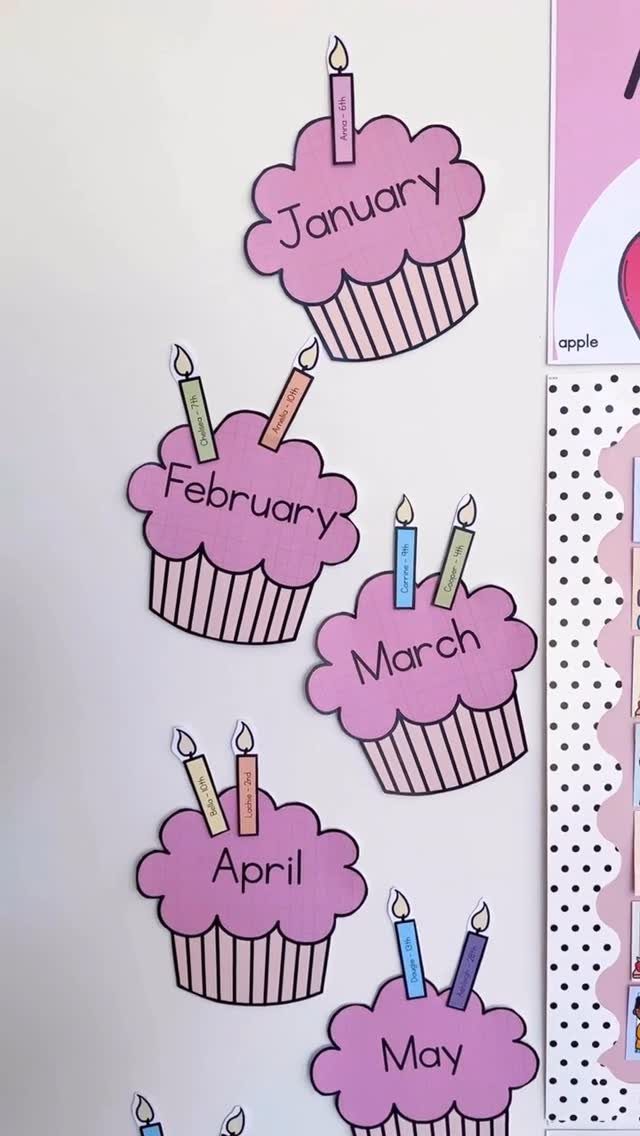
Pink cupcake cutouts, one for each month, turn birthdays into a wall children check. Each candle carries a name and a date, so the display works as a tracker too.
Cut one cupcake per month and label it in big letters.
Write the names on candle strips so you can add them as you learn the dates. I like a plain white wall behind it, since the pink then carries the color.
11. Classroom Jobs Board
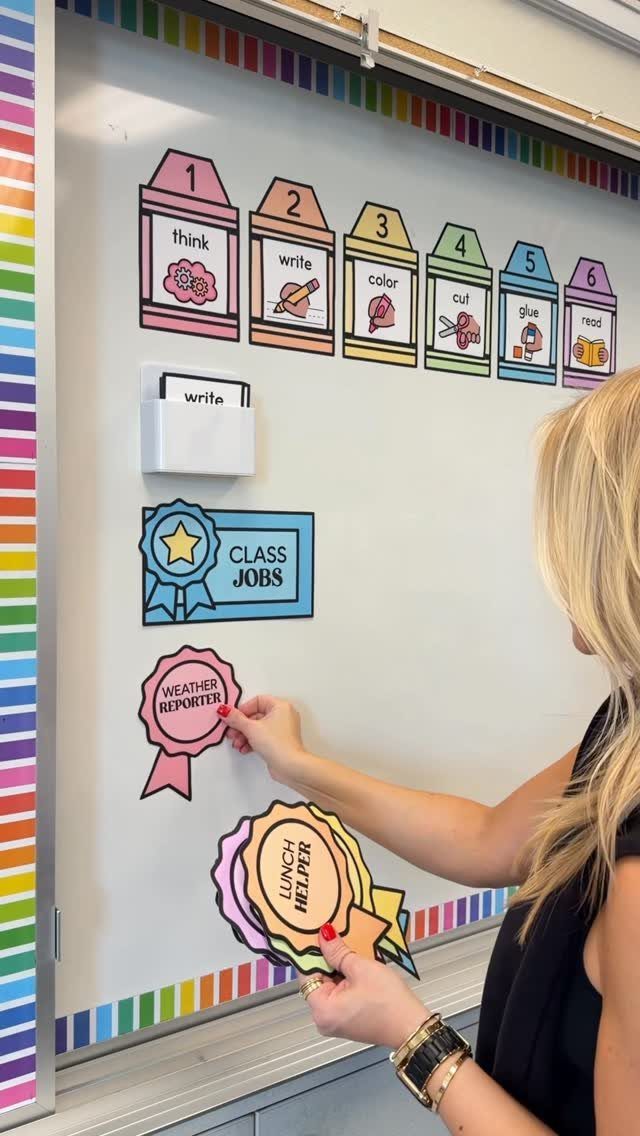
Ribbons and pockets make a jobs board easy to run. Task pockets labeled "think," "write," "color," "cut," "glue" and "read" give each job a word and a clear action.
Put the ribbons on a rainbow-bordered board where children can reach them.
Kindergarteners can’t read every label yet, so I would pair each word with a small icon. Rotate the ribbons so everyone gets a turn.
12. Good and Bad Habits Bulletin Board
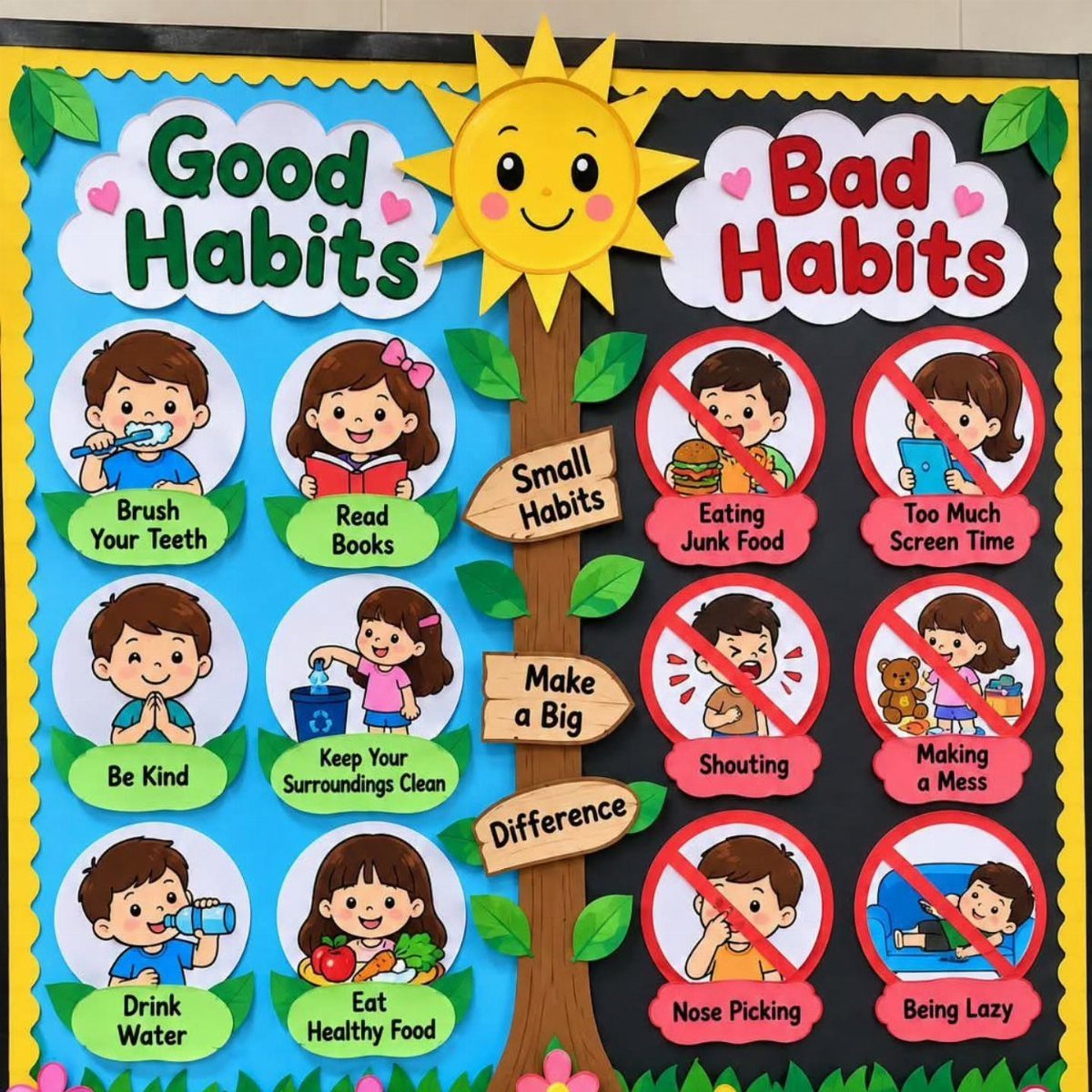
A paper tree splits this board down the middle: "Good Habits" on one side, "Bad Habits" on the other. Cartoon children make each behavior easy to read, and a sun keeps the mood light.
Draw or print the children doing each habit, then add one short line under each. I would keep the good side bigger, so the board points children toward what to do rather than what to avoid.
Classroom Management Tips
Routines do more for a kindergarten room than any decoration, so settle them before the first day. Pick a few clear expectations, teach each one, and practice until children can follow them without a reminder.
Organization belongs in the same plan. A room where children know where things live runs more smoothly for everyone.
Go easy on yourself, too.
Comparing your room to someone else’s, or planning more than you can finish, adds stress without helping anyone. Children care that the room feels welcoming to them, and a room that isn’t perfect by the first day still does that.
Student Engagement Strategies
Leave some wall space empty at the start of the year. Bare bulletin boards tell children there is room for their work and their mark.
Put names up before the visit day: on lockers, sign-in cards, desks and a birthday chart. Seeing a name in the room shows a child they belong there.
Fill the empty space with things the children make.
A "hopes and dreams" display belongs on the wall in the first week of school, and I like pairing it with a self-portrait drawn each season, since the 4 drawings side by side show how much a child grows by spring.
When a display comes down, bind the finished pieces into a class book so children can look at them again.
Once routines settle in, usually around week 3 or 4, I’d add photos of kids doing their class jobs and pictures from the books the class writes together.
Decorating with Purpose
Before hanging anything, ask what its purpose is. A room should help children feel valued, safe, independent and calm, and anything that supports none of those can stay in the closet.
Schedule cards, calendar cards, labels and nametags earn their spot. Match them to one color scheme, add visuals, and use a font young readers can read easily.
Label with restraint. I label what children need to find and put away on their own, and I skip the rest, because over-labeling turns every tag into background noise.
When you shop, favor pieces that teach several skills at once and cost little. That test beats any theme.
Frequently Asked Questions
How do I decorate my kindergarten classroom?
Function comes first: lay down a rug for circle time, tuck a tent in the corner for independent reading, and arrange low tables where art supplies can stay out.
Give each area one clear purpose, and leave some wall space bare so children’s own work can fill it. Decorative extras that do not teach a skill or mark a zone can fill in once the working parts are set.
What are the classroom decor trends for 2026?
Composition notebook and chalkboard brights both show up often, and groovy retro is still around.
Composition notebook marbling gives you the calm of black and white paper with pops of color from the binder clips you add. Chalkboard brights use a dark background to make saturated chalk colors stand out, bright but not loud.
What are some must-haves for a kindergarten classroom?
Schedule cards, calendar pieces, bin labels and name tags go up before anything decorative.
Print each child’s name and attach it to their desk, locker, sign-in spot and the birthday chart before visit day, so they walk in and see their place already made.
A jobs chart with a picture next to each task works better than words alone, since most kindergarteners arrive not yet reading.
Where do teachers get classroom decor?
Many teachers buy themed bundles or editable decor kits from stores like Target and Amazon, and others make pieces by hand.
A coordinated bundle solves the color-matching problem in one purchase instead of hunting through separate listings. An editable set means you can type in your own text and print just the pieces your room actually needs.