Most of these themes run on paper, markers, cardboard and tape, and the range is wide: a lemon classroom or a bee and hive wall takes one craft period, while the camping classroom or the horse stable play area asks for real props and floor space.
What picks yours is how much of the room you can live with for a full school year, so match the theme to your layout and your teaching style before you match it to a color.
1. Tropical & Beachy
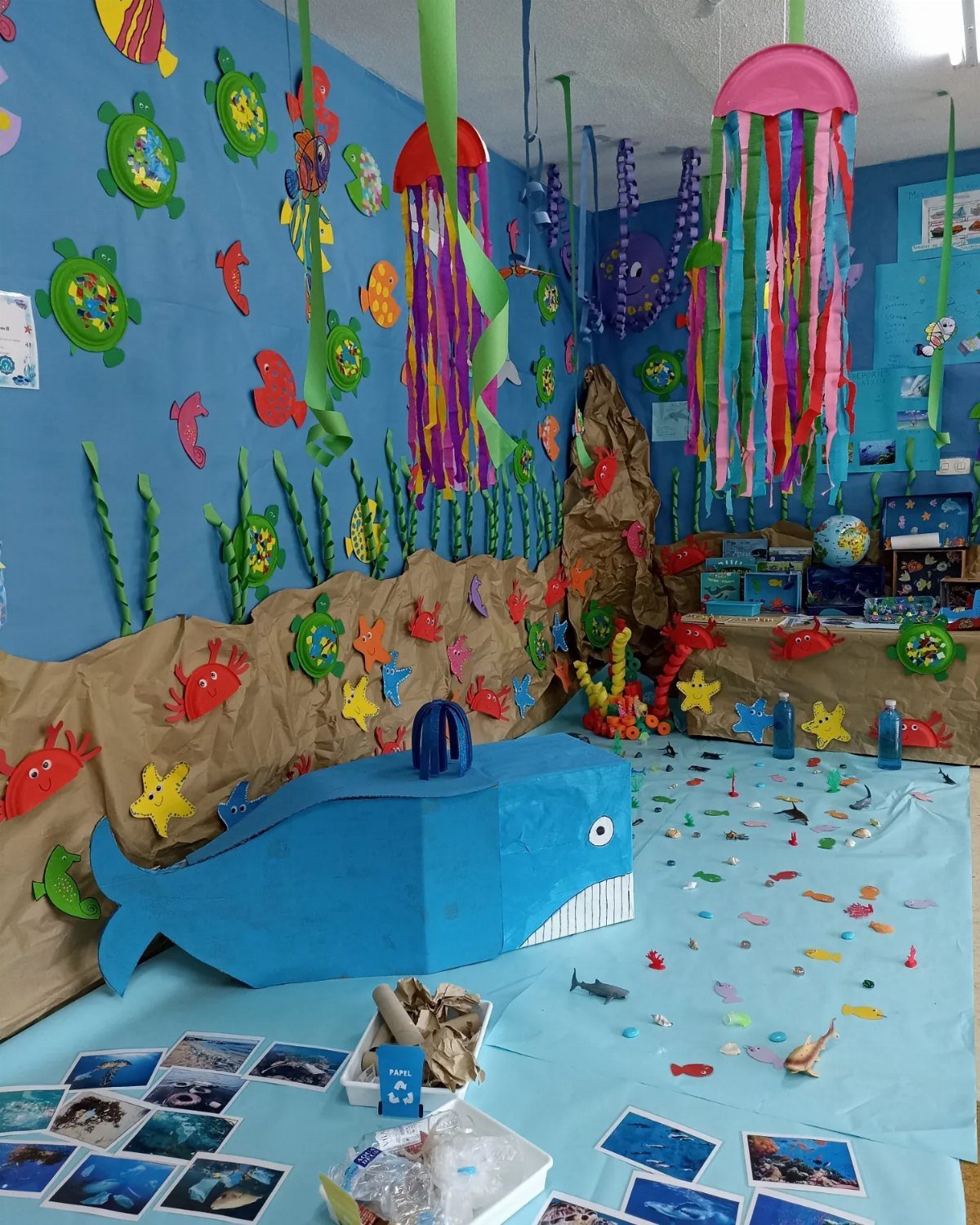
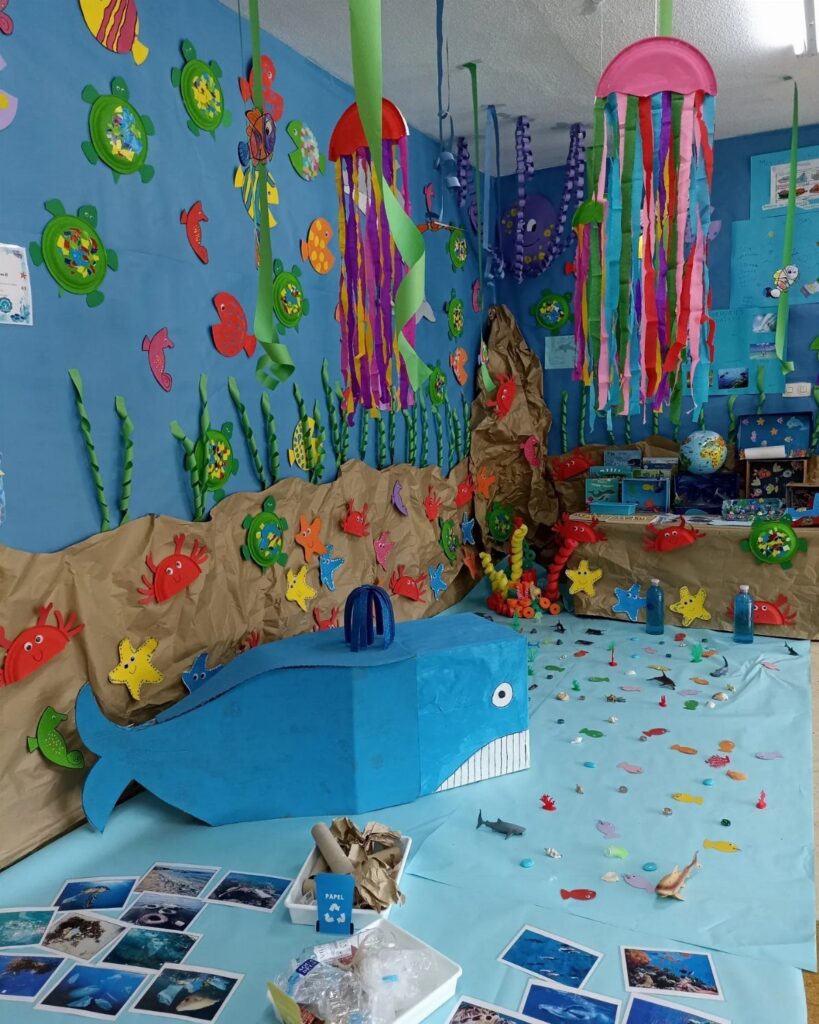
Though the heading says tropical and beachy, this version reads as underwater, which is a fine direction for kindergarten.
Paint or paper the walls blue first, then add one oversized animal as the anchor.
Smaller paper jellyfish, turtles and fish cost little and can double as a class craft. I’d let the kids make the fish.
2. Camping Classroom Theme
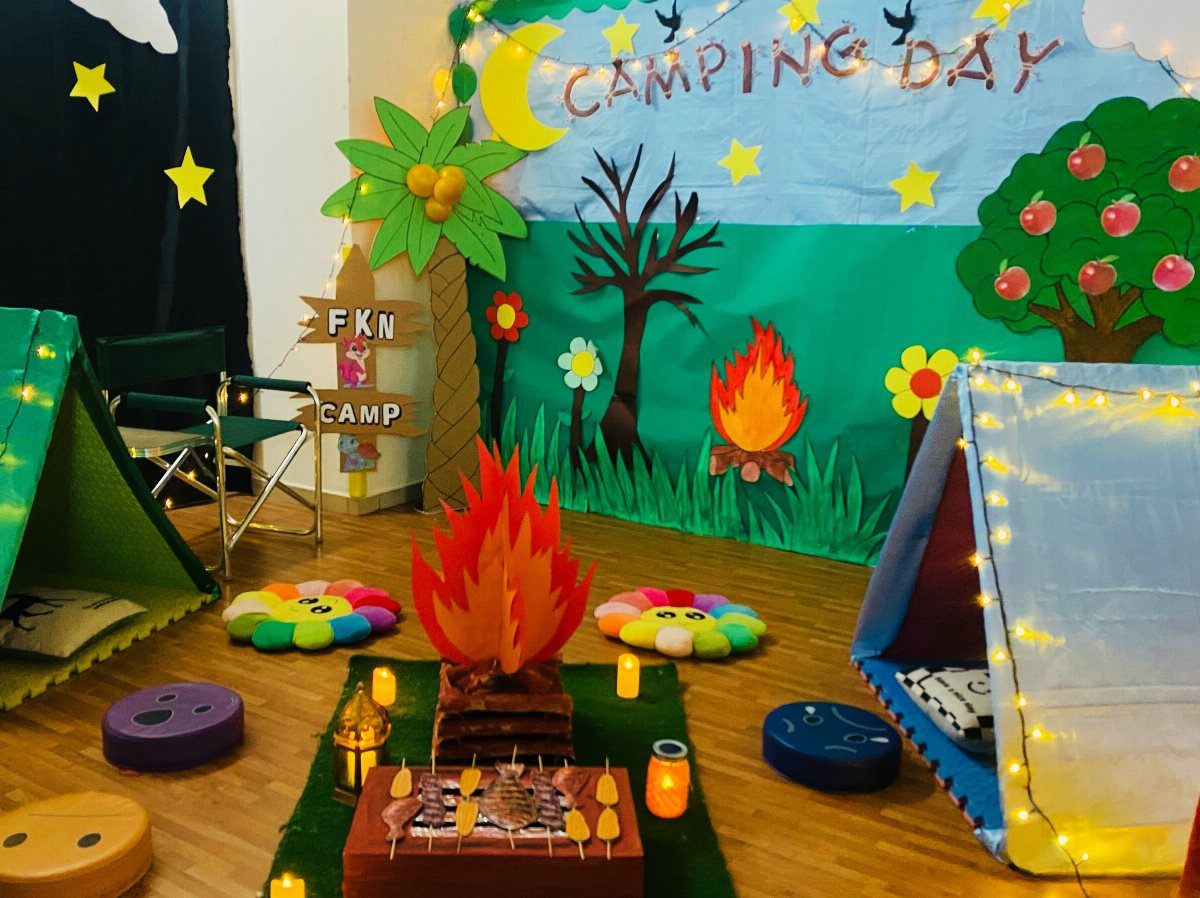
2 small tents, a fake campfire and a backdrop with a tree and stars make a corner that kids will want to crawl into. A banner naming the day tells children right away what the space is for.
Keep the setup low and open so you can see inside the tents.
The campfire can be pure prop, so skip anything that needs a plug. I’d pair it with a reading hour, since a tent is already a cozy place to sit with a book.
3. Nature Classroom
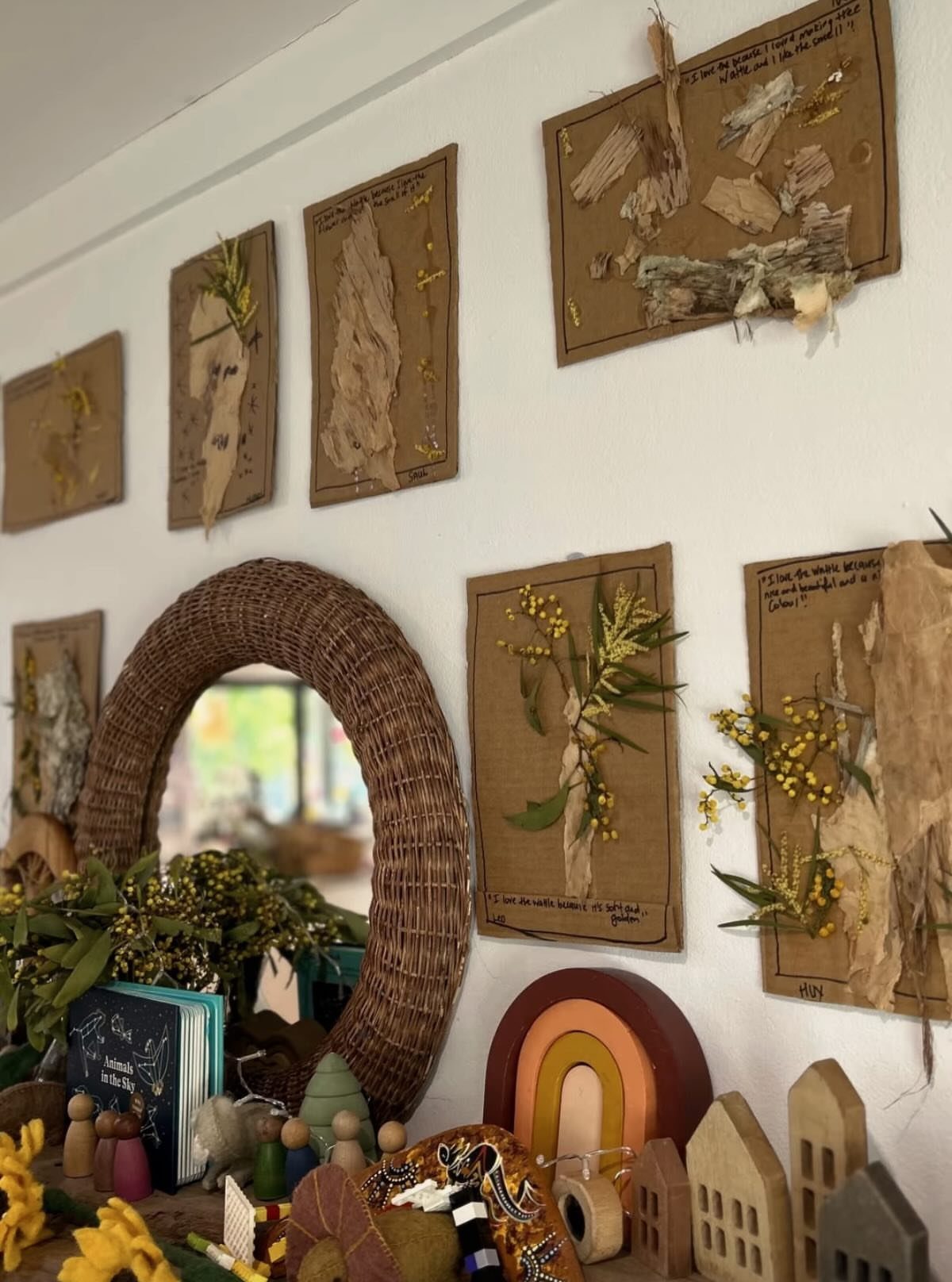
White walls let the earthy textures stand out without much else.
This costs less to set up than most other themes.
Kids can press flowers or make bark art for the display, and wooden toys keep the shelf in the same palette. I like it for teachers who want calm over color.
4. Graphics of Composition Notebooks
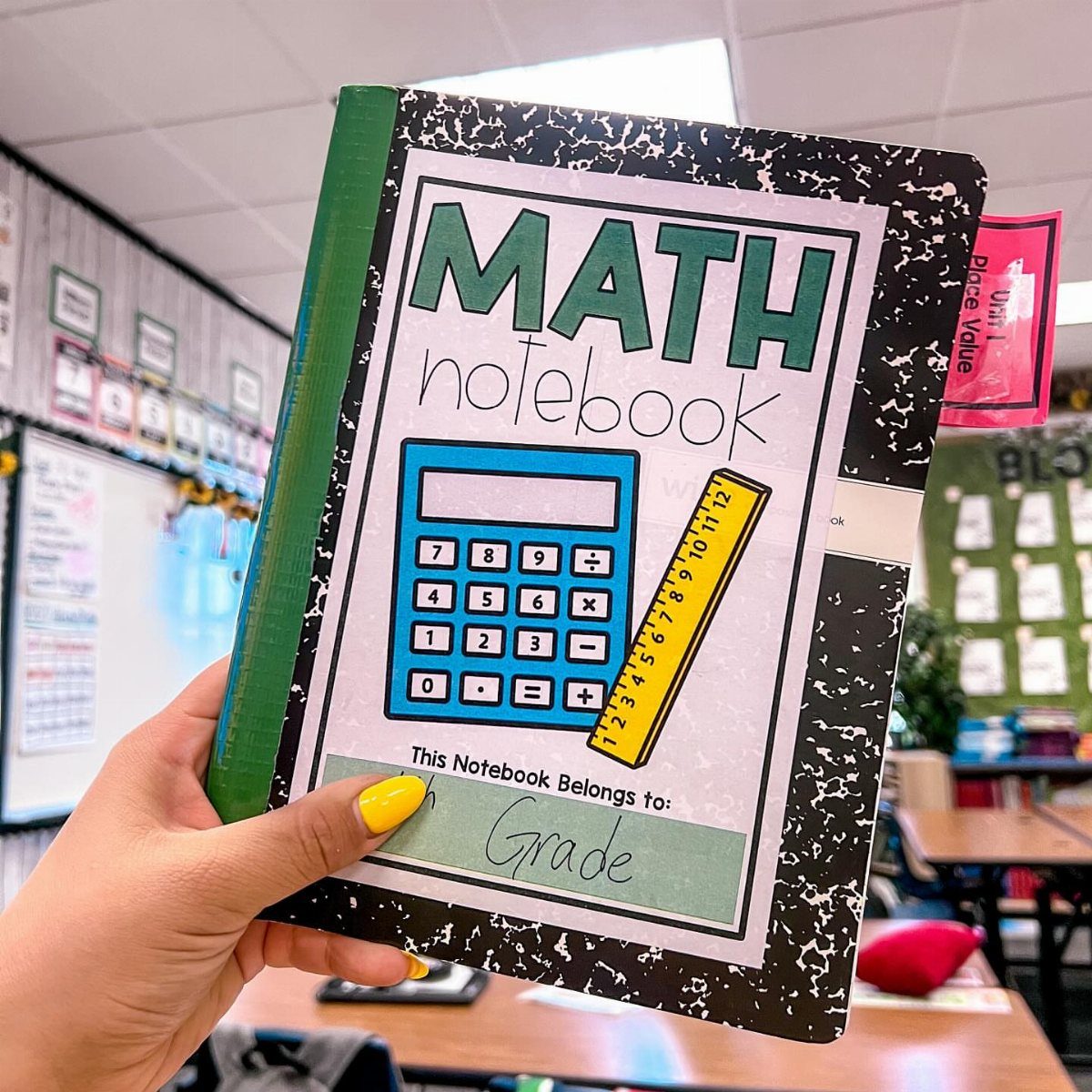
Math gets its own look when the notebook cover shows a calculator and a ruler, so a child can spot the right book at a glance. Each subject gets its own cover art.
Print or draw one graphic per subject and tape it over a plain composition notebook.
Pick images that match the subject, like the math cover’s calculator and ruler, so even non-readers can sort their books. It costs little and keeps desks organized.
5. Safari Theme
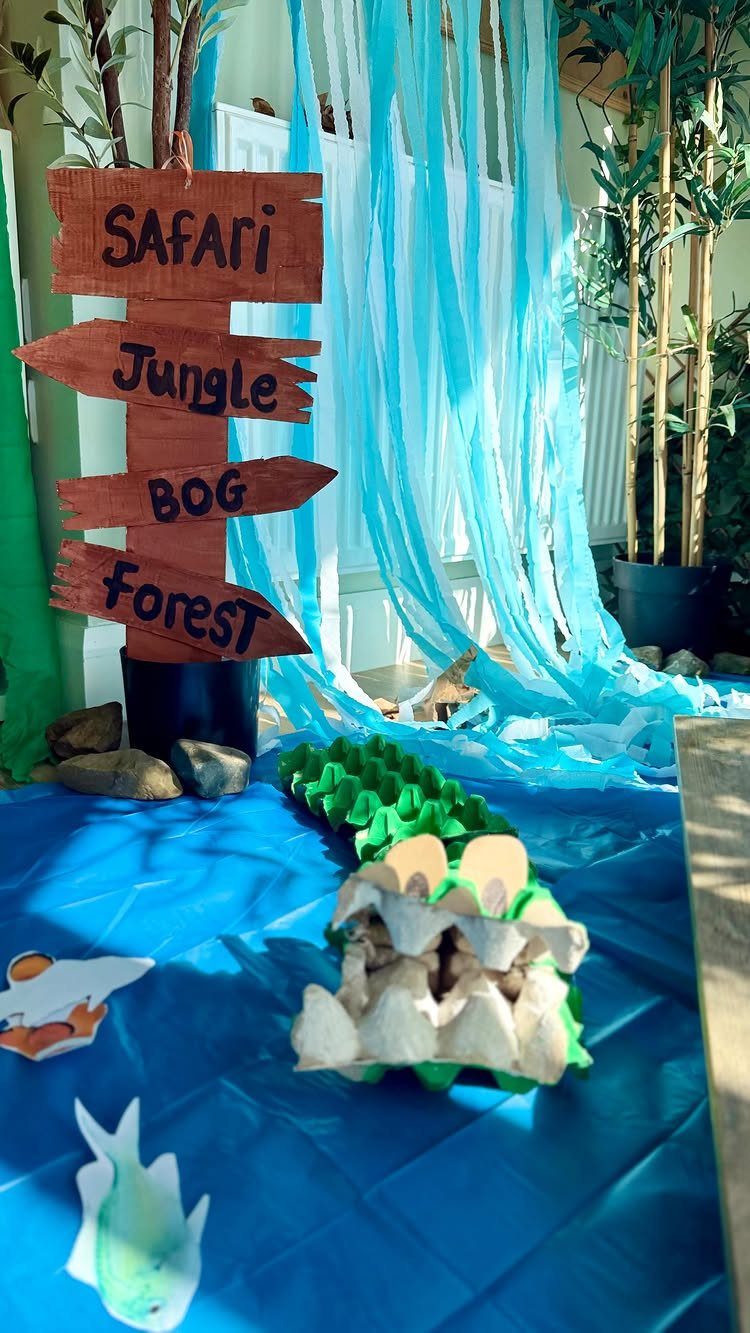
An egg carton crocodile is cheap, funny and easy for small hands to help build. A wooden signpost reading "Jungle", "BOG" and "FOREST" points kids toward imaginary stops.
Blue plastic sheeting and blue streamers make a pond for the crocodile to sit beside.
Cut the carton cups into teeth and paint it green. If sign lettering feels like a chore, label cardboard arrows instead; they read just as well.
6. Outer Space Theme
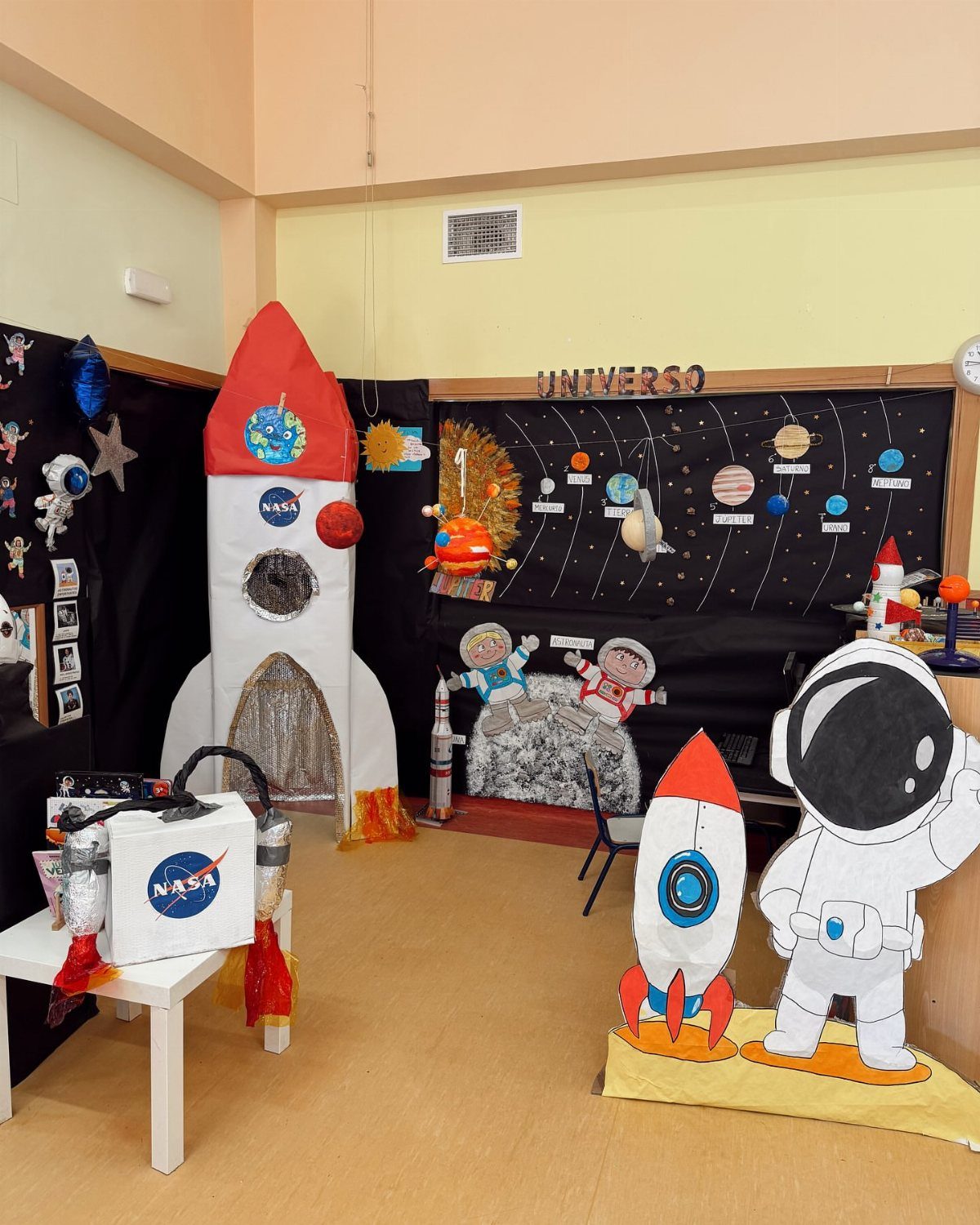
A big cardboard rocket is the centerpiece of this space corner, with astronaut cutouts, NASA logos and a solar system display around it. Together they give children something to stand beside and imagine with.
Build the rocket from cardboard, since it’s free and sturdy enough for a wall.
Add a hand-lettered title banner like the "UNIVERSO" one here. I’d save the planets for a class project so the display fills in over several weeks.
7. Reading Cove with Books
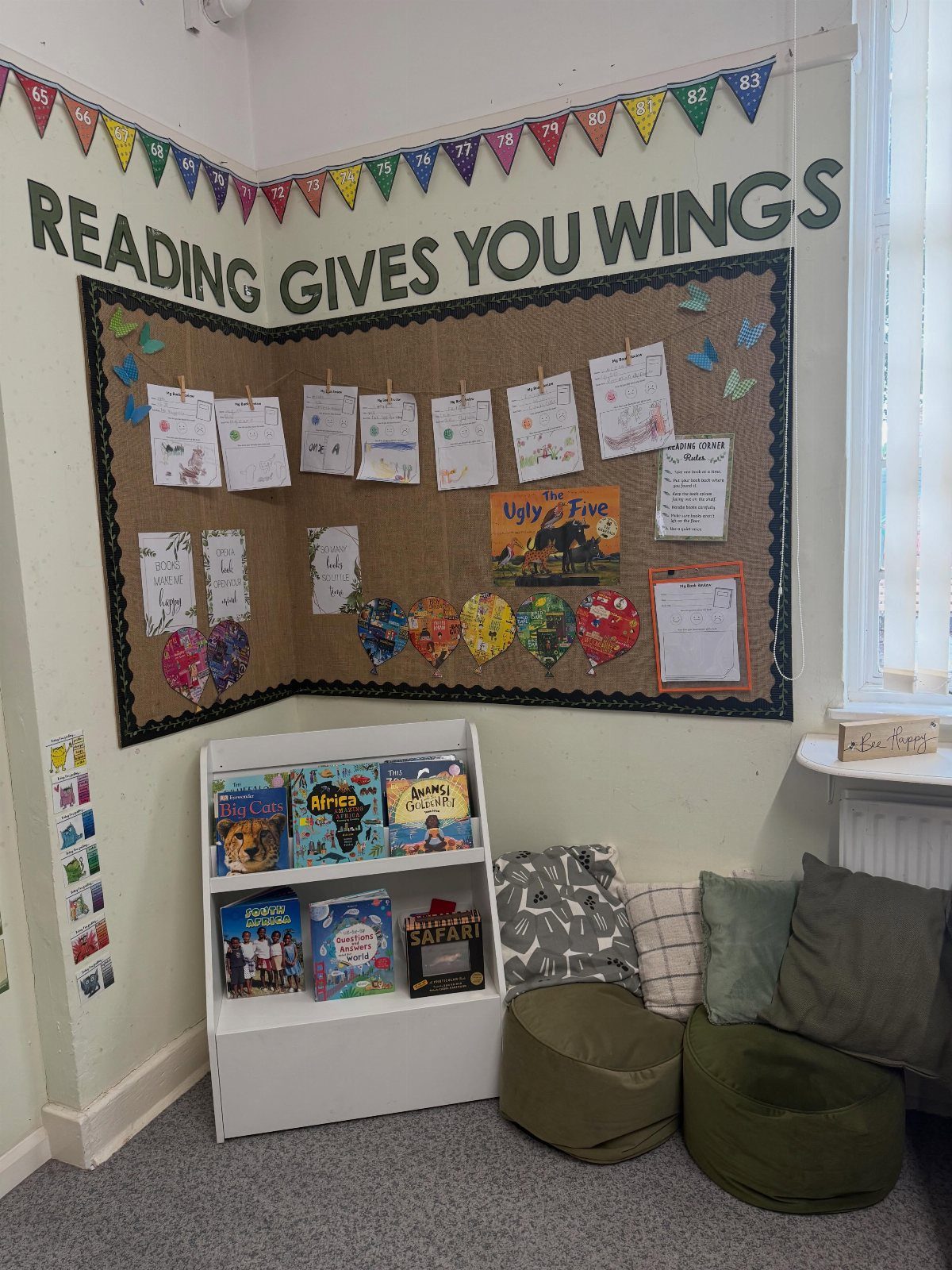
A reading cove needs very little: a low white bookshelf, 2 beanbags and a corner where kids can see the covers of the books. Keep the shelf at child height so kindergartners can pick their own books without asking.
The banner and the bulletin board do the theme work, so use the board for student work and the cove stays tied to the rest of the room.
Green beanbags with a pillow each keep seating soft and clearly marked as the place to sit. I’d limit it to 2 beanbags so the space stays small and calm.
8. Motivational Posters and Comic-Style Signs
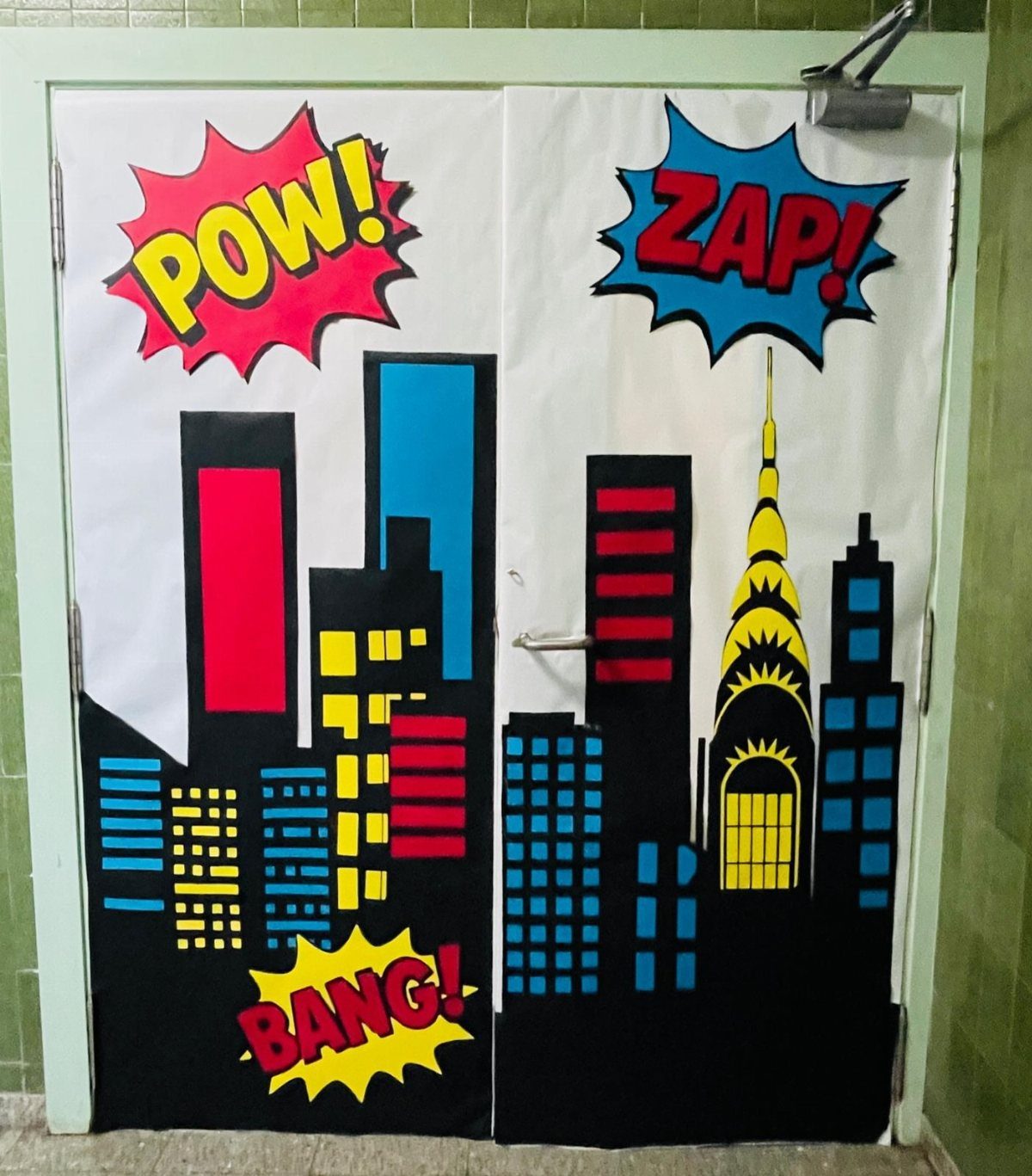
"POW!", "ZAP!" and "BANG!" in bold block letters read from across the hall, and kindergartners love sound words.
Swap in your own class phrases, like a motivational line, if you want the door to say something besides noise. Paper and markers cover the whole cost.
9. Goose Mascot
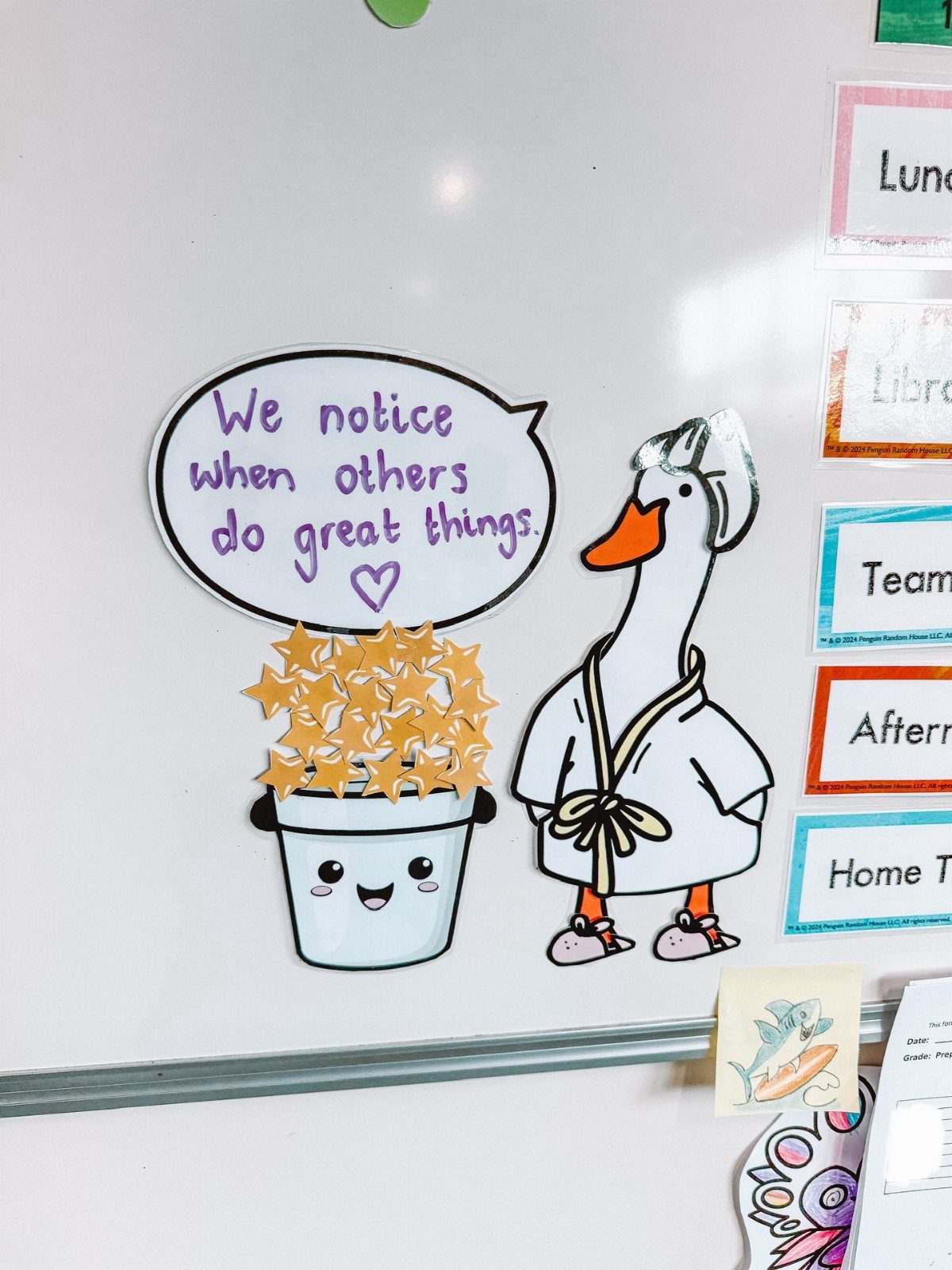
A cartoon goose in a robe gives the class a character to rally around.
Draw the goose right on the whiteboard, or print one and tape it up. Kids can earn a star when they spot a classmate doing something great.
I like this better than a plain reward chart because the goose gives the praise a voice. The only cost is a bucket and some paper stars.
10. Western Theme
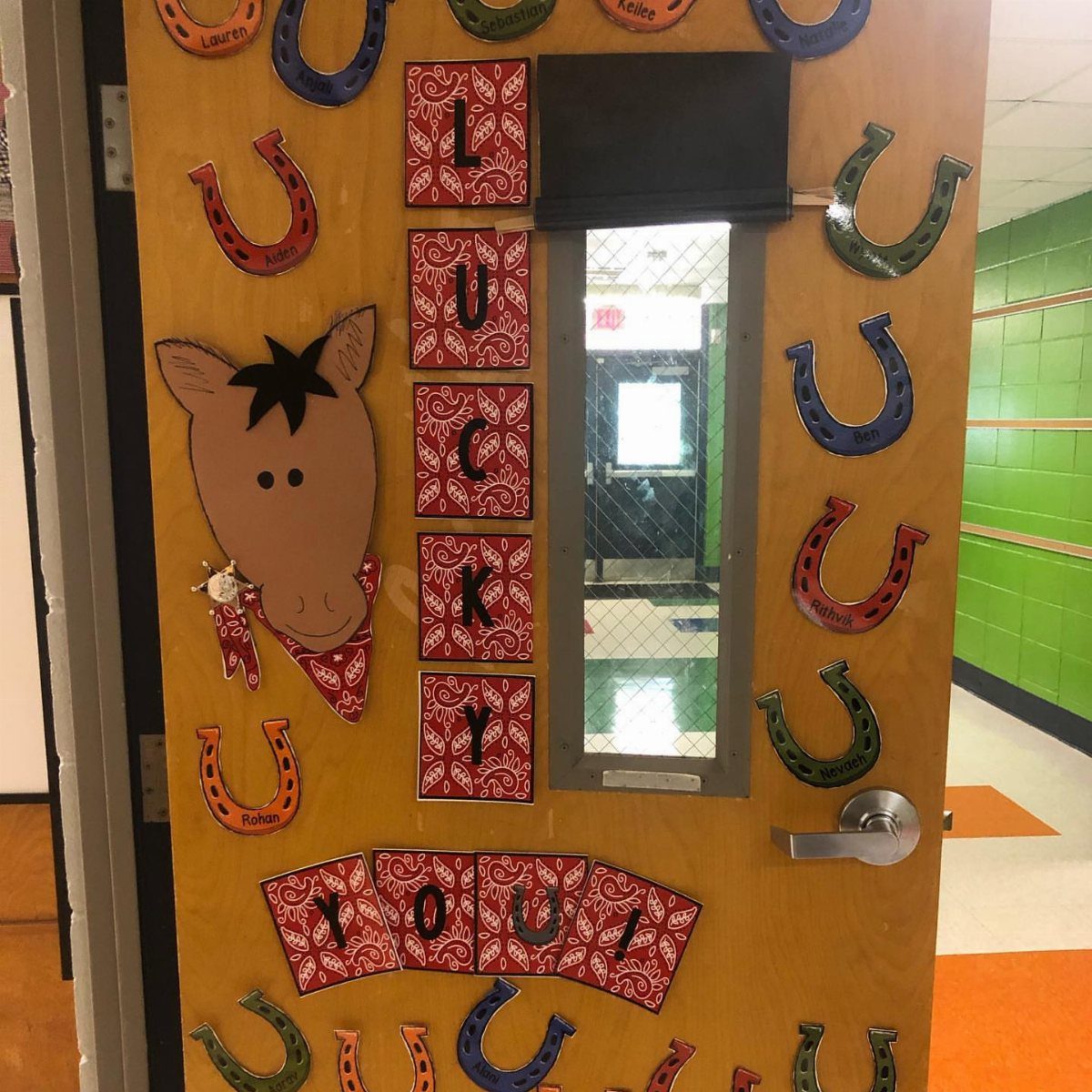
Horseshoe cutouts with a name on each are the smartest part of a western door, since every kid sees their own spot. Every child finds their own shoe, so the door doubles as a welcome.
Cut the shoes from colored paper and write names in marker.
Bandana-print paper or wrapping paper is a cheap stand-in for fabric. I’d cut the horseshoes with the class so kids see their names go up.
11. Disco Theme
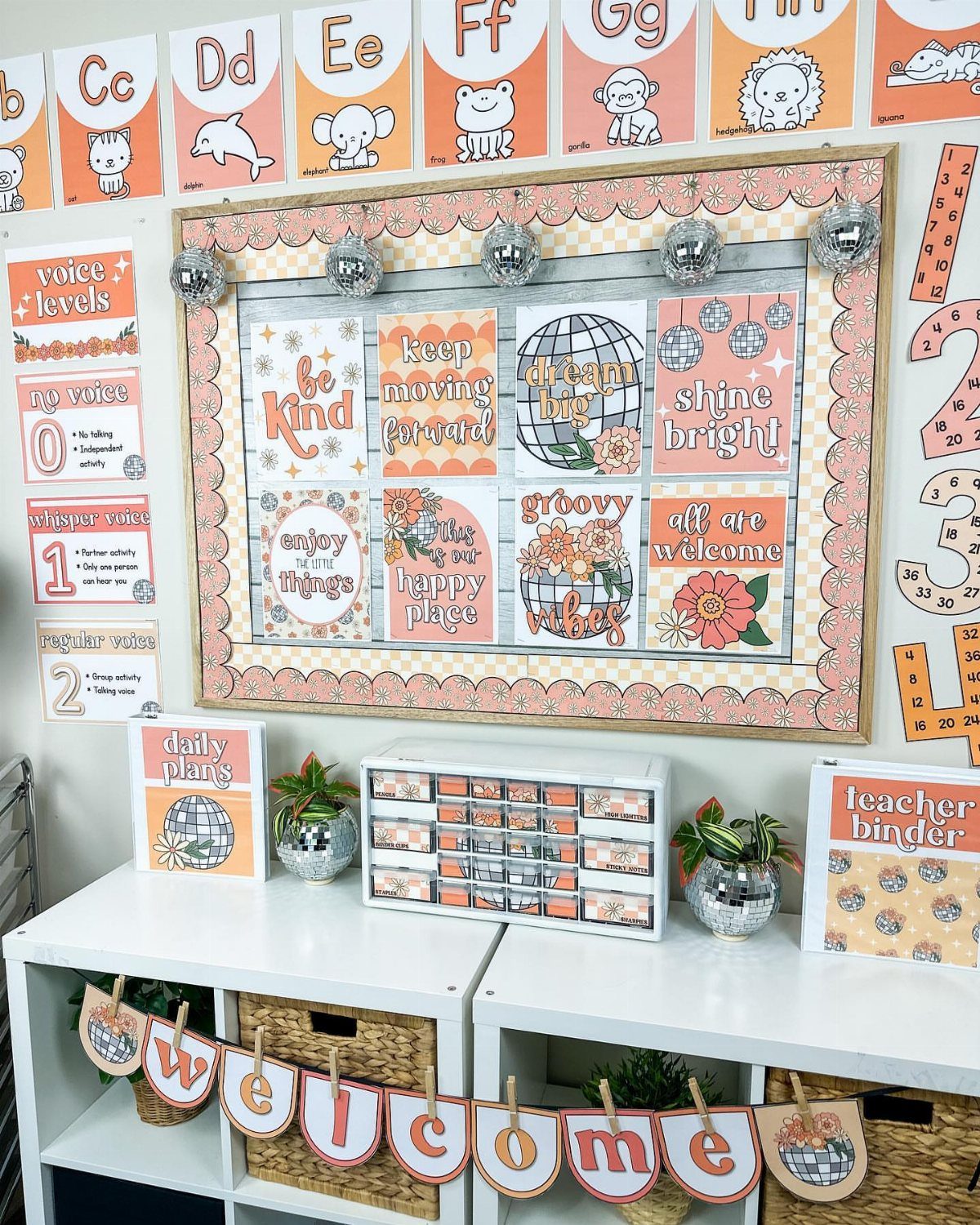
Disco balls and orange retro accents give a plain white shelf a lot of shine. Because the shelving and storage bins stay as they are, the theme adds sparkle without changing how the room works.
Hang a few disco balls near the bulletin board and keep the alphabet posters up, so the decor still teaches.
A "Welcome" banner ties it together. I’d keep the sparkle to a few spots; too many shiny pieces pull attention away from the lessons.
12. Weather Theme
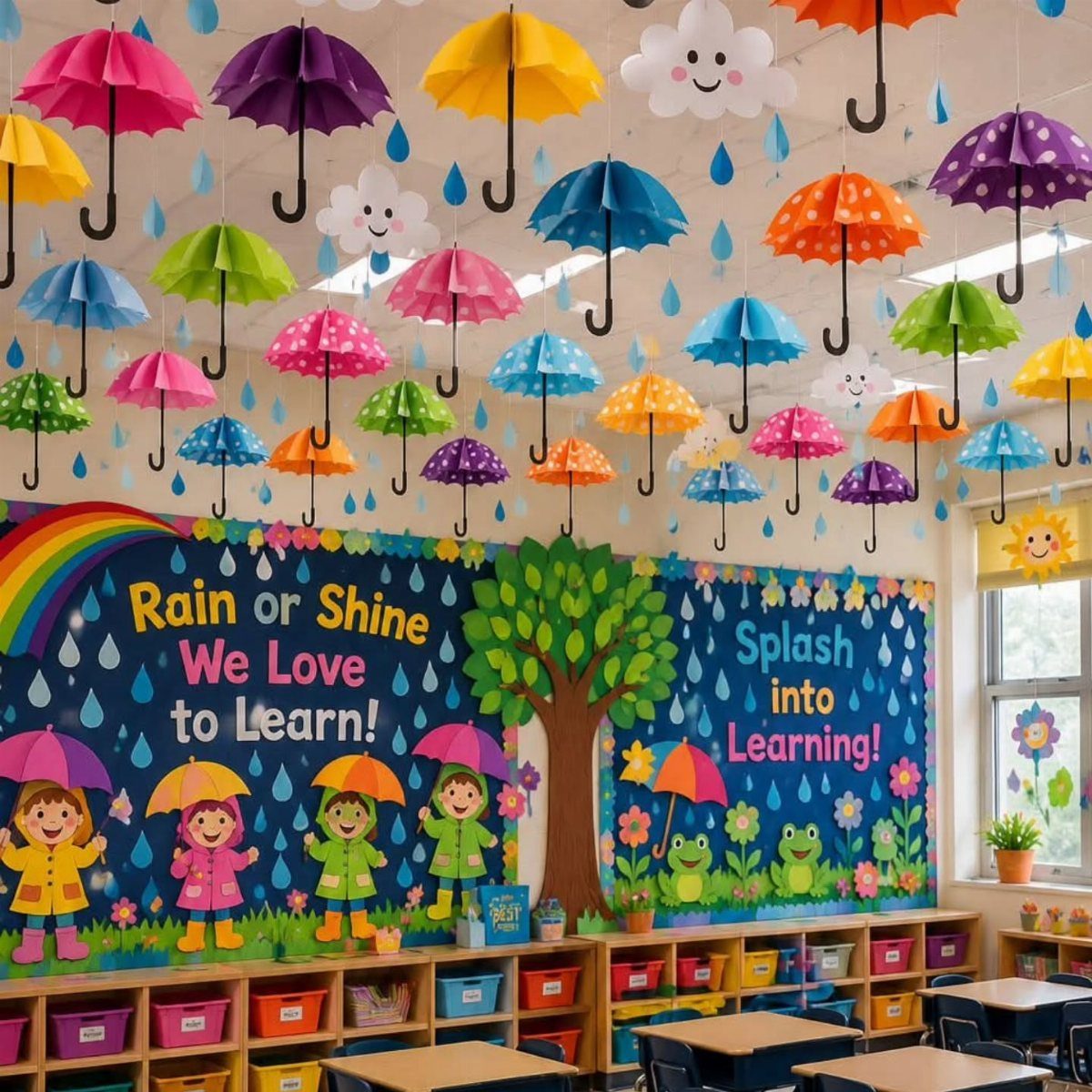
Colorful umbrellas hung from the ceiling do most of the work in a weather room. Add paper clouds between them, and the whole ceiling becomes the sky.
Kids can fold and cut the umbrellas and clouds themselves, so the decor doubles as a class craft. I’d hang them first, since overhead decor is the hardest to add once the room is full of kids and furniture.
13. Star-Themed Decor
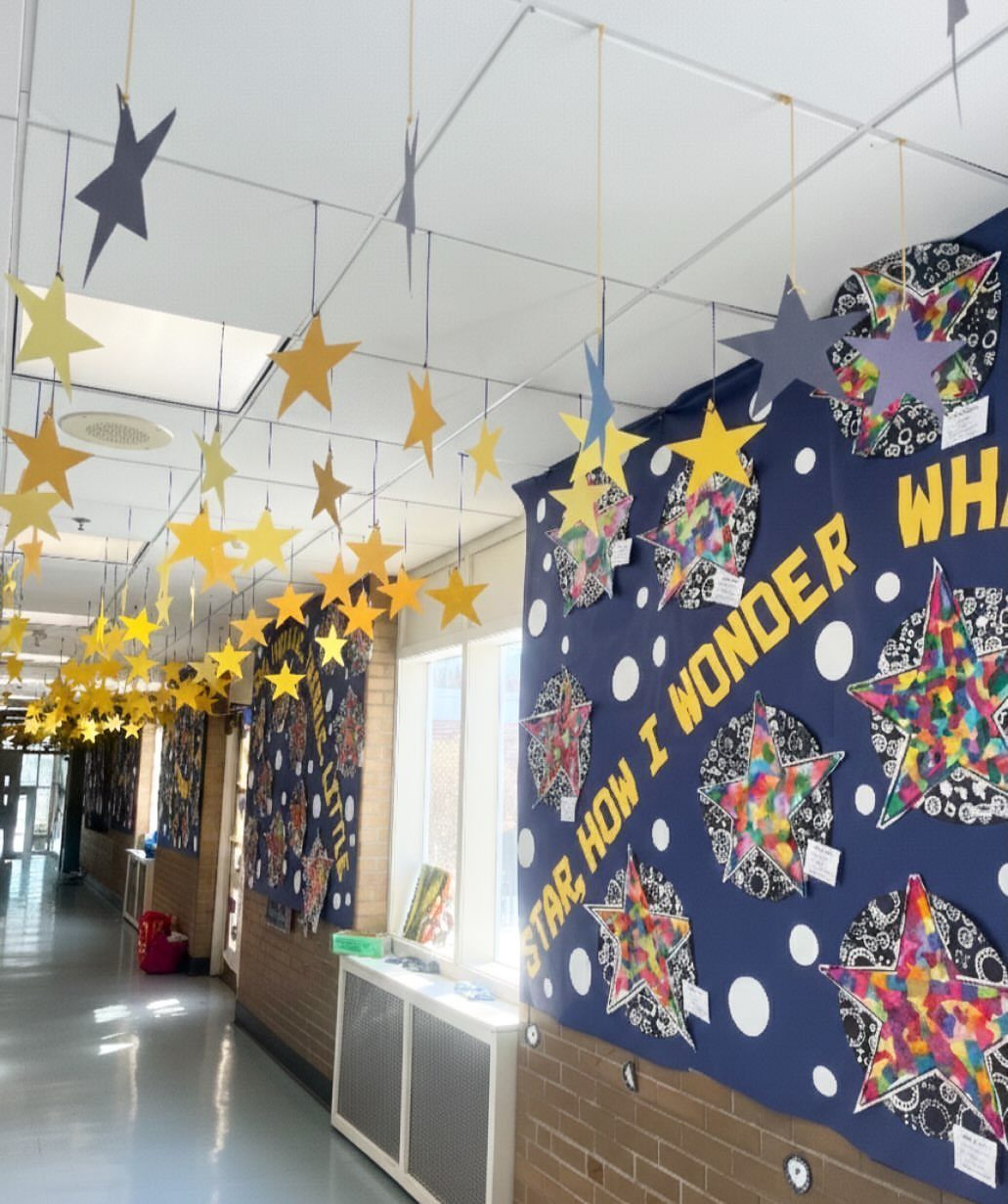
Yellow and grey stars hung at different heights give a hallway depth without a single piece of furniture. The blue display board behind them works as a night sky, so a "Twinkle, twinkle" style title fits right on it.
Cut the stars from paper and hang them on string, which costs almost nothing. I’d keep to 2 colors so the hall looks planned rather than busy.
14. Circus Theme
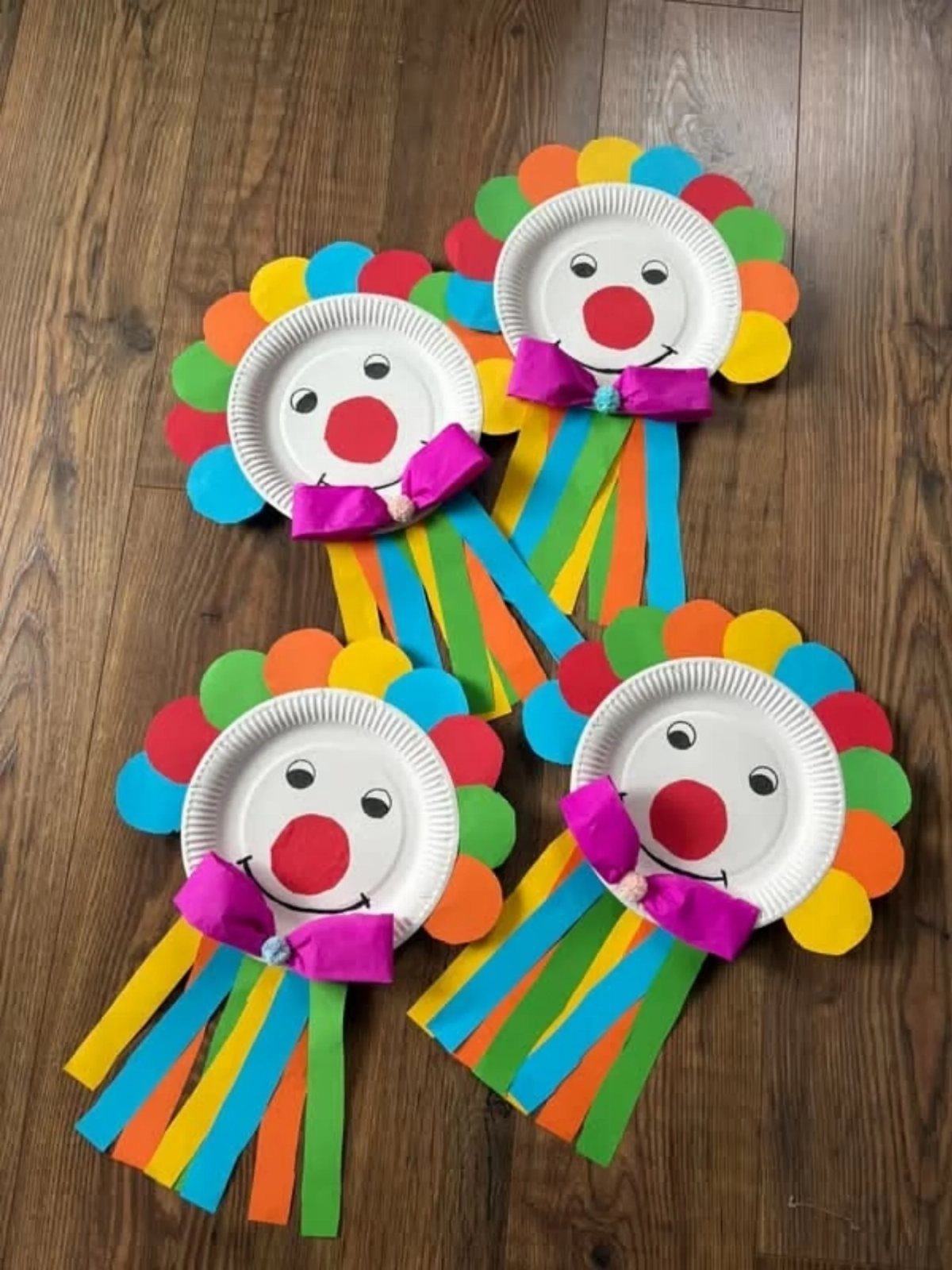
Paper plate clowns are the cheapest circus piece I know, and kids can make every one of them.
Let each child give their clown a different expression, then hang the set along a wall or door. A row of mismatched faces looks better than a matched set.
15. Carnival Theme
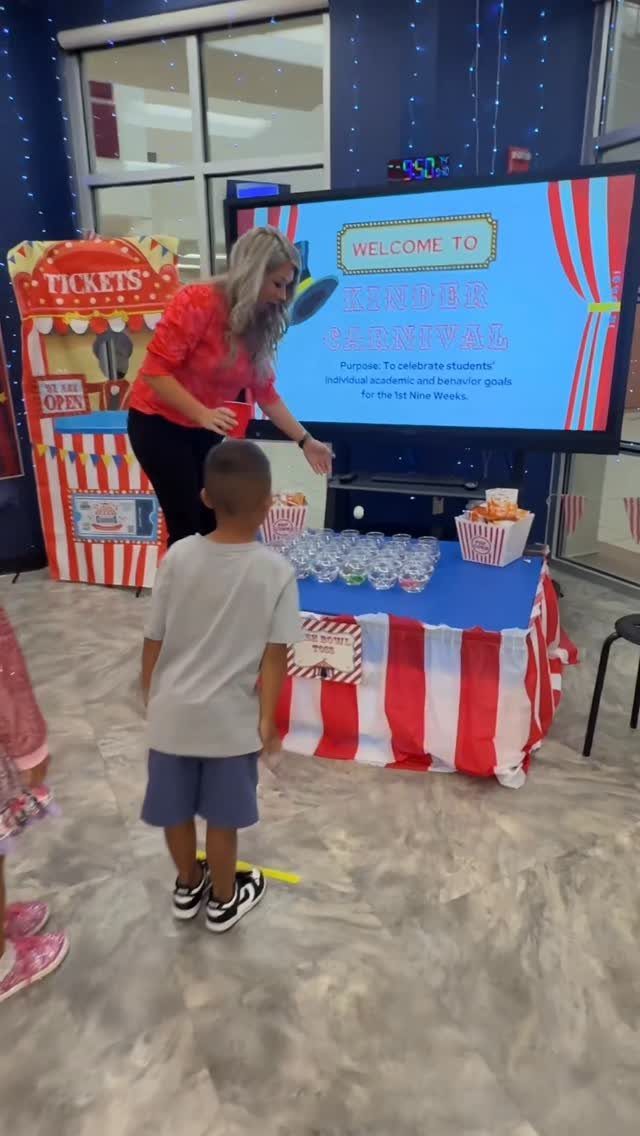
Red and white stripes on a table skirt say "carnival" before anyone reads the sign. A blue table makes the stripes pop, and a ticket sign tells kids what the station is for.
Make the skirt from paper or fabric strips, and label each game station so children know where to line up.
I’d give every child a paper ticket to hand over, since that small ritual is what makes the stations feel like a carnival.
16. Farm Theme
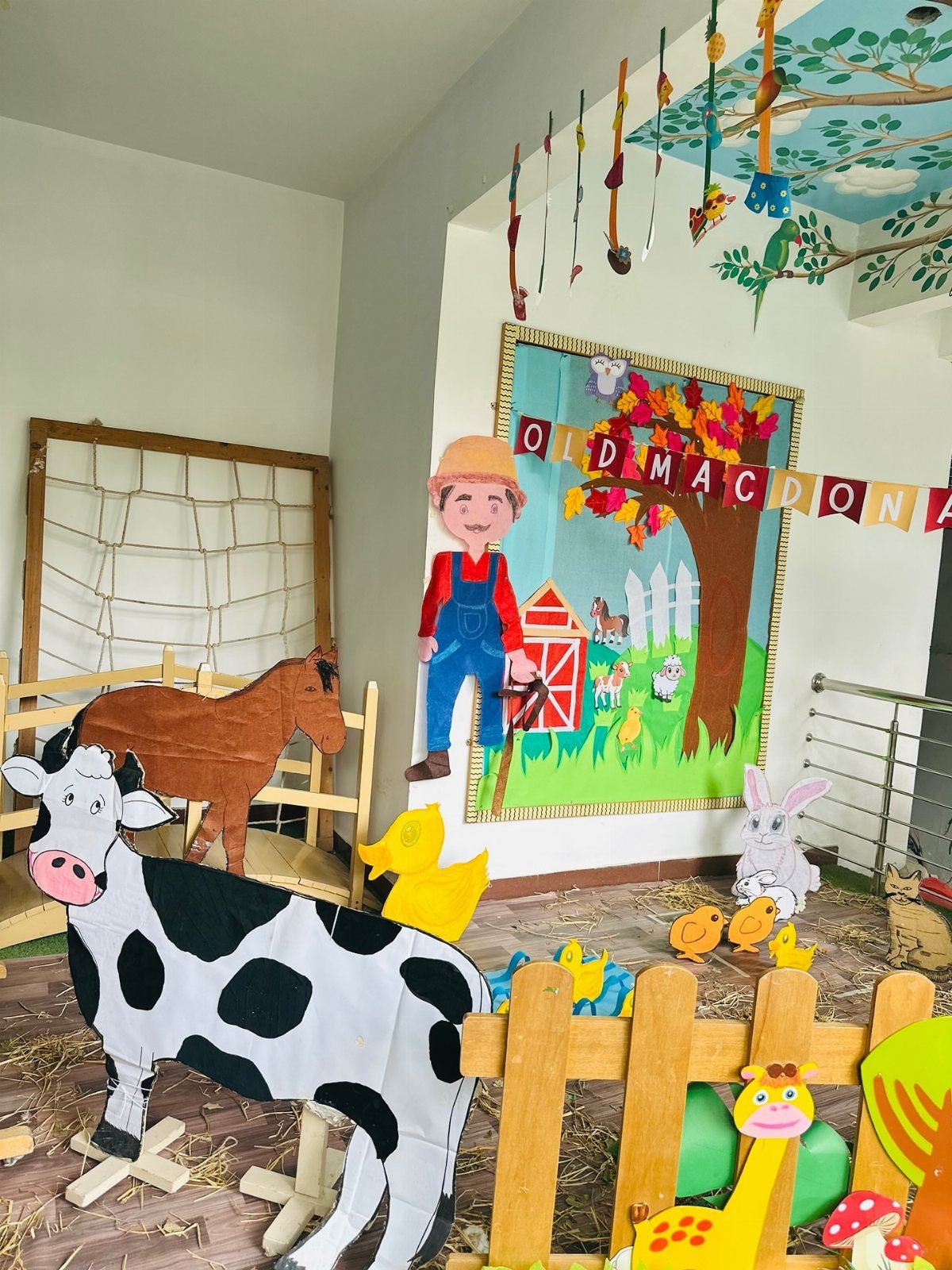
Stand them in front of an "Old MacDonald" banner, and the song becomes the lesson.
Add a low wooden fence and a little straw to make a play spot.
Kindergartners will sing along, so I’d sketch the animals large and simple; cardboard boxes from the school office work fine. Straw sheds, so keep it on one small patch.
17. Bee and Hive Theme
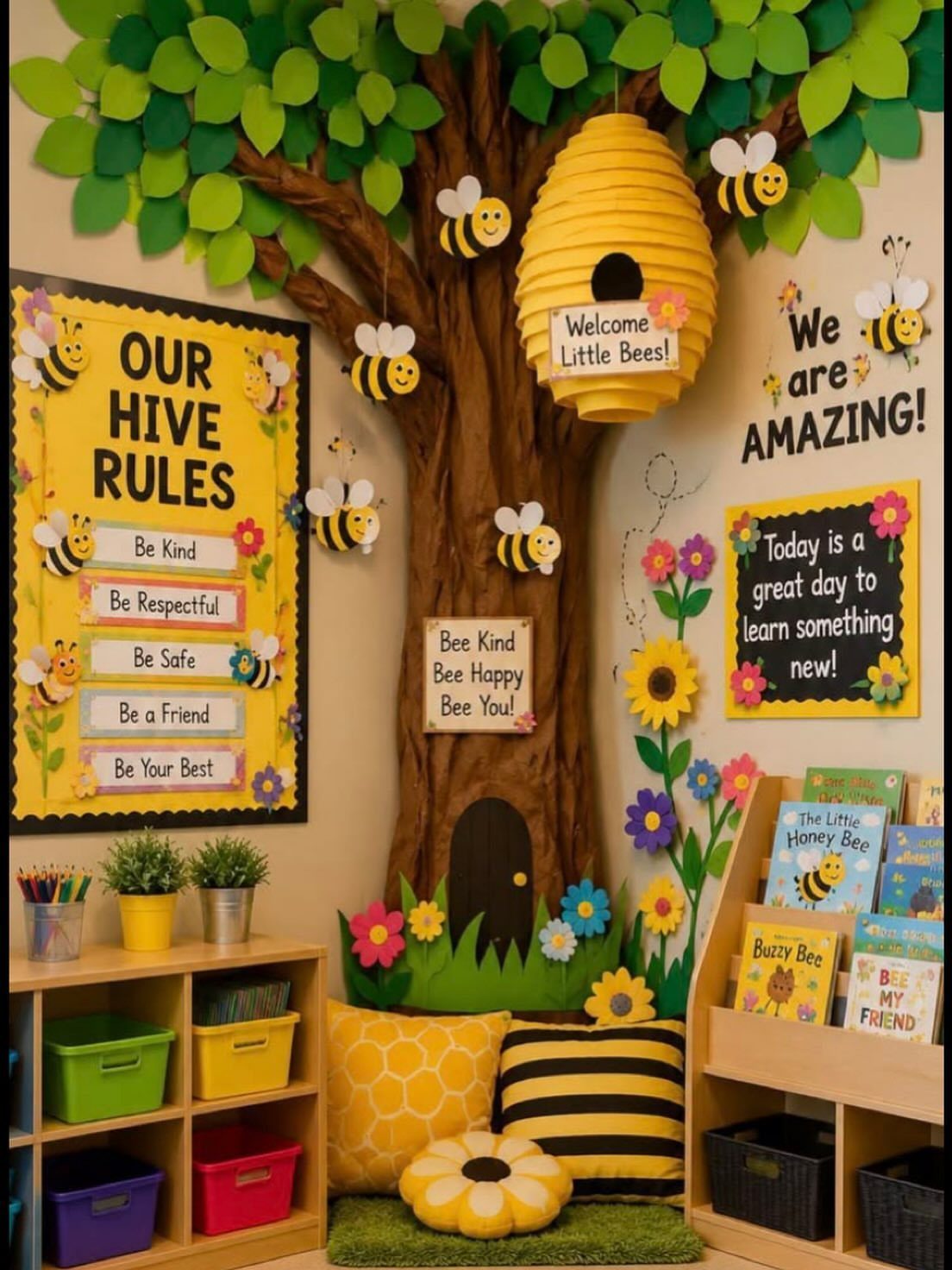
A bee corner works because one idea ties everything together: a hive, a tree and a rules poster titled "Our Hive Rules" that sounds like a team agreement. Kids hear "hive" and understand they share the space.
Make the hive from honeycomb paper and the tree from rolled brown paper, and keep pillows on the green rug so the seating is obvious.
I like a small shelf of picture books here; the bee decor can stay modest while the books draw children in.
18. Magical Forest Theme
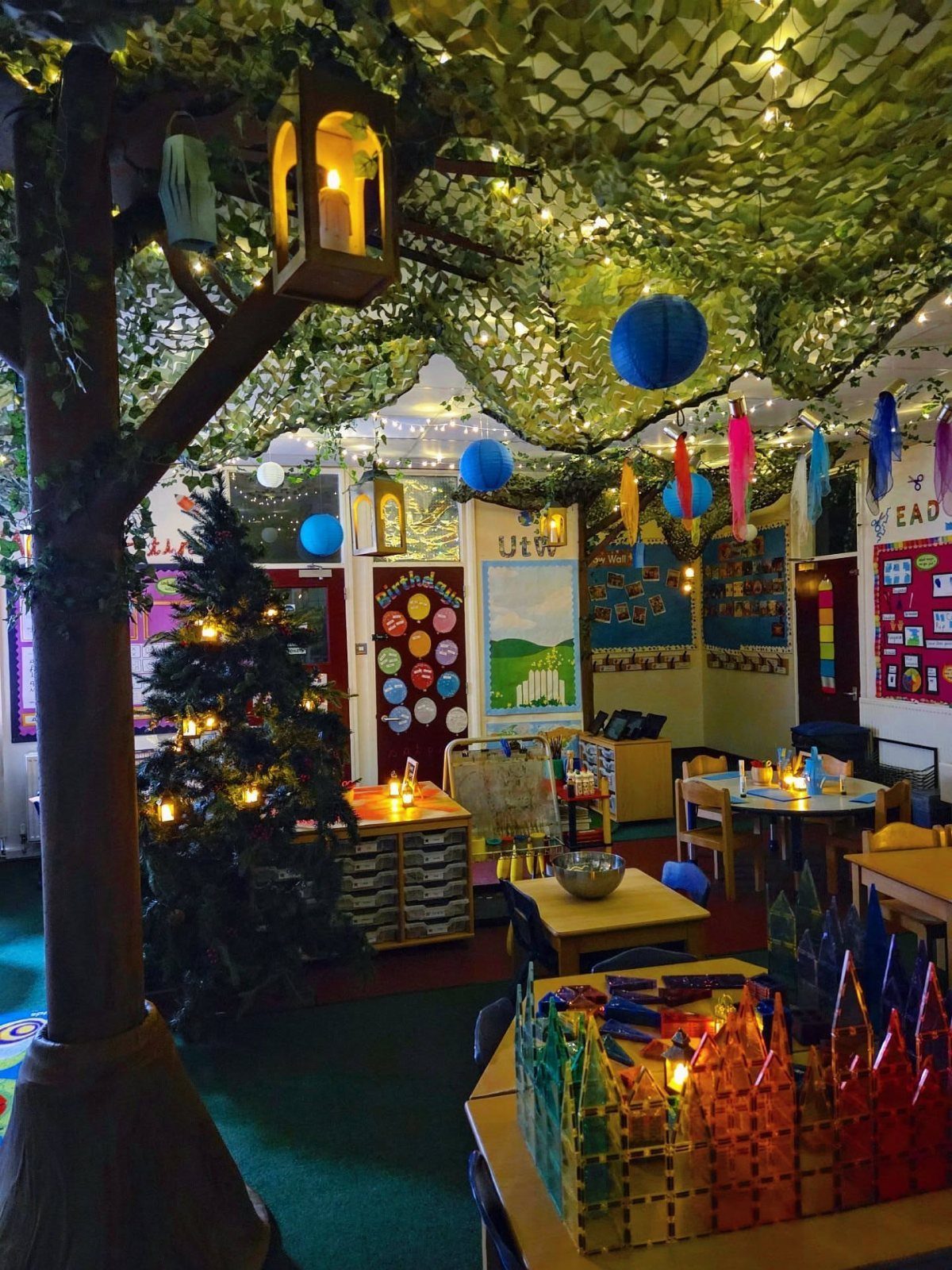
Fairy lights strung through a leafy canopy turn an ordinary classroom corner into a forest. A large tree anchors it, and paper lanterns hung at different heights add the glow.
Use battery-powered lights so no cords cross the floor.
I’d hang the canopy over the reading area or a calm corner and leave the rest of the room as is, since twinkling light everywhere is more than kindergartners can ignore. Paper lanterns are the budget piece.
19. Bug and Insect Literature Doorway
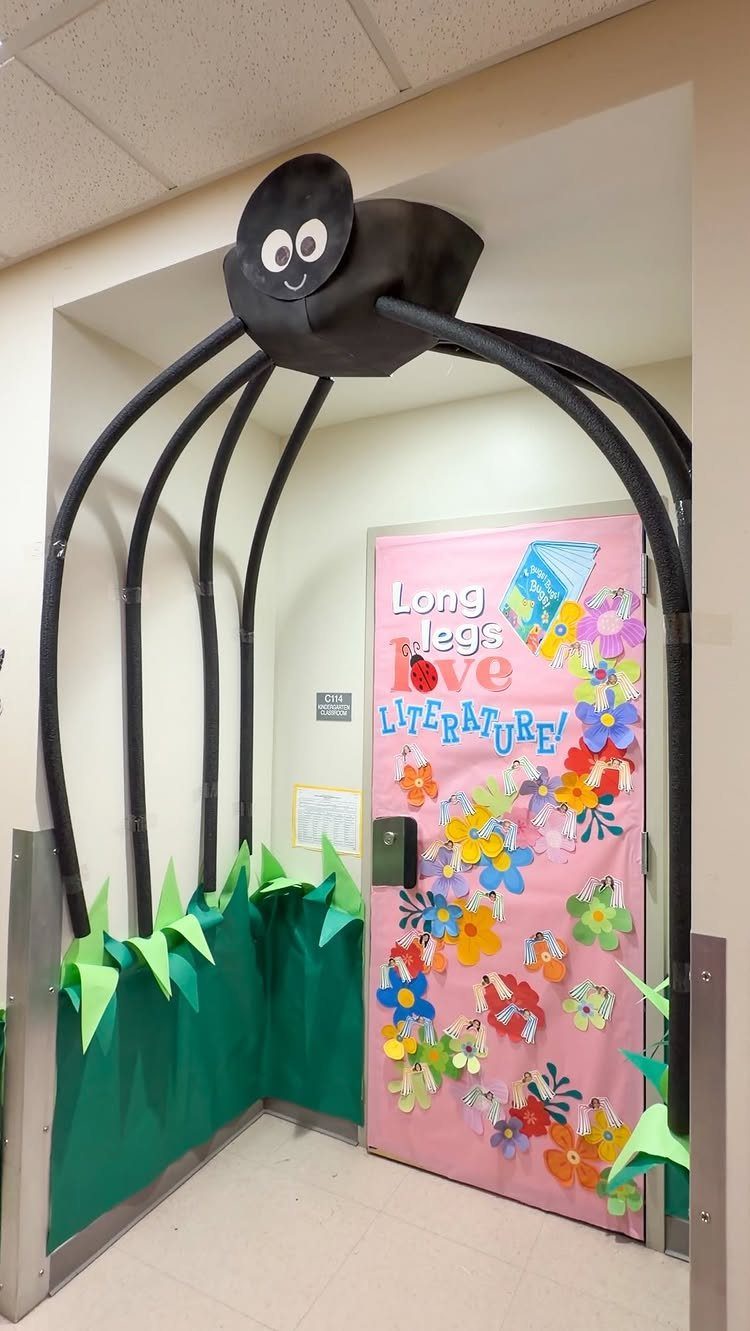
A spider arch over a doorway turns a pun into a welcome, and "Long legs love LITERATURE!" is a line kindergartners will repeat on the way in.
Cut the arch legs from black paper and curve them over the frame so they meet at the top.
Paper flowers and grass at the base keep the door cheerful rather than creepy. I’d make the flowers a class craft, since small hands handle that part well.
20. Under the Sea Theme
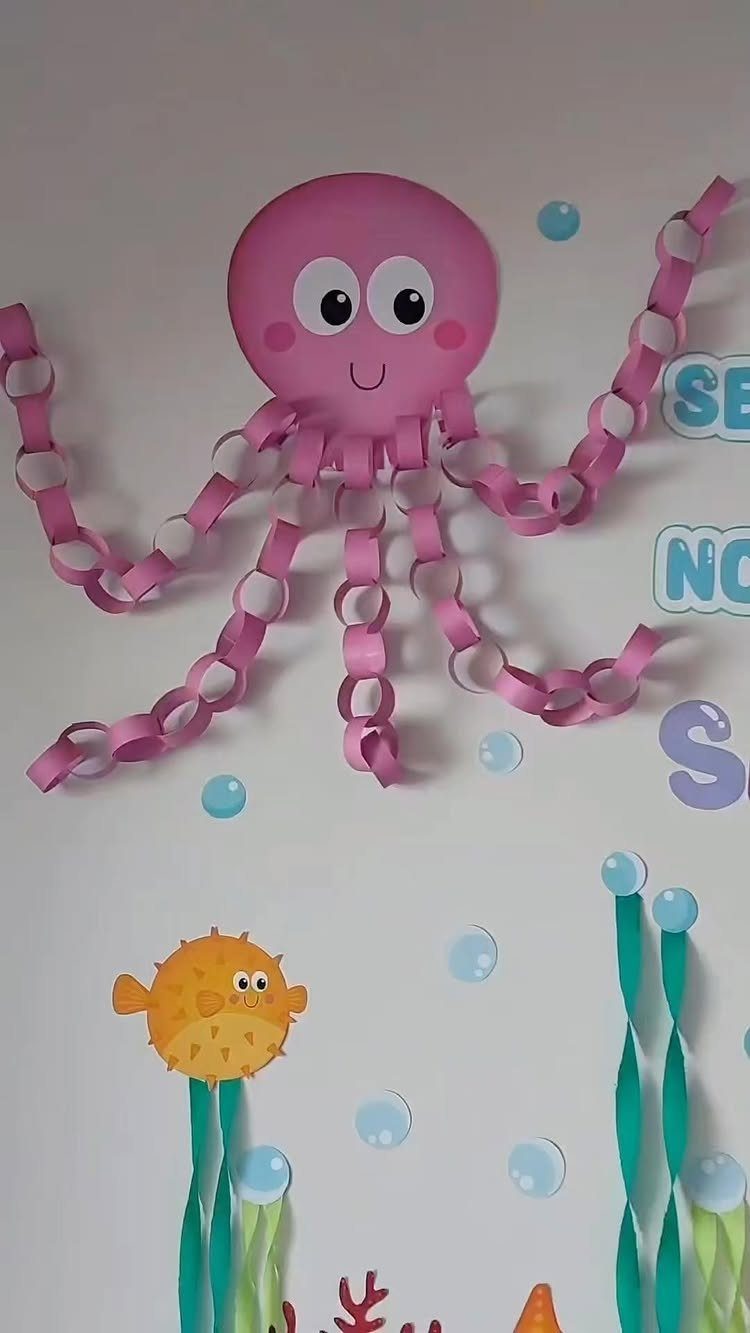
A pink octopus with curled tentacles gives an ocean wall its personality, and everything else can stay small and simple around it.
Cut the body from one sheet and curl each tentacle by wrapping it around a pencil. Add a yellow fish, blue paper bubbles and green seaweed strips for filler.
Because this one is flat paper on a white wall, it costs very little and comes down without a trace. I’d add letters last so the wall can carry a title.
21. Pretend Pet Shop Theme
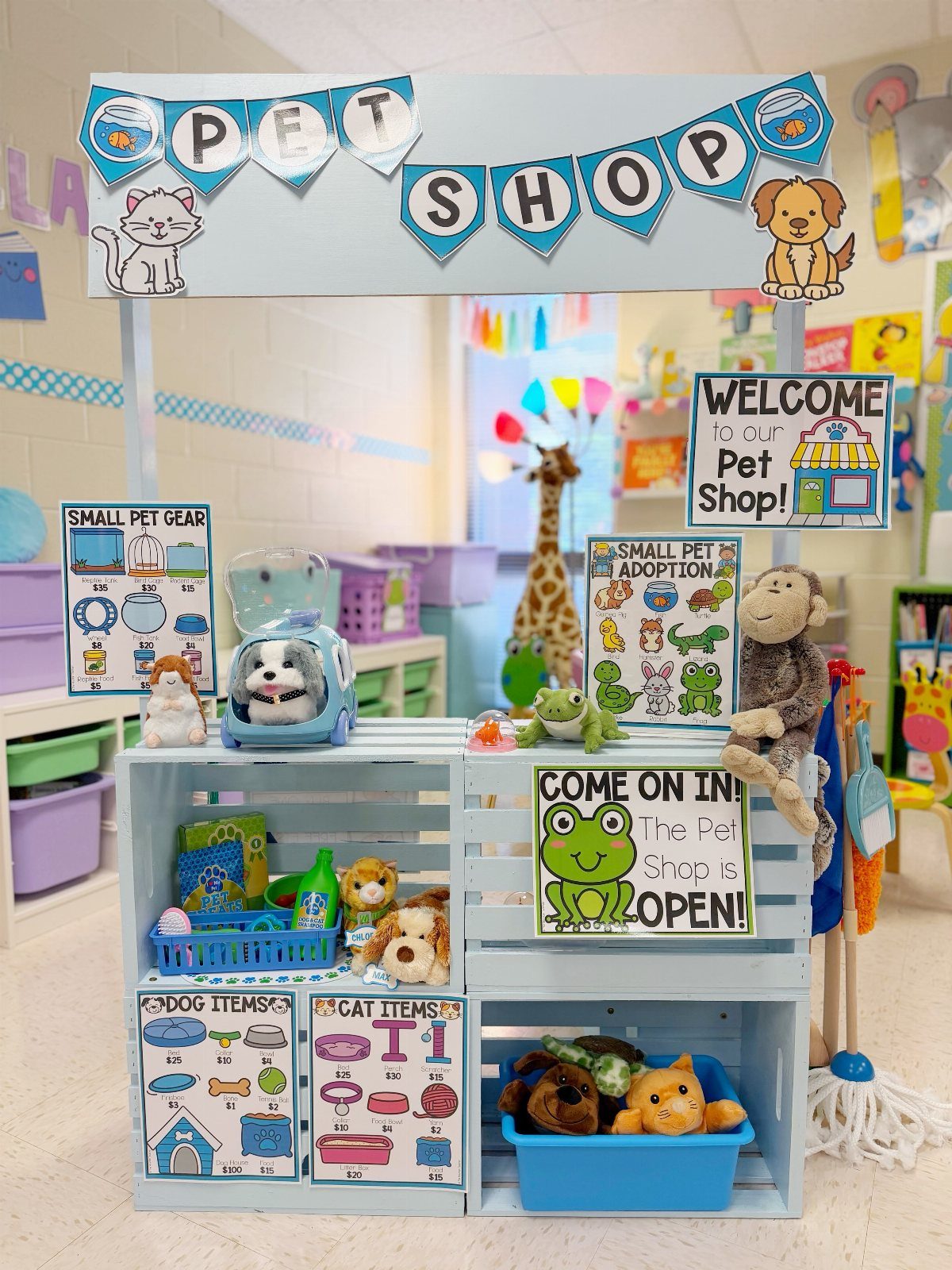
Crates, stuffed animals, and clear signs for the front counter are enough for a pet shop that kindergartners will run on their own.
Label the zones the way a real store would: "Small Pet Gear" on one crate, "Small Pet Adoption" on another.
Children who can’t read yet will still sort by picture, so tape a drawing beside each word. I’d ask families to lend stuffed animals for a few weeks, which keeps the cost near zero.
22. Horse Stable Play Area
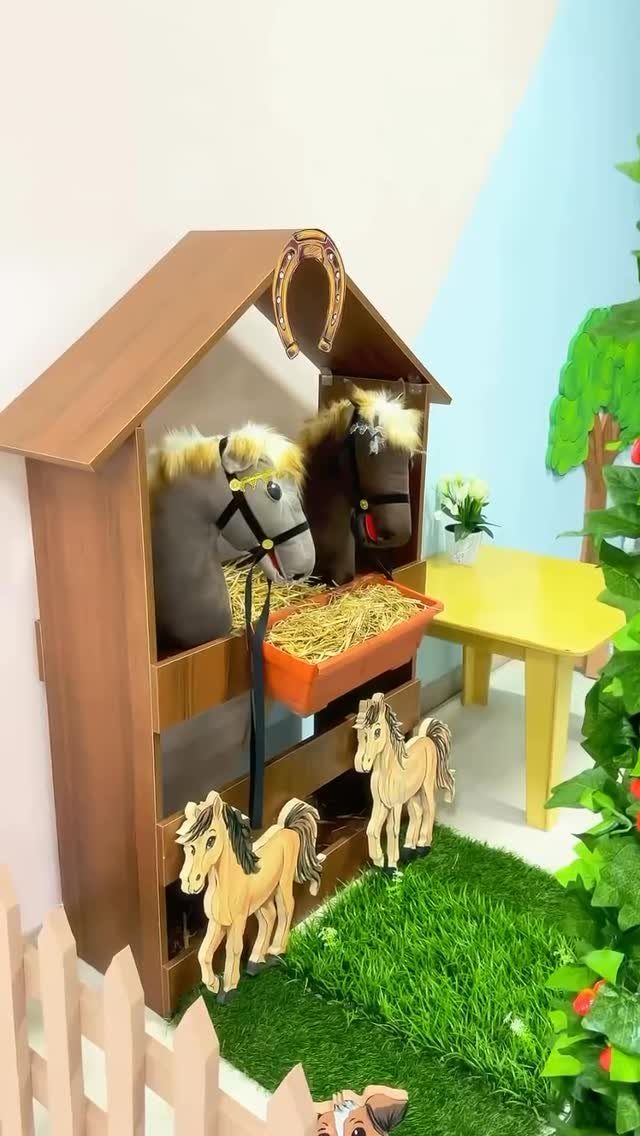
Plush horses, a wooden stall and a hay trough give children a whole story to act out: feed, groom, shut the gate.
Picket fencing on a square of artificial grass marks where the play happens, so the corner stays contained.
Keep it to 2 horses so kids have to share and talk. If you have no wooden stable, a cardboard box cut into a stall works, though I prefer the sturdier look of wood.
23. Lemon Classroom Decor
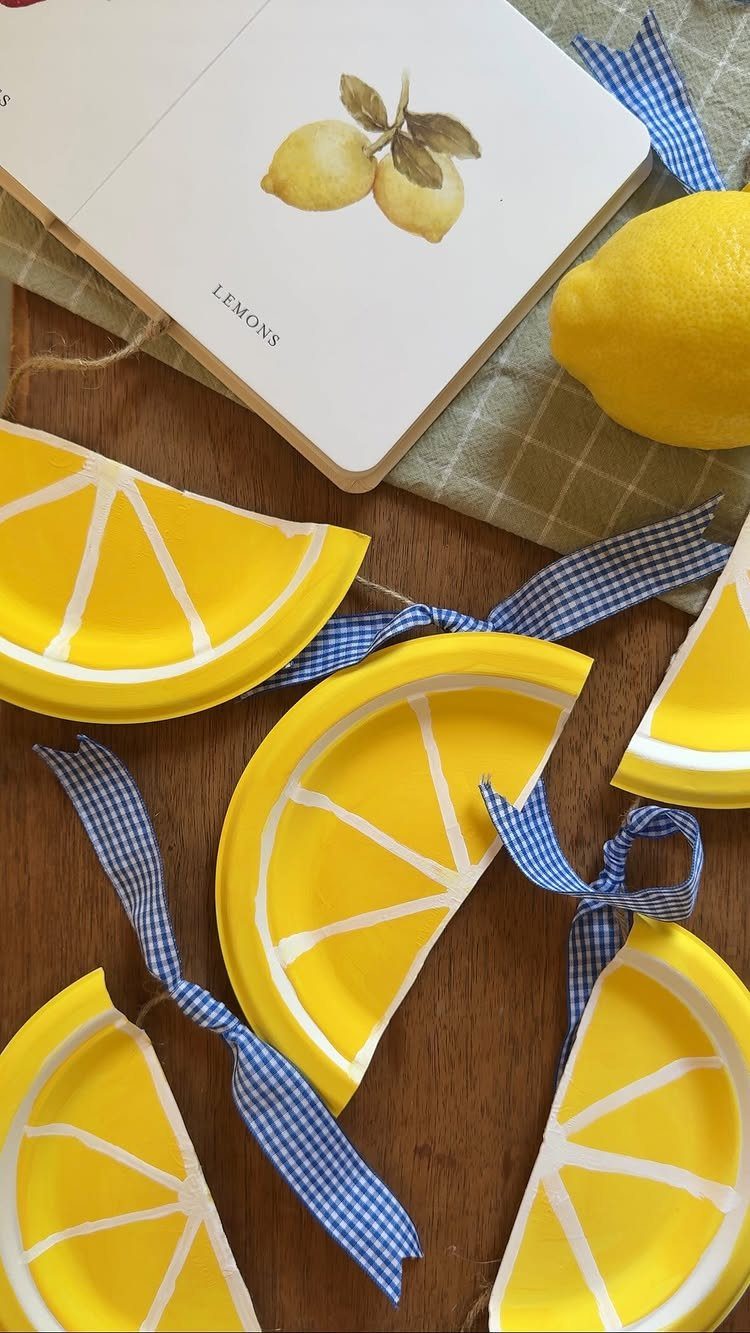
Paper plate lemon slices are the cheapest citrus decor I know, and a plain yellow plate does most of the work.
Draw the segments in a slightly darker yellow, then tie a loop of blue gingham ribbon through the top to hang it.
Pair the slices with a botanical print labeled "LEMONS" and a real lemon on a nearby shelf. I’d keep to yellow and blue only, so the look stays fresh and the room doesn’t feel crowded.
Choosing a Theme
Start with last year’s room. Think about which themes got the loudest reaction from your students, and which ones you were tired of by October.
Excitement from a class is a good sign, and some topics hold kids’ attention year after year, so keep those in your rotation.
Then weigh what you can realistically live with for a full school year. A theme should fit your teaching style, your room’s layout and the age of the children in front of you.
If you can’t decide between two, pick the one you can refresh with the least work. A theme that adapts to a new class beats one you have to rebuild every August.
Budget-friendly Options
Paper, markers, cardboard and tape cover most themes, so start with what the supply closet already holds. Ask your school office for spare boxes before buying anything.
Hand the cutting and coloring to your students wherever you can. Their work fills the walls faster than store-bought pieces, and it costs close to nothing.
Buy only the few items that can’t be made by hand, like battery lights or a roll of butcher paper. Then price the whole theme per student and see where the money actually goes.
Families are often glad to lend or donate small items if you ask early with a short list. A clear request gets better results than a general call for help.
Frequently Asked Questions
What are good classroom themes?
Ocean, camping and outer space are reliable picks for young kids.
2 small tents, a prop campfire and a backdrop of trees and stars give a reading nook a pull that kids feel right away, so I’d tuck it beside the book bins for story time.
An underwater look works because kids can make the paper fish, jellyfish and turtles themselves.
What are some good themes for kindergarteners?
Animal themes like farm, bees, pet shop and under the sea suit kindergartners best. Kids this age sing along to an "Old MacDonald" banner and sort a pretend pet shop by picture, so the theme doubles as a lesson.
Pick one where children can cut, color or lend something, since their own work fills the walls fastest.